Summer Yoga Experiment – Week Three

For my third Yoga class of this experiment, I decided to change a few things.  I tried an evening class, it was Hot Yoga, and my husband came with me.  I also came across some Yoga history in a novel that inspired me to look at it differently, as you’ll read below.

Again, it was a new instructor, but I know this instructor from staff parties, as I instruct my own classes at the same gym.  It added a certain comfort level being under the instruction of someone I already knew.  She was early and prepared, she started the class off with moments of readiness and preparation, and focused our minds on loving ourselves and others.  She reminded us to be grateful for our bodies, our hearts, and life itself.  She was detailed in her instructions, and gracious in the areas we needed growth.  Her class was also the most physically challenging one I’ve attended this month, with many strength and balance poses that the other two didn’t include; fine this time, but I wouldn’t always want that.

I’m learning that it’s important to find out what I want from a Yoga class, and then choose a time of day, level and instructor that delivers what it is that I need in that season.  There’s a time for everything.

Coming into an evening class felt okay for me, because I’m not a morning person.  I was more alert and had spent more time preparing for my experience.  I had picked a Bible verse I’d come across recently that applies well to my current life space, and I was ready to use it as a mantra.  I was also using this class to help wind down at the end of a day, rather than rolling out of bed into it, another plus for this time.

It was over 30 degrees Celsius in my city at the time, and we don’t have air conditioning in our house.  I had concerns about how Hot Yoga would affect my already over-heated body, so I consumed extra water before going (something I wouldn’t have done well before a morning class). As it turns out, when you walk from 30 degrees into 34 degrees, it doesn’t really feel that different; however, I noticed immediately how much further I was able to stretch into my downward dogs and forward folds, simply from the added heat in the room. I was actually cold when I left the room, which was just what I needed to feel!

Having my husband there was great.  He attends my fitness classes often, lifts with me, or we run together.  I’m comfortable exercising with him in many capacities, so I was aware of him, but he didn’t distract from my focus.  He’s a bit more experienced with Yoga than I am, so I looked forward to discussing the class afterwards with him.  His main observation was that he appreciates the time to slow down and actually focus on breathing.  The average person breathes in and out more than 20,000 times per day, and breathing is an essential life function, but we don’t stop and think about it unless we make the effort to focus on our own bodies and be grateful for a few moments.

I recently read Eat Pray Love by Elizabeth Gilbert, because in the first third of the book, she relays her experiences of life in Italy, a place I hope to move to.  The next two thirds of the book cover her experiences in India and Bali, and I wasn’t planning to read them, but I noticed that the introduction to the India section was about meditation and Yoga, and seeing as how I was right in the middle of my summer Yoga experiment, it captured my attention.  Here’s what jumped off the pages at me.

“Why do we practice Yoga?… Is it so we can become a little bendier than our neighbors?  Or is there perhaps some higher purpose?  Yoga, in Sanskrit, can be translated as ‘union.’ It originally comes from the root word yuj, which means ‘to yoke,’ to attach yourself to a task at hand with ox-like discipline.  And the task at hand in Yoga is to find union between mind and body, between the individual and her God, between our thoughts and the source of our thoughts, between teacher and student, and even between ourselves and our sometimes hard-to-bend neighbours… The ancients developed these physical stretches not for personal fitness, but to loosen up their muscles and minds in order to prepare them for meditation” (p.121).

I love that “Yoga” essentially means “union.”  Sure, it can be a simple physical exercise, surface level stretching, if that’s what you are comfortable with.  But, it can be an opportunity to experience union with other people, or with soul, spirit and body, or with my God, if I set that intention, and I love that.  In the business of this life, this North American culture, and this crazy mind of mine that insists on fighting rest at any cost… it’s a gift.

1 Corinthians 1:10 “I appeal to you, brothers and sisters, in the name of our Lord Jesus Christ, that all of you agree with one another in what you say and that there be no divisions among you, but that you be perfectly united in mind and thought.”

I also love that it encourages one “to yoke” to something, and attach to it with ox-like discipline.

Matthew 11:28 “Then Jesus said, ‘Come to me, all of you who are weary and carry heavy burdens, and I will give you rest.  Take my yoke upon you.  Let me teach you, because I am humble and gentle at heart, and you will find rest for your souls.’”

Sometimes, I feel weary, like I am carrying a heavy burden, and I want rest for my soul from a humble, gentle God.  There are many ways I can seek His rest, and I would argue that Yoga can be one of them, if I’m setting that intention – to take His humble, gentle yoke upon me and let myself be taught.

“Yoga is about self-mastery and the dedicated effort to haul your attention away from your endless brooding over the past and your nonstop worrying about the future so that you can seek, instead, a place of eternal presence from which you may regard yourself and your surroundings with poise” (Gilbert, p.122).

Phillipians 4:8 “Finally, brothers and sisters, whatever is true, whatever is noble, whatever is right, whatever is pure, whatever is lovely, whatever is admirable – if anything is excellent or praiseworthy – think about such things.” 

Exactly.

Needless to say, after reading all of this, I entered my third Yoga class with a fresh perspective.

“Take my yoke upon you…you will find rest for your souls.”

Does Yoga have to be spiritual?  No.  It can be purely fitness related.  You can walk into that room and let your mind wander through all your to-do lists, and everything you’re worried about, and you can watch the clock and just stretch.  If that’s what you need, then do that.  If you’re not into the Bible like me, you can choose a different focus, any mantra you like, and make it a positive or relaxing experience, where you practice gratitude, or learn to focus your mind a little more.  Or you can use it to connect with yourself, a friend, or God.  I have done all three now.

Yoga keeps surprising me. There is one week left in my summer Yoga experiment, and I’m curious to see what it will bring.

Namaste.
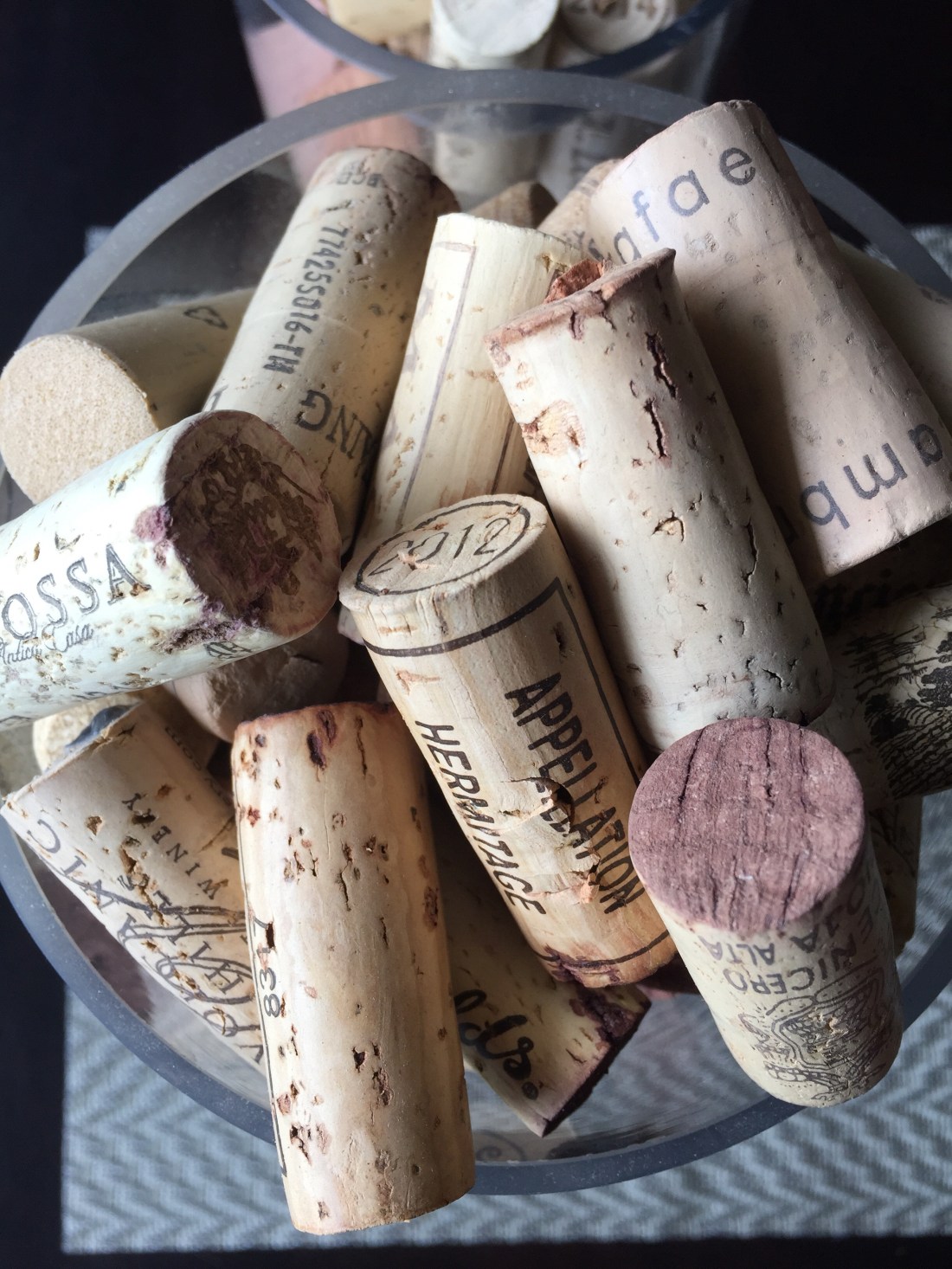
Real Cork vs. Synthetic Cork and Screwcaps

Real Cork

Cork is a natural substance that has been used for thousands of years by multiple ancient civilizations.  We now associate it mostly with wine stoppers, but I didn’t know how that usage came to be until I did some research.

“The most significant development occurred in the 1600s, when Dom Perignon, developed his methode champenoise.  The wooden stoppers used to store still wines had considerable disadvantages when applied to sparkling wine.  Dom Perignon successfully adopted cork stoppers and soon cork became essential for wine bottling.”[1]

Way to go, Dom!

Natural cork has its benefits.  We know that it has good results with long term aging.  It allows a very small amount of oxygen to slowly enter the bottle over the course of several years, helping harsher wines, with lots of tannins, to soften and become more easily palatable and interesting.  Too much oxygen will ruin a wine, and quick.  Think of it like The Three Bears scenario:  too much is bad, but too little is bad – it has to be just right.  It’s also a somewhat renewable natural resource.  “Cork continues to re-grow after the bark has been harvested.  However, it needs time, so the cork bark is only harvested once, every 9 years or so.”[2]

People also seem to love wine with real cork in it.  It feels more authentic and traditional, and hints at better quality.

I found results to a study done at Oxford University that supports this argument.  They found that wine tasted better to the participants if it had a cork, because they believed and expected it to be better, as opposed to a screwcap.  The study tested 140 people that tried two similar wines back to back, one with a cork, and one with a screwcap.  They then sampled the same wines again, without realizing it, except the tops were switched.  Each time, they were asked which one tasted better.  113 of those people chose the wine with the cork, each time, even though the wines had been switched on the second round.[3]

The Professor who performed the study explained that “our senses are intrinsically linked – what we hear, see and feel has a huge effect on what we taste.”[4]  This just goes to show that no matter the truth behind the wine closure, many people want a cork in their wine, because it enhances the experience.

I have to admit, upon first reaction, I like a real cork too, especially on an old bottle, when there’s a bit of fungus growing on top.  It reminds me that the bottle has a history, and a story, and it feels real.  I have to correct my reaction that seeing a synthetic or screwcap top on the bottle doesn’t imply the quality is less.  Real cork just plays into the fanciness, and the classy feeling that uncorking a wine gives.  It’s part of a ritual, if you will, when one wants to really enjoy a wine.

So if cork works, and people love it, why would anyone not use cork?

That’s where TCA steps in.  Dun dun dun…play the scary music.

TCA stands for Trichloroanisole, and basically, it’s a compound that forms in natural cork, and ends up getting transferred into wine, through that cork.  Terms such as “cork taint,” or a wine being “corked,” are referring to TCA.  If you’ve ever had the opportunity of smelling a wine that’s been affected with cork taint, it’s really bad!  The smell reminds me of an old church garage sale, or my grandmother’s basement storage room, that’s had a little bit of water in there over the years, hasn’t been dusted or cleaned out, and is probably growing mould.  As you can guess, it has a similar, unpleasant taste, too.

TCA’s not going to kill you, and as far as we know, it wouldn’t even make you sick – if you could still stomach the wine.  What’s likely to make you sick, however, is how your beautiful, expensive bottle of wine you’ve been anticipating is now effectively ruined.

You can find countless different statistics all over the internet on the percentages of wines that have been ruined by cork taint.  There was a big surge of it in the 1990s, that got people looking for other methods to close their wines.  On one of the wine tours we attended, the guide explained that they had switched to screw caps during that time, because they were finding that up to 10% of their wines were tainted.  Other statistics claim it was as low as 1-2%, and I’ve heard up to 20%.  There really isn’t an extremely accurate way of tracking this, and it differs from region to region.  A certain batch of cork could have been tainted, or it could have been a poor winery practice that caused the taint in the wine.

The numbers have significantly dropped now, as the cork industry got on top of the issue.  “Quality procedures have been overhauled, starting in the cork forests” with procedures to prevent the mould from getting into the cork itself.  The storage has been improved with “new factories close to the forests…the bark is stored only on concrete or stainless steel, never touching bare earth.”  The cork is also “rejected if [it shows] the slightest hint of a greenish stain,” and the bark is turned into corks by hand, “ensuring that the corks are taken from the best part of the bark.”  Nothing is wasted, and all the unused material is recycled.[5]  From the sites I referenced in this article, it seems to be that the percentages of cork taint have dropped significantly; the wine buyer at my favourite liquor store says that they hardly ever have returns anymore for this issue, and in all of the wines I’ve bought from them, and had in their tasting room, I’ve only ever seen one corked one.

Synthetic Cork

An alternative to real cork, is synthetic cork.  With this, there is no risk of TCA.  Synthetic cork can also be way more affordable for producers who are making inexpensive wines, meant for immediate consumption.  We don’t see super cheap wines in Canada very often, but if you’ve travelled Europe, you know that you can get some wines for less than $5.  Robert Joseph of Decanter makes an excellent point for why these types of producers may choose synthetic cork.  “When you are earning €3 a bottle, it makes no sense to spend a sixth of that sum on a top-quality cork.”[6]

It may be more consistent, and cheaper than real cork, but it’s also plastic, and not natural.  Jeff Leve explains that “the problems with synthetic corks is the lack of a perfect seal.  In turn that allows more unwanted air into the bottle, causing the wine to oxidize.  Worse, many of the synthetic corks have been known to impart a slight rubber or chemical smell, damaging the wine.” [7]  I’ve heard several of my wine industry friends complain of this happening; they say that if they’ve aged a wine on its side, and the synthetic cork is touching the wine, it can taste like plastic, so they always store their synthetically corked wines upright.  As for the lack of perfect seal, Jeff explains that some wine makers prefer this, if it can age their wines more quickly, to be consumed sooner.  He says there are also many companies now that are coming out with synthetic cork that lets in a more controlled amount of oxygen.[8]  There has also not been proof of how well it holds up for long term aging.

Screwcaps

The good old screwcap is another manufactured wine closure that is more cost effective, and less environmentally friendly, than real cork.  It also eliminates the risk for TCA, or plastic tasting wine; however, as you read above in the Oxford study, it’s associated with cheap wine.  Australia has put significant research into screwcap closures, as an article in the Sydney Morning Herald explains.

“The winemakers worked with the Australian Wine Research Institute, which over a 24 month period conducted trials that tested nine different closure methods (including natural cork, synthetic cork, technical cork and screwcaps.  After nine months under screwcap, each bottle of the same wine tasted the same… but the same wine under eight different cork closures all varied in taste.”[9]

I like some good research to back any fact, and I am impressed that there has been significant testing done on this issue.  Taylors Wines was the first winery to bottle every wine they make with a screwcap closure, in 2004, even though they risked what people’s opinions of the quality would be.  Now, 98% to 99% of Australian wines are bottled under screwcaps.[10]

Unfortunately, using a screwcap doesn’t guarantee a perfect seal.  There are some screwcaps that have been designed to allow slow amounts of oxygen into the wine, so that it can get some aging benefits, but it’s very possible that when the cap is getting attached to the bottle, it might not seal correctly.    I’ve had this happen to me before, (once) and had to send wine back to a winery because of it.  A wine expert taught me a good way to test this; when you’re buying a screwcap bottle, gently try and twist the closure under the lid, to see if it will rotate around the neck.  If it’s stuck to the neck and doesn’t rotate, you’re good.  If it does rotate, the bottle has not been sealed properly, and you could find that it’s been oxidized.

New Zealand launched their initiative to use screwcaps on even their top quality wines in 2001.  The initiative aims to “encourage and facilitate the use of screwcap wine seals by New Zealand wineries,”[11] and basically also to research them and make them super awesome! Excellent! You go, New Zealand! Maybe they’ll find a solution to ensure even more bottles are sealed tightly.  They do believe that screwcaps can be guaranteed to age well for considerable time, which is another plus for them; I’ve heard up to 10 years or more.  The founders of the initiative believe that cork taint is a considerable problem, and should no longer be tolerated, and seeks to find new and better ways.

It seems to me that our opinions of quality, based on a judgement we make on seeing the wine’s closure, may be preventing us from enjoying actual quality in some wines.

Didn’t anyone tell us not to judge a book by its cover?  In my opinion, those who judge all wines by their screwcap ‘cover,’ are missing out on some of the best wine ‘stories’ out there.  For example, I continue to buy Australian wine, even though it’s closed with a screwcap, because one of my favourite wines of all time is Penfolds – screwcap tops, amazing quality.

Let’s not be so hasty in our judgements anymore, wine drinkers!  Have you had a poor quality wine with a screwcap?  Yeah.  Have you had a poor quality wine with a synthetic cork?  Yes.  How about with real, natural cork in it?  Uh huh – me too.  I’ve also had great bottles with all three closures.  There’s so much more to what’s in the bottle, than what’s on top of the bottle.

There are no guarantees that every single bottle coming out of production is going to be perfect when it’s opened, no matter the type of seal.  There is always that small risk that it’s going to be corked, or oxidized.  That’s why in a restaurant, when you order a bottle, they allow you to taste it before it’s served; you’re checking that the quality is acceptable.  Luckily, most wine stores and producers understand that a percentage of damaged wine is part of the process, and I’ve never had anyone refuse to refund or replace my corked or oxidized bottles.

In the end, wine producers need to weigh their options and determine what’s going to suit them best.  As a buyer, knowledge is power.  It’s good to be aware of the pros and cons of each wine closure, and to eliminate misconceptions as much as possible.  When you’re purchasing a wine, and you’re looking at the closure, think about what that wine’s purpose is going to be for you.  Keep an open mind.  Who knows, maybe in a few decades, the sound of a screwcap seal breaking will have a friendlier association… we can hope!

Happy wine-ing!

Special thanks to Chad for asking me to write this article, which required the most research I’ve done since being in University… I guess we do learn to cite things for an applicable life reason. 😉

[1] Unknown.  “History of Cork Usage.”  http://www.corkqc.com/pages/history-of-cork-usage.

[2] Leve, Jeff.  “Wine Corks Everything You Need to Know About Wine Corks.”  https://www.thewinecellarinsider.com/wine-topics/wine-education-articles/wine-corks-everything-need-know-wine-corks/.

[3] Yorke, Harry.  “The Great Wine Debate; Corks really are better than screw-tops, Oxford study finds.” http://www.telegraph.co.uk/news/2017/09/27/great-wine-debate-corks-really-better-screw-tops-oxford-study/.  (September, 2017).

[4] Yorke, Harry.  “The Great Wine Debate; Corks really are better than screw-tops, Oxford study finds.”

[5] Bird, David.  “How the Cork Industry is Fighting Back.”  https://www.decanter.com/features/which-cork-is-best-246798/

[6] Joseph, Robert.  “Which Cork Is Best?”  https://www.decanter.com/features/which-cork-is-best-246798/ (January, 2009).

[7] Leve, Jeff.  “Wine Corks Everything You Need to Know About Wine Corks.” https://www.thewinecellarinsider.com/wine-topics/wine-education-articles/wine-corks-everything-need-know-wine-corks/.

[8] Leve, Jeff.  “Wine Corks Everything You Need to Know About Wine Corks.”

[9] Bliszczyk, Aleksandra.  “Australia’s wine screwcap revolution.” https://www.smh.com/au/business/australias-wine-screwcap-revolution-20170628-gx0e3l.html (June, 2017)

[10] Bliszczyk, Aleksandra.  “Australia’s wine screwcap revolution.”

[11] www.screwcap.co.nz

How to Teach Phys-Ed in Heels

Anyone who knows me can tell you that I adore high heels.  I’m not prejudiced either; I love them in all shapes, colors and styles!  My clock is a red high heel.  I have a high heel shaped tape dispenser (thanks, sis), wine bottle stand, cake server, calendar… Even my spoon rest on the stove is a red high heel.  I also have a few real pairs… (okay, I’m being modest).  After my husband accepted the fact that he’ll never get me to stop buying them, he built me a closet for them.

I originally took my teaching degree to teach Middle Years students, but jobs are scarce in my small city, and if you want one, you take what you get and you don’t get upset!  Long story short, I ended up becoming an Elementary Phys-Ed Teacher for a couple of years.  That’s not where I thought I’d end up, but being the perfectionist that I am, I set out to do the absolute best job that I could, while still being myself, of course.

Myself – wears heels.  I was the gym teacher who wore heels every day.

My students quickly became fascinated with my shoes.  They would wait to see which pair I’d have on each day.  A rumour went around my school that I’d never worn the same pair twice, which I’ll assure you is not true!

“How many high heels do you have?” I’m often asked this question.  My students could tell you the answer I always give.  “I refuse to count.”  There are some things you just don’t need to put a number on.

Another frequent question I hear is, “how do you walk in those shoes?”  My answer to that one is, “the same way you do.  One foot in front of the other.”

“Those can’t be comfortable,” they say.  Honestly, they’re not always comfortable, no.  If what you value most in footwear is comfort, then heels are not the shoes for you.  If you value style, I would argue that there are stylish shoes in any heel height, right down to pretty flats and funky sneakers.  Wearing heels is important to me.  I feel good in them, even if my feet don’t always feel good.  (However, at work I am practical in my choices; I do have several comfortable pairs of heels, that I can wear all day, be active in, and my feet are fine at the end of the day.) Some women do a lot more difficult things in heels than teach! You get used to them.

It was inevitable that someone would eventually comment on my ability to teach phys-ed with heels on.  Some wondered how I could possibly do a good job if I wasn’t in runners.  It’s amazing to me some of the things that people decide to care so much about.  Is my shoe choice really that big of an issue that it needs to become a topic for gossip?

I kept a pair of runners at school for the days I needed to demonstrate a skill; I was the teacher – I knew when those days were coming! With my hobby job and certifications in the fitness industry, I also knew the importance of modeling proper footwear for my students when doing physical activity.  On the contrary, anyone who’s ever taught a phys-ed class knows that the teacher’s main role is not to get in there and participate in every sport.  It isn’t summer camp, and I’m not a counsellor; the teacher’s role is to educate, supervise, support, build relationships, and assess (plus so much more), much of which can be done in heels.  It can – I did it.

My boss thought I did a great job.  The kids thought I did a great job.  Any parent that actually spoke to their child in my class knew that I poured my heart and soul into being the best phys-ed teacher I could, while still being me.  One of my colleagues suggested I do a professional development at a conference titled, “How to Teach Phys-Ed in Heels.”  I didn’t get the chance, so I’m writing this in honour of her now. She knew I was fulfilling my professional duties, while still expressing my personal style. (Thanks, Heather!)

My heels can tell stories.  I remember where I was when I bought them, or an experience I had while I wore them.  I have shoes from places around the world, and when I look at them, they remind me of that trip, or that place, and that brings me joy.  My heels were a point of connection for my students to ask about my stories, and my life.  They were a discussion starter, and a symbol of me, to them.  Now, because of those cute, honest conversations with kids, some of my heels have become reminders of my students, to me. When I see certain pairs, I can see their beautiful little faces.

I’ve had parents tell me more than once that my name gets brought up when their kids see high heels on movies, shopping, or on trips. It warms my heart; it’s nice to know they think of me.

I asked my husband once if it’s dumb that I’m known throughout the school for my shoes. I said, “that’s a really trivial thing to be remembered for.” He reminded me that my shoes are just a fun part on the outside, and how any student that has actually worked with me will remember me for how I impacted their lives. Upon receiving their farewell cards this spring, I can see that they will remember me because I helped them learn something, overcome something, because I listened, because I showed them love. The heels are just a visual reminder.

Whether I want to admit it or not, wearing heels has become a part of who I am.  I feel like myself when I have them on.  People can think what they want about that. As educators, we teach kids the importance of ignoring negative criticism, and fully embracing their own little (or big) personalities. We try to instil values in them like independence, strong self-esteem and acceptance of diversity. We teach that doing things to help them feel great, beautiful, confident, or like they’re being true to themselves is important in presenting their beautifully and wonderfully created selves to the world around them.  Why should we not do the same?

Wine Tips for Beginners: Pairing Wine with Food

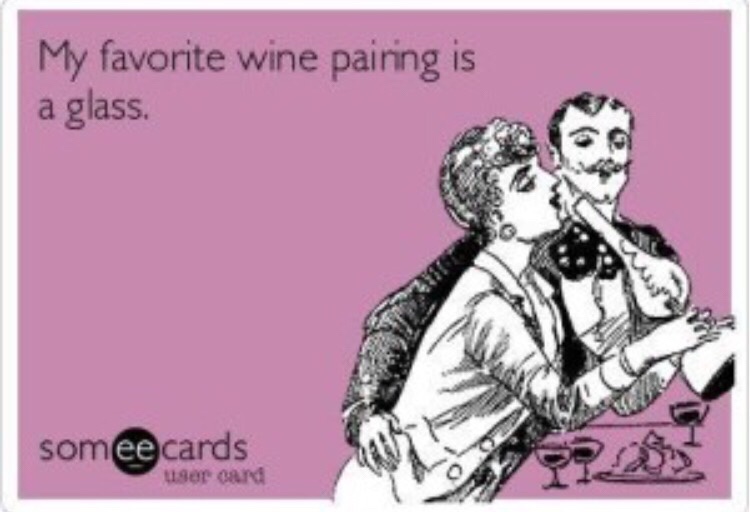
Anyone that’s ever experienced a perfect pairing between wine and food can tell you that it’s like magic in your mouth.  Good food + good wine = an explosion of flavor.  In my quest to answer more questions for wine beginners, I think a brief article on food pairings is an important topic of discussion! (Memes from someecards.com)

You don’t have to drink white wine with chicken; it’s a myth and it’s been busted.  I love a great Pinot Noir with my chicken.  There used to be so many rules about always pairing white wine with fish, and red wine with red meats, but what if I want to eat fish AND drink red wine at the same meal?  Now I’m forced to choose, and that’s just not going to do.  Forget the rules.  Rules make me cranky sometimes.  White wine with fish doesn’t taste bad, but there are so many more options!

So, you ask, how do I drink wine, and eat food, without it being a complete disaster in my mouth?  Trial and error always works for us!  Take a look at some tips below, and maybe you can save yourself some of the error.

From our WSET course, and years of personal experience, we’ve learned some basic tips.  There’s so much more to be said on this topic, but here’s a start, including some quotes from my husband, Greg:

1. Unlike in people’s personalities, salty and acidic qualities seem to be the easiest to pair.  It’s a lot harder to go wrong with a wine when ordering or serving these types of dishes.  This is because salt and acid in food make wine seem sweeter and less acidic by comparison.

Greg’s food suggestion:  “A well seasoned piece of meat – it could be anything, ribs, steak, whatever, you need to put the seasoning to that meat – and a Montepulciano, Shiraz, or a strong Cabernet Sauvignon.”

2. Fatty foods pair best with acidic wine; this is likely due to how refreshing a crisp wine can be in comparison.

Greg’s food suggestion:  “A great juicy burger and fries, or pork side ribs and a beer!  If you’re drinking wine though, most wines are acidic; try a good Italian wine like a Chianti, or a big bold Chardonnay.  You’re eating a burger and fries.  You’re thirsty.  You want a crisp, cool wine.”

I also love these types of wines with a cheesy pasta dish.  Yum.

3. Sweetness and certain savoury foods can bring out bitterness in wine, making sweeter foods hard to pair.  If you’re as sweet on sweets as I am, and you’ve ordered something with sweetness to it, pile on the sweetness with an even sweeter wine.

Greg’s food suggestion: “If you’re having something with a sweet and savoury sauce, like a candied salmon or reduction-type sauce, get a Gewürztraminer or Riesling for white, or Gamay, Malbec, Shiraz or Zinfandel for red.  That does sound good…let’s have that.” 

4. Try and match intensities of foods with wines.  If you have a really acidic dish, a more acidic wine will pair nicely; just make sure the wine is more acidic than the food, or the wine will fall flat on it’s face.

Greg’s food suggestion:  “Pasta sauces, like tomato sauces need an acidic wine, like Italian ones, because tomatoes are so high in acid.”

Whites generally have more acid than reds, like New Zealand and Loire Valley Sauvignon Blanc, or German and French whites.  Italian wines are often high in acidity, and some great, easy to find reds are Chianti, Sangiovese or Valpolicella.  Most restaurants should have one of these on their menus.

5. Bitterness leads to more bitterness, just like in a bad relationship.  Keep all those bitter family members away from each other to avoid a brawl.  No heavy reds with mushrooms and asparagus, or anything soya saucy or Asian!  You’ll want a crisp white for those dishes.

Greg’s food suggestion:  “I eat noodle bowls and sushi, and ginger beef.  A crisp white wine would go well with these.” 

Many crisp whites have been listed above!

6. Spicy food will have an extra mean kick if you’re matching it with heavy, high-tannin reds.  That high alcohol level will add to the burn!  Keep the wine on the fruitier, sweeter side, with lower alcohol levels.

Greg’s food suggestion:  “Spicy ribs or chicken wings, with a low alcohol Riesling will go well because of the sweet sauce and the spice.  The low alcohol won’t enhance the spice flavour, and the sweetness should take away from some of the spicy sauce.” 

7. “What grows together, goes together.” – I’m not sure who first said that, but it’s true!  If you’re eating Italian, get Italian wine.  French food, French wine, Asian food, Asian wine?  So it doesn’t ALWAYS apply, but when it does, it works.  Almost like the foods and grapes that grow in the same soils and climates might have something in common…

*Remember this:  the wine must always be sweeter than the food!

Dessert

Red wine and chocolate is a popular pairing misconception.  They’re actually not that good together – try it for yourself and see.  This is a shame, I know.  As red wine and chocolate happen to be two of my most favorite things to consume, I just do it anyways.  So you can be a food pairing rebel, like me, or you can save your chocolate for once you’re done your glass of red, or vice versa.

This all means that for dessert, a dessert wine must be served if you want a successful pairing.  Look in the dessert wine section at your store for Icewines (more expensive), late harvest wines (a bit more affordable) or try something interesting like Tokaji (Hungary) or Muscat de Beaumes de Venise (France).  The question about Muscat de Beaumes de Venise is the one we both got wrong on our WSET exam; we won’ t be forgetting that wine ever again!  It’s actually really tasty.

To Sum Up

If you are ordering for multiple people eating different things, good luck.  It’s not an easy task, but the safest choices are neutral, un-oaked whites, or light body, fruitier reds, examples below.

A white wine that pairs well with almost any meal is Italian Pinot Grigio.  Pairing well with most meals are unoaked Chardonnay.  For a more interesting choice, try Chenin Blanc from South Africa or Albarino from Spain.   

Red wines that pair well with almost any meal and are usually a safe bet:  Beaujolais (the “hot dog wine” from the Somm movies), or Pinot Noir.  These reds can stand up to red meats, but also won’t overpower a fish or poultry dish.

You can Google specific food pairings online if you want to be precise.  Some reputable websites for wine information are www.winefolly.com, or www.jancisrobinson.com.  For example, check out Madeline Puckette’s wine and cheese pairing information here:  https://winefolly.com/tutorial/6-tips-on-pairing-wine-and-cheese/.

Wine Folly | Learn about Wine

www.winefolly.com

Wine Folly is the best place to learn about wine. Browse our visual wine compendium or our playful weekly articles. Start your wine education today.

6 Tips on Pairing Wine and Cheese | Wine Folly

winefolly.com

Armed with the right information you can create amazing wine and cheese pairings on your own. Here are several classic pairings and why they work.

(All of my suggestions for resources are my own opinions.  I have not been paid to recommend these resources.  I truly find them to be written by some of the most knowledgeable and accurate wine professionals out there, and I have invested in purchasing their books for my library.) 

Summer Yoga Experiment – Week Two

Two out of four; I’m half way to the completion of my summer yoga experiment. I’m embarking on this journey with an open mind, to discover how weekly yoga may impact my mental, physical and spiritual health.

Following Last Week’s Practice

I noticed a bit of stiffness in my neck throughout the same day, but none following that.  I also felt less back pain and joint stiffness at the end of the week.  Last week was what we call “Launch Week” at my gym, when brand new choreography is released in a branch of fitness classes we offer.  I am a fitness instructor, and on Launch Week, I typically teach upwards of twice as many classes as my usual amount, which leaves me very sore by the end of the week.  I can’t say I wasn’t stiff at all, but I can say that I noticed a marked improvement in how I felt, just by slotting that one Yoga class into the middle of the week.  I should not be surprised; I’ve been well educated on the benefits of proper stretching!

This Week’s Practice

If you recall, there were a few things I wasn’t fond of in the class I attended last week, namely the late instructor, and the overly full room of loud, bad-breathed breathers.  I purposefully chose a different class this week, so that I could experience another teacher’s practice, and a fresh environment.  I’m pleased to report that the teacher was early, stayed late to chat with me, and there were no loud, bad-breathed breathers.  The only breathing I heard today was when the instructor asked us all to exhale forcefully, and we did it as a group, which had a nice sense of comradery to it.

I came into the class slightly more comfortably after having just done Yoga last week.  I began my morning in a similar fashion, getting up early and heading to the gym with ample time to warm up and get acquainted with the room.  I also don’t have my own yoga mat (yet?), and there are only a couple of spares, so I wanted to make sure I got there early to get one.

I was tired today.  I had lots of sun this weekend, and a restless sleep last night.  I seriously considered turning the alarm off and just rolling back over, but then I remembered I made a commitment to myself, and the blogging community, to do four classes this summer, and I needed to get my lazy butt out of bed.

My experience today was entirely different than last week.  I’m discovering that this is something that intrigues me about Yoga.  I never know what to expect; no class is ever exactly the same.  There are so many poses a teacher can choose from, based on the experience level of the participants, requests, or simply what he or she is feeling inspired to practice that day.  In some classes, like the ones I teach, predictability and patterns are keys to success and the development of better cardio-vascular fitness, strength and stamina.  In Yoga, predictability doesn’t seem to matter as much. There’s lots of time to sink into each pose, adjust, and re-adjust.  I can see how familiarity with the poses would add value, but Yoga truly is a practice, and there’s always room to keep practicing and growing in the many facets of what it offers.

Some of the poses were familiar today, but some were new, and the order surprised me.  Not knowing what was coming forced me to be mentally engaged in the class, and to pay attention.  In Yoga, I have to listen and heed the instructions; I must be aware of what I’m experiencing in my body.

The Instructor Matters

I specifically appreciated three things about the way the instructor taught this morning (on top of her timely arrival and personable manner).

First, she made an effort to remind us to be aware of our mental state.  She started the class with a relaxation time, in which she brought our attention to all parts of our bodies and our breath; she challenged us to let go of worrisome thoughts or our to-do lists of the day, and be present in the class.  I needed this.  Throughout, she reminded us to focus in on our breathing.  At the end, she encouraged us to be grateful for something, and to set a goal for our state of mind for the rest of the day, whatever we each wanted it to be.  She wasn’t specifically spiritual, but I was able to make it spiritual for me, in the way I wanted to.

Second, she gave detailed instructions, in a calm voice.  She explained all poses with care, and reminded us to tighten up tiny details in our postures that would have altered their effectiveness if we’d forgotten them.  She taught us how to breathe deeply, to the top of our lungs, into our belly breath, and within our body’s natural rhythm; she cued which types of breathing to do in each pose.

Third, she came to me when she noticed I was struggling, and whispered the question, “Would you mind if I offered you some assistance?”  I gladly accepted, and she helped re-align my legs and hips into the proper placement, which in turn enabled me get the most out of that stretch.  I clearly needed this too, and she acted on it.

I felt more satisfied after this class than last week’s.  That could be partially caused by simple familiarity, but I imagine it mainly had to do with the room being less full, and the instructor’s style.  I will certainly try to make it to one of her classes again.

Thanks for sharing your thoughts last week on how Yoga has impacted you.  Any tips on choosing a Yoga mat?

Namaste!

Sonoma Valley, Napa’s Not So Similar Sibling

Napa Valley and Sonoma Valley almost come hand in hand as a wine travel experience.  People ask if you’ve “done Napa and Sonoma,” and they roll off the tongue as though they are one in the same, but they’re actually quite different.  We visited Napa Valley first, and then went touring in Sonoma Valley.  We were shocked at some of the differences.  I believe our shock came from simply being misinformed, and setting false expectations for Sonoma, based on our experience of Napa.  If I had read an article like the one I hope to provide you with now, I believe I would have experienced a better appreciation for Sonoma at the time.

Let me first clarify that when I say Napa and Sonoma are different, I don’t mean that either one is better or worse; different means different, and that’s it.  Some might say that Napa is superior to Sonoma.  Few might argue that Sonoma is more personable or friendly than Napa.  My stance remains that they are both great in their own right, and they each have much to offer.

There are some things Napa and Sonoma have in common.  They both represent well known growing regions in California.  They share the Mayacamas mountain range running between them, and both have excellently warm weather, breathtaking views, and are blanketed in wine grapes!  They each have a main highway that runs through them, leading tourists and wine experts alike down a trail of near endless exploring from one wine estate to the next.  Wineries offer tours and tastings, and have vast, stunning estates for their guests to enjoy.

There are many things that are different about Napa and Sonoma Counties.  On our visit, we were educated about how the Mayacamas Mountains, standing between Sonoma Valley and Napa Valley, actually block some of the cool current winds that come off of the San Francisco Bay area from reaching Napa Valley.  This keeps Napa’s climate slightly hotter than that of Sonoma’s.  With more of the cooling winds able to reach Sonoma Valley’s vineyards, the grapes are subject to a bit of a cooler climate, which in turn affects their development.  You may be thinking that’s a bit ridiculous, and how much of a difference could a slight breeze really make from that far away?  Well, in the world of wine, it’s a big difference.  Believe it or not, grapes can actually change in taste from one owner’s plot to the next door neighbours, even within the same small region.

All of this means that certain grapes will not grow as well in Sonoma as in Napa, and vice versa!  It can also mean that the same grape will taste different if it’s grown in Sonoma rather than Napa.  The winemakers in each region have been at it long enough to have figured out the exact climates and micro-climates of their particular vineyards, and they seem to be doing a fabulous job!  Remember, neither is better or worse; it’s a matter of preference to your tastes, whether you like warmer or cooler climate styles of each grape varietal.  Enough about all of that for now.  To sum up, the wines from Sonoma Valley are going to taste different than the wines from Napa Valley.

Another difference I wish I had been prepared for was the type of experience we were going to have in SOME Sonoma wineries.  After coming from Napa wineries, I had some expectations in my mind regarding curb appeal, staff dress, staff language and overall etiquette on the grounds.  I must make this clear; one winery we visited, which will remain un-named, certainly does not represent all Sonoma Valley wineries, but it was found among them. The place was difficult to find, and we had to drive down a long, windy dirt lane.  When we pulled up, we weren’t even sure we had arrived at the right spot.  Upon going in, we discovered some of the staff to be dressed in dirty, very casual clothes.  One of the men had his socks pulled up to his knees inside of his sport sandals, underneath poorly fitted denim shorts.  There were dogs running around though the tasting area.  Once I heard the word “butthole” come out of one of the staff’s mouths during a tasting, I knew this particular winery wasn’t within my preference.

We finished the tasting, and made the most of it, but I wouldn’t recommend that particular place to just anyone.  If you desire a very casual environment where you can bring your dog into the tasting area, and you’re looking for more of an affordable, weekend cook-out style of wine than the expensive, 100 point stuff, the wineries you’re looking for are not found in Napa Valley.  I do believe there IS a place for every type of winery in the market though, and Sonoma definitely has more diversity in its estates.  If I had known what I was getting into, I could have come with the right mindset, and enjoyed it for what it was – it may not have been my preference for language and dress, but it was a casual and relaxing environment, where anyone would be warmly welcomed.

I will note that we also visited some very high-class, professional, gorgeous estates in Sonoma Valley, which exceeded our expectations and delivered a five star experience, at a more affordable price than the Napa Valley wineries.  For example, B.R.Cohn, and St. Francis were both exceptional tours that I would highly recommend to anyone and everyone!  Domaine Carneros sits in between the Napa and Sonoma Valleys at the south end, and has exceptional reviews; we didn’t get the chance to visit it ourselves, but it is well known and reputable.  If you enjoy sparkling wine, I would take a chance on saying it’s the place to be.

The price differences compared to Napa Valley are something you’ll notice right away once you get into Sonoma Valley wineries.  Don’t let the comparatively lower price of a Sonoma bottle fool you into thinking it’s not as good as one from Napa.  Price per acre of land in Sonoma and Napa Counties in general is very high, and can range up into the millions; however, Sonoma price per acre does tend to be a bit less than in Napa. Hence, Sonoma wineries don’t need to charge as much.  They also don’t have quite as much prestige behind their name as their neighbour, which is all the better for us consumers!  We get amazing quality wine, and I would argue that it’s just as amazing as Napa Valley wine, but at a lower price point.  Some of our favourite wines are from Sonoma; they do an exceptional job at making the grapes they grow into amazing, award winning wines that score very highly with countless sommeliers.

“Pretentious” is a word used by some to describe Napa Valley.  A dictionary would tell you that this means Napa is attempting to impress by affecting greater importance, talent, culture, etc., than is actually possessed” (dictionary.com).  I wouldn’t go so far as to say Napa doesn’t actually possess its importance, talent, or culture; Napa Valley vintners have invested in their prime location for grape growing, developed stunning estates, acquired a vast knowledge, and have developed an expertise.  They produce a quality product.  However, in the grand scheme of history, European countries have been producing wine for centuries, and Napa was only put on the map in the 70’s; it’s a baby still, yet it’s competing with the Grandparent wines of the world, and breaking all of their rules on top of it.

Napa Valley wine IS expensive, and is highly raved over by certain wine-lovers, simply because of its name, before they even know what is inside the bottle.  Some would argue that it doesn’t warrant its price, but I won’t discuss that here.  Napa wine is often very full bodied and bold, and has specific taste profiles.  If that profile isn’t someone’s taste, they’re not going to think Napa’s is the greatest wine in the world.  It would be a fair guess that most of Europe would hold that viewpoint! Sonoma produces a quality product as well, but has a more approachable atmosphere for a wider range of people.

The best way I can suggest you determine which place you like, is to visit both of them.  They’re so close together geographically; it’s quite easy to do on one trip!  Go into both experiences with an open mind, and maybe you can enjoy them equally, and soak them in for their own personalities and styles; they both do offer so much style.  Either way, you’re going to be served excellent wine, in an exceptional setting, hopefully with the ones you love.  Happy wine tasting!

St. Francis Winery, Sonoma Valley – A Visit to Remember

Exactly one year ago today, we visited St. Francis Winery in Sonoma, and it was incredible.  St. Francis Zinfandel was the wine that introduced us to this particular producer, some years ago, when great friends shared it with us.  We loved it, of course, and shelved the information in the back of our minds.  Those same friends invited us to spend a weekend at their cabin the following summer, and we were to bring wine for a meal.  We browsed the isles at the liquor store, and picked out the St. Francis Zin, not remembering its significance.  When we served it, our friends exclaimed in excitement that this was from their favourite winery, and they had been to visit!  We asked them to tell us the story this time, and determined that if we ever went to California, we were going to St. Francis.

Fast forward two years, and we made our way to California for a wine-tasting adventure.  I made sure to book a tasting at St. Francis well before embarking on the trip, and it’s a good thing I did, because they book up fast!  For a standard tasting, guests can walk in with no appointment and approach the bar.  We wanted the full deal, and I booked our lunch tasting months in advance.  Upon booking, I discovered that St. Francis was the highest rated restaurant in all of the USA that year on opentable.com.  I was impressed!  The price was $72 per person, for a five course meal with wine pairings, seating only 16 people at once to facilitate an intimate and personal setting.  For those not interested in a meal, St. Francis offers several other events at which to experience their winery, such as art festivals, concerts, outdoor movie nights, and even an annual Blessing of the Animals.  Information on the wine, winery visits and the event schedule can be found at www.stfranciswinery.com.

St. Francis Winery & Vineyards – Sonoma, CA

www.stfranciswinery.com

For more than four decades, St. Francis Winery has consistently produced luscious, elegant, fruit driven wines that best interpret the richness and distinct varietal characteristics of Sonoma County’s unique, diverse terroir.

We arrived at St. Francis early to enjoy the grounds before our tasting began.  We were greeted by a very friendly face, who in realizing we had a while to wait, offered us a complimentary glass of crisp white Sauvignon Blanc to enjoy in the hot weather as we walked the grounds.  It was perfect.

The grounds are big and beautiful, and surrounded by the vineyard.  There are charming benches to sit and relax, a calming fountain, gardens full of flowers in bloom, streams of lights decorating the spaces, and statuesque art acting as centerpiece to a lush lawn area.  The gift shop is full of practical wine tools, artistic home décor pieces, and cute wine themed souvenirs.  The tasting bar is long and grand, with plenty of room for tasters to make their way through their desired flights.

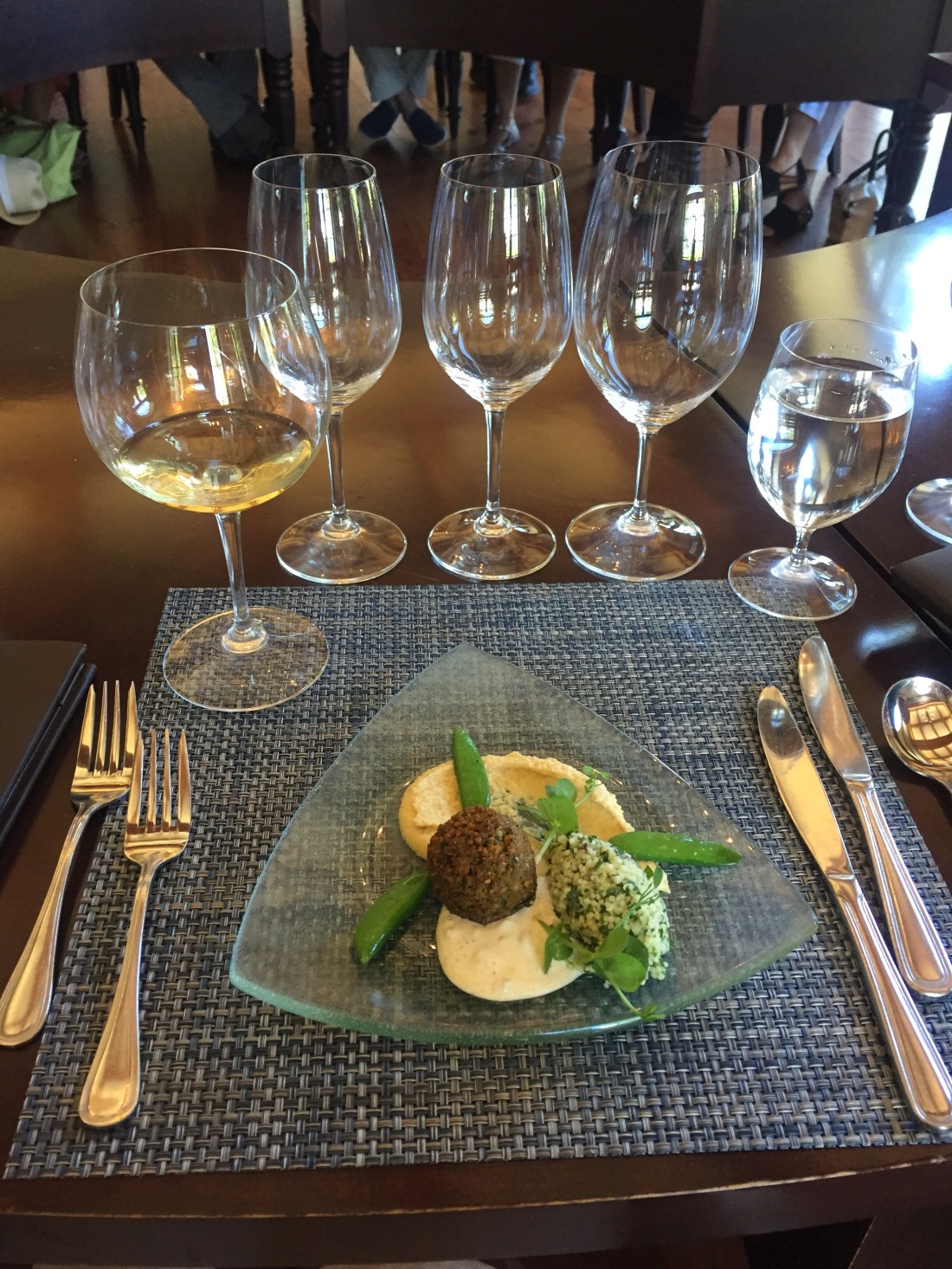
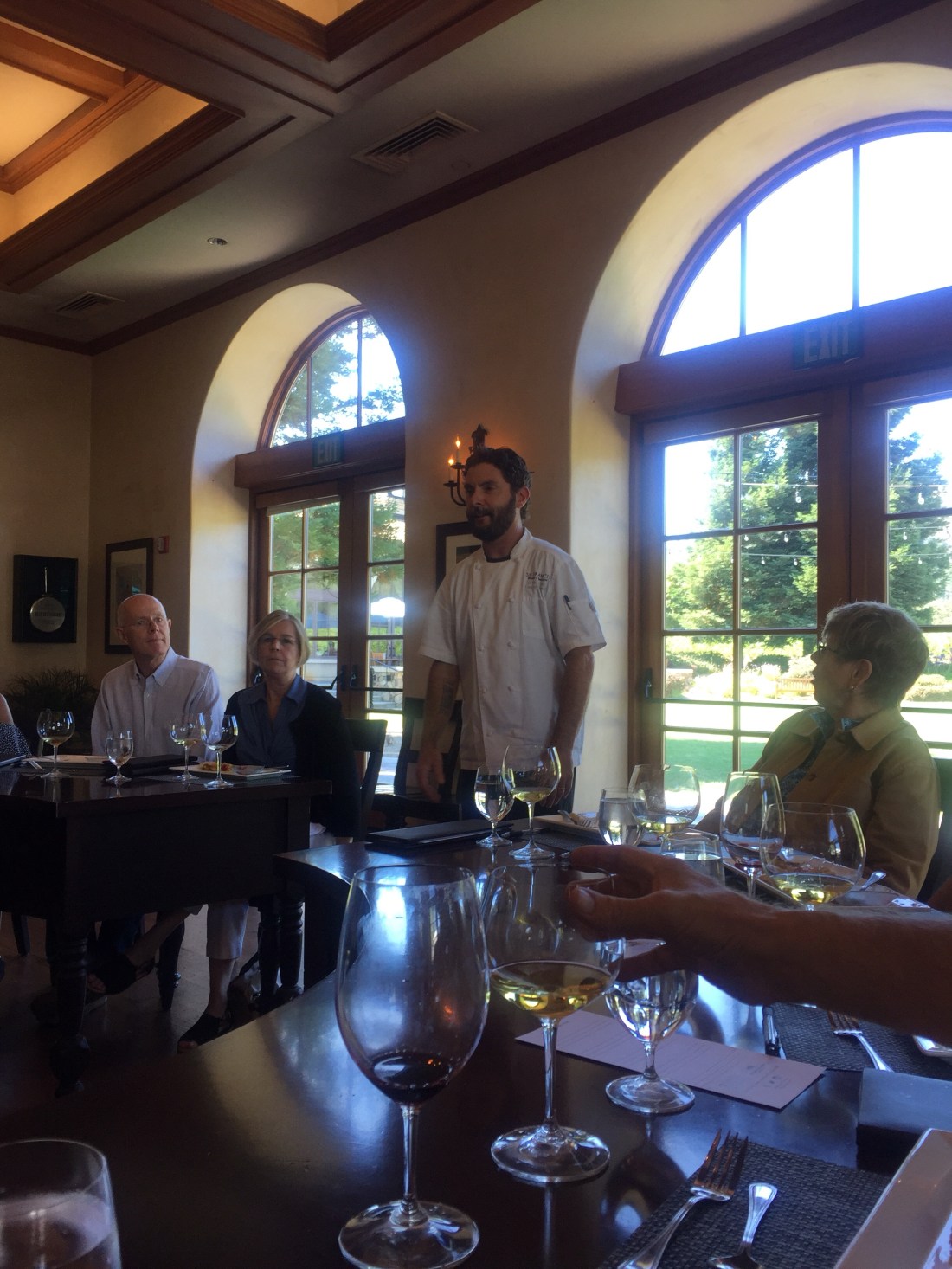
Once it was time for our booking, we were welcomed into the luxurious tasting room.  Our two hosts explained the wine making process, educated us about the grape varietals, and gave tasting notes for each of the 4 wines that went with our dinner courses, and the 5th wine, specially paired with dessert.  In a traditional pairing situation, the food is the star, and the wine is selected to enhance the meal, but at St. Francis, the chef has done the opposite.  He has designed a well thought out menu to showcase the specific taste profiles of each wine, and very successfully so.  He greeted us after the meal to personally answer our questions.

Upon finishing the tasting, my husband and I began to make our selections for purchase.  As participants in the tasting, we were given an additional 15% off of our purchases, which turned out to be a pleasant surprise.  St. Francis has a large selection of varietals and blends to choose from, and they kindly allowed us to taste some additional wines that hadn’t been a part of our lunch pairing.  We found their prices to be reasonable, and left with a full case of some of our favourites, and a special gift for our friends who introduced us to St. Francis in the first place.

Our visit to St. Francis was a highlight of our trip, and I would recommend the investment of time and money there; it doesn’t disappoint!

Summer Yoga Experiment – Week One

The discipline of Yoga, an ancient spiritual, mental and physical practice, was a taboo topic in my church upbringing.

I feel I have to be very careful in verbalizing my stance on Yoga.  I’m part of a circle of people who are extremely divided on the subject.  I’m not promoting Yoga for everyone, nor am I judging it all as evil.  I’m simply embarking on an experiment to see if it can help me as much as it has helped others I know.

I made a goal to attend Yoga four times this summer.  To dedicated Yogi’s out there, I bet that seems like a small number.  To me, it seems like a huge, but manageable goal.  As a fitness instructor, who does weight training, I have muscles that are often tight and sore.  I’m at the gym regularly, and I seldom feel like making time for extra stretching or Yoga.  My flexibility is not increasing, and my recovery time is becoming longer, hence the Yoga experiment.  I was in a car accident in the fall, and got whiplash that persisted for months, despite the more than weekly massages and physio.  Many claim that Yoga has helped them manage pain, and heal from various injuries.  I am also in a season of big life change, and could use some focused relaxation time to de-stress.

In the church, Yoga has been seen as anti-Christian, too new-age, or even demonic.  A simple Google search on “yoga and the church” brings up titles such as “Church Bans Yoga because it is Non-Christian,” or “Should Church Buildings be used for Yoga Classes?”

Here’s what WebMD says about the fitness benefits of Yoga:

“Workout fads come and go, but virtually no other exercise program is as enduring as yoga. It’s been around for more than 5,000 years. Yoga does more than burn calories and tone muscles. It’s a total mind-body workout that combines strengthening and stretching poses with deep breathing and meditation or relaxation” (www.webmd.com, July 25/18).

Hmm.  As a Christian, do I participate in Yoga for the physical benefits, or do I steer clear altogether, just in case?  The answer to this question isn’t simple.  Rather than a black or white, yes/no decision, I believe the answer is very grey, and is different for everyone.

I signed up for my first Yoga class while I was in University.  I was talked out of going to it by some well-meaning family members, who convinced me that it wasn’t right for me.  Ironically, those same family members now practice Yoga as they’ve discovered how much it has benefitted their health.  They’ve experienced relief from nerve problems and other ailments, through Yoga.

About a decade ago, the church I was attending brought in a practice called “Holy Yoga.”  I practised my first yoga class there, and found it to be mentally and physically relaxing; it increased my flexibility, and I was able to connect spiritually with God.  I continued to attend Holy Yoga, until the church cancelled it, due to the overwhelming amounts of negative feedback from several members; people were leaving the church over the fact that Yoga was happening on a weeknight, in the building.

A couple of years later, I tried Yoga again, when I got a gym membership, and discovered it was included at no extra cost.  In the first Yoga class I went to, the teacher had an idol at the front, and he encouraged participants to pray to it.  I respectfully refrained.  As that isn’t something I’m personally interested in, I chose a different teacher the next time. That class was very fitness focused, and helped me loosen up my tight muscles and joints, and relax.

Today, I embarked on the first class of my summer Yoga experiment.  I woke up early, got warmed up a bit first, and then entered the Yoga room and waited patiently.  The teacher was seven minutes late.  That wasn’t a great start, but I put it out of my mind and prepared myself to be open to the experience.

She began by taking requests for certain areas people wanted to work on.  Several participants asked to focus on lower back, so we spent the first part of class loosening up the lower back with a variety of stretches, lying with our backs on the floor.

I was a bit distracted by the lady next to me, who was breathing so loudly, I’m sure everyone in the room could hear it.  She also fell over a couple of times, but that’s okay; I’ll probably fall over one of these days too!  I tried to tune her out and focus on relaxing my own body, and enjoying the relief of my lower back tension.

We spent the remainder of the class opening up our hips, shoulders, and hamstrings.  I wouldn’t consider myself to be very flexible, but I was surprised at how much I was able to move after an hour of being in a warm room, committing proper time to each stretch, breathing through the movements, and slowly relaxing into them.

How do I feel now that it’s done?  Physically, I feel looser, and more relaxed, for sure.  My hips and hamstrings aren’t as tight as they normally are.  My neck cracked at least a dozen times during the class, so I’ll be interested to see how it feels throughout the day, and tomorrow.

As for the mental and spiritual aspects, I was able to focus my mind on my body, instead of letting it run away with anxious thoughts about things I can’t control.  I found moments to pray, and be grateful for the blessings I have in my life.

I wouldn’t say this was the best Yoga class I’ve ever been to, but it’s only week one.  However, I would say it was worth the benefits I got from giving up a bit of sleep, and an hour and a quarter of my time.

I’m curious to hear of your Yoga experiences, and any benefits you’ve found in those experiences. Thanks for reading, and “Namaste.”

Why Can’t He Have a Beard?  It’s Not Your Face.

I can’t count the number of times I’ve heard a wife or girlfriend say, “I won’t let my husband have a beard.”

The comment is usually followed by some explanation of why their statement is valid, but the usual reasoning can typically fall into two categories.  They either don’t like how it looks, or they don’t like how it feels.  I guess that’s one category.  The guy can’t have a beard because his wife doesn’t like it.  I’ve not yet heard a woman give a selfless reason such as, “he’s succumbed to the peer pressure of the trend, but actually hates it, and I’m his scapegoat,” or “the doctor said he’ll die if he doesn’t shave it off; I’m saving his life.”

What’s worse, is I have heard comments about how a wife will allow the beard to disrupt their sex-life.  “He knows that if he doesn’t shave, he’s not getting any.”  I’m serious.  That’s been said, in so many words, more than once to me.

Here’s my problem with these types of statements.  Is a marriage type relationship ever going to be at its healthiest when one person exercises control over the other?  When one attempts to manipulate the other?  I’ll be the first to admit that I love to have control in my life; I’m one of those Type A, super organized planners that loves being in control.  I’ve been on a journey of learning that I can’t control my life, no matter how much I try, and that I can’t control my husband.  It’s not beneficial for me, him, or our marriage when I try and control him.

Woah, Chelsea, you started talking about beards and now you’re onto control and manipulation in a marriage?  That’s not what I was expecting when I clicked on this article.  It’s just a beard!

Hear me out.  In my marriage, I often try and think about each situation we disagree on as if I were in his shoes.  He will do this for me too, which is important in a partnership.  Just humour me on these next few examples.

How well received would it be if today’s men were out there saying things like, “I would never let my wife get highlights.  Gross.” “She thinks she’s going to sleep with me with those shorter layers brushing against my face?  Forget it.”  “I’d never let my wife wear make-up.  I don’t like how it looks.”  Um… excuse me?  It’s not the 1900’s anymore.  This would not fly with us. So why do we think we should tell our men what they can do with their faces?

My husband’s face is not my face.

Yes, I have to look at it a lot more than he does, but he has to own it, be it, live it.  Can I make suggestions to him as to what my preferences are?  Absolutely.  “Honey, I really like it when you keep your beard trimmed and well maintained.”  Can I purchase him a gift card for a barber shop if I think it’s looking a little ragged?  Yeah, I can.  He might take my suggestions, or he might not. If you have a husband like mine, he would.  He would shave or cut his hair and beard into anything I asked him to, if it were important enough to me.  He also knows that I would do the same for him, if it were important enough to him.  He supports me in my style choices.  Whether he prefers them all or not is a different story.  So why shouldn’t I support him in what makes him comfortable and confident in his appearance?

Okay, let’s be honest ladies.  Some beards are legitimately so ugly.  They are.  I’ve seen wretchedly awful beards on guys (or maybe they just seemed wretchedly awful to me).  I’ve seen food stuck in there (snacks for later?), I’ve seen longer beards than I can get my hair to grow (jealous), and I’ve seen all kinds of patchiness (my husband would attribute that to character, and encourage those guys to keep going with it).  Maybe they just don’t realize their beards could look better, and a simple suggestion or tip on beard care could be all they need.  Maybe they’re loving it that way and rocking it.  In that case, I’d say, “you do you!”

Can we admit that some beards look great?  Some men can really pull them off, especially if they’re taking care of them.  The beard trend became a thing sometime in the last few years, and a lot more guys are sporting them.  There seem to be an infinite number of new styles for beards.  There have been many new barber shops springing up to help men trim their beards into fashionable, well maintained, clean looking designs.  Men with beards have the option to choose a haircut and beard combo that can make them look their best.  Basically, guys with beards get to have TWO haircut styles going on at the same time.  Now that’s impressive.

Barber shops are also there to set beard enthusiasts up with the right products for daily care.  These products help keep beard hair looking shiny and healthy, and feeling soft, and I’ll tell you – lots of them smell great.  We all love a hair-spray that smells great, so we can understand that this is important.

I’ve got a family and friend group full of beards! My three brothers-in-law and my Dad and father-in-law all experiment with their facial hair. Apparently I cried in horror as a child the first time I saw my Dad shave his moustache off! Facial hair can really change a man’s look.

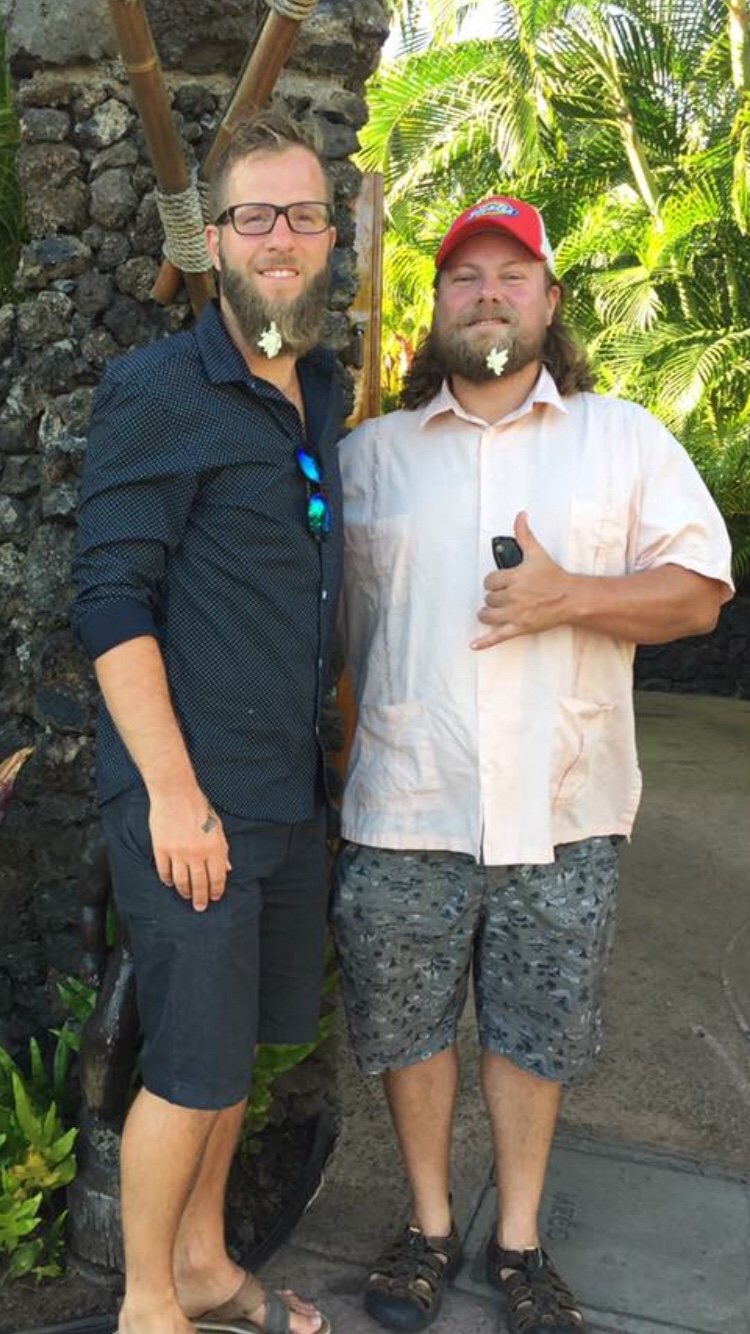
My husband’s facial hair has changed a lot through the years I’ve been with him. Sometimes it has looked great, and sometimes, it really hasn’t. At all. I’ve included a variety of photos in this article to give you an idea. What hasn’t changed through the years is how much I love him, regardless of his facial hair choices. Did I give him a hard time for some of these? You’d better believe it! He took it in stride and appreciated the joke.

If you’re one of those women who hates beards (or other facial hair for that matter), I challenge you to really think about why you hate them.  Getting to the bottom of why I feel a certain way about anything, big or small, always helps me to learn more about myself.  Do you hate beards on all men, or just your man?  Could you try having a conversation with him about it to hear his side?  Could you be flexible on his beard, if it meant your guy would be happy and secure in the way he looks?  Even if this article hasn’t given you an appreciation for beards, I hope it’s given you something to think about the next time you see one.

Visiting Napa Valley; Helpful Tips to Plan Your Trip

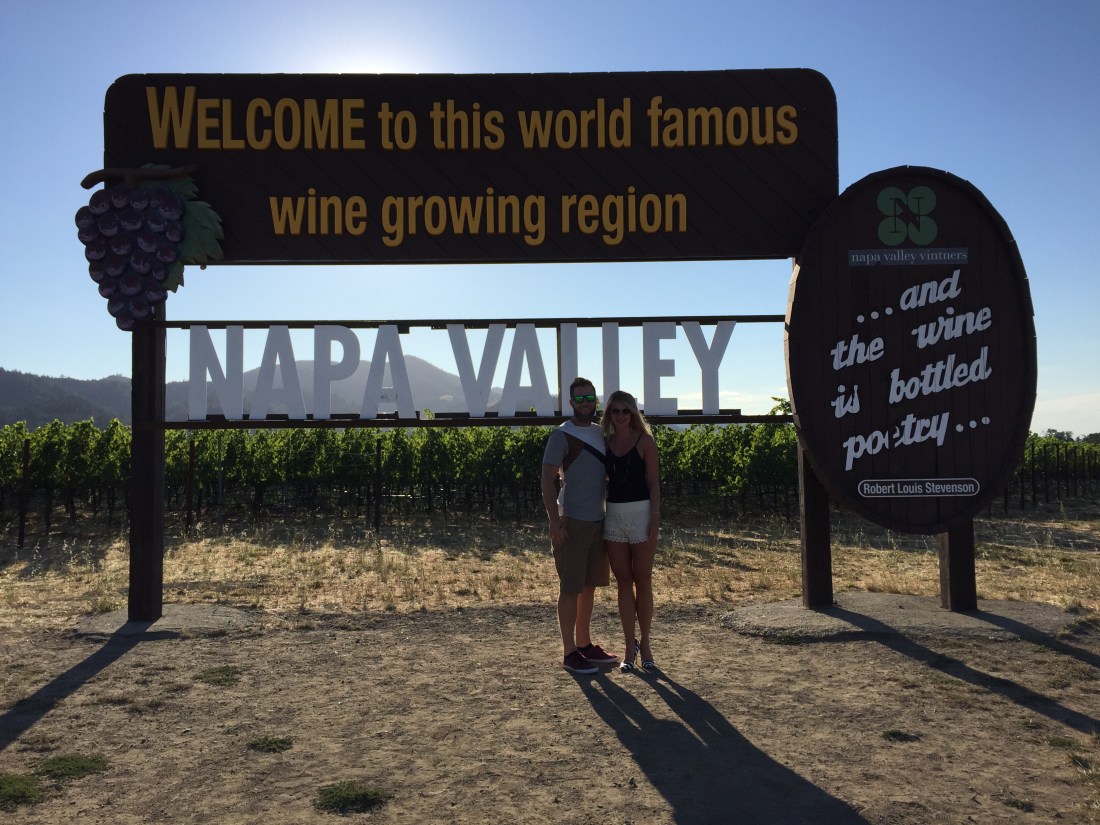
If you’re a wine enthusiast, California is a must see destination to expand your understanding of one of the most well known wine regions in the “New World” (not Europe).  It can also be a bit overwhelming to visit if you’re like most travellers who have only so much time and money.  How do you choose what you’re going to enjoy the most, and what’s worth every hard-earned dollar?  My husband and I visited several California wine regions in the summer of 2017; hopefully our experience can help you make the most out of your trip.

Napa Valley is world renowned for producing some of the best wine, and most expensive wine, in the world.  I won’t get into specific wine details in this article, but instead, will focus on the travel aspects of a trip to Napa Valley.  So get your palates prepped, pack some chic, warm weather clothes and shoes, and get your wallets ready for Napa Valley exploring!

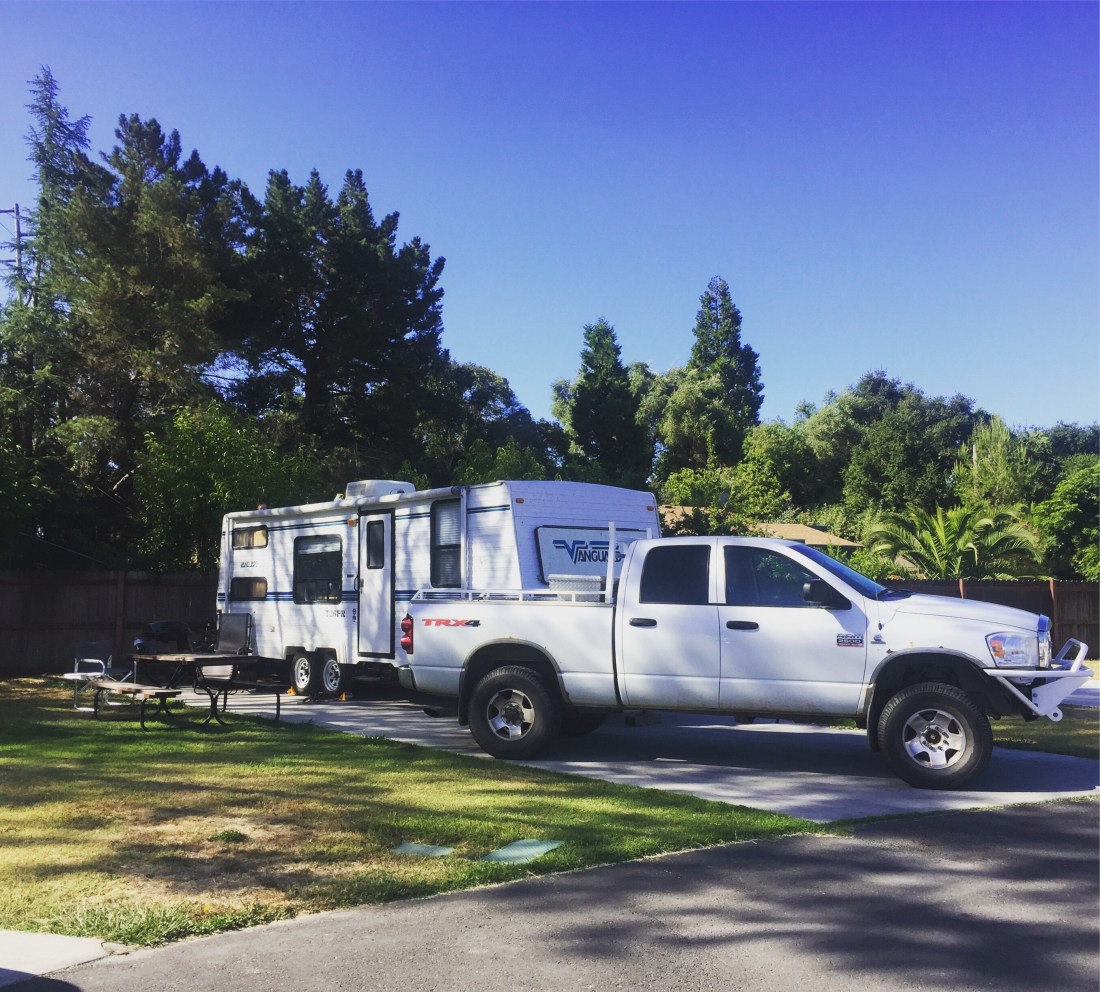
We drove from Canada, with our travel trailer, down the Oregon coast, and through the Northern Part of California.  It took us two days to reach our first destination, the Napa Valley Expo RV Park.  The RV Park is located right in the town of Napa, which is a great town to be based out of to explore this region.  If you enjoy RV-ing, I would recommend this park.  The staff was friendly and helpful, and even gave us a coupon for some 2-for-1 Tastings and winery recommendations.  It was clean, and had full hook-up sites for a reasonable price.  It was also within easy biking distance of Napa’s downtown, and close enough walking proximity as well.  If you’ll be staying in a hotel, there are many to choose from near Napa’s downtown.

I would highly recommend staying in Napa; we felt we were central to so many different areas.  Napa Valley and Sonoma Valley run parallel to each other, divided by a mountain range, and Napa is at the bottom, so it’s a great starting point to go up either valley from bottom to top.  San Francisco can also be reached by car in less than an hour and a half, as another sight seeing option.  Napa itself has much to offer, with a beautiful and quaint downtown alongside a river.  There are several restaurants and shops, and so many tasting rooms!  The town offers a tasting card that can be picked up at one of its two Tourism offices, that allows you to taste at a discount in several tasting rooms, all within walking distance of each other. It can also be ordered online at donapa.com.  This is a great way to cover more ground in a shorter time if you’re curious to expand your palate, and you need a break from driving.  We only had the later half of an evening to spend doing tasting rooms, so we chose not to purchase the card, but if we had more time, it would have been worth it to buy.  More information on the tasting card and the town of Napa can be found at donapa.com.

If you’re flying in, there are a few different airports you can choose from, with different shuttle or car rental options.  Information on airports can be found at napavalley.com.  Depending on your budget and comfort level behind the wheel, having a car is great when you’re touring wine regions.  That being said, you will want to think about how much wine you’re planning to be consuming.  As I’ll discuss in greater depth later, they’re not exactly under-pouring in Napa and Sonoma, and you could easily be over the legal driving limit after your first winery stop if you’re consuming everything you’re poured.  If the spittoon is your friend, you’ll find you get to taste a lot of great wine without over-indulging.  If you’re thinking, “what’s a spittoon?” then you’ll want to explore other options than driving yourself.

If you have someone in your group that’s okay being a designated driver, then a car rental is the most budget friendly way to see Napa and Sonoma.  You have so much more freedom when you’re in your own vehicle to enjoy the days at your desired pace, rather than waiting on the rest of a tour group, or facing the opposite problem of being rushed away from a place when you’re not done there.  If you’ve got no DD, there are a few options you can use to explore the Valley.  There are multiple tour options, depending on the wineries you want to see, how long you want to be out, how many people you’d like to share a ride with, and what your budget is.  You can choose to hire a driver for the day, and still enjoy your privacy, or you can choose to go with the tour group route.  A Google search for “Napa Valley Wine Tours” will lead you to several companies to choose from, with customer reviews.  The same options are offered for Sonoma Valley as well.

When I first glanced at the Napa Valley tourism map we picked up at our RV Park, I remember feeling overwhelmed.  There are over four hundred wineries in Napa Valley alone.  Highway 29 runs from the top of the Valley, down to the town of Napa.  There are wineries the entire distance on both sides, and then there are more behind those, with access by side roads.  We only had three days to spend in Napa Valley, and had no idea how long to expect to be at each place, or which ones were going to be good.  I had purchased a Priority Wine Pass at prioritywinepass.com that allowed us 2-for-1 Tastings at several wineries, so we highlighted several of those on the map as a start.  We then looked into the opening and closing hours of each of them, and planned to start at the bottom-most one we wanted to see, and work our way up the valley.  We had the benefit of driving through the Valley on our way into town, so we had been able to get a feel for how long it actually is from top to bottom, and the whereabouts of certain wineries we wanted to visit.  It took roughly 30 minutes, dependant on traffic, to drive the entire length of the Valley.

We had heard from people that you can’t do more than three wineries in one day.  We did six on our first day in Napa.  We’re probably more on the extreme end of the spectrum; I don’t think most people would do that many in one day, but we started right at 10am, and went till 6pm, with a quick stop for lunch in the middle.  We also didn’t do winery tours on that day; if you’re doing a tour, you can expect to spend an additional hour at each place.

Most wineries open at 10am, and close at either 4pm or 5pm, but some are open later.  We had looked into this ahead of time to plan accordingly.  We also spent more time at the wineries we really enjoyed, and made a couple of quicker stops at the ones we felt we had seen enough of.  Your start time, end time, and pace is really going to determine the amount of wineries you can see.  We are also extreme wine enthusiasts/wanna-be sommeliers, so we have a high stamina for tasting wine and visiting wineries, and we’re accustomed to using the spittoon.  It may not be enjoyable for you to see more than three in a day, so take your personal and group interests into consideration when planning.  Some wineries do tasting by appointment only, so you need to look into this if you want to visit any of those.  My advice is to choose a few that look interesting to you, and visit their websites.  Napa Valley wineries are in the business of tourism; they expect visitors on a regular basis, and are set up for visits and tours, so they have great websites with all of the information you need to know to help you plan your visit.  Investing some time to explore individual wineries online will prepare you for when you arrive.

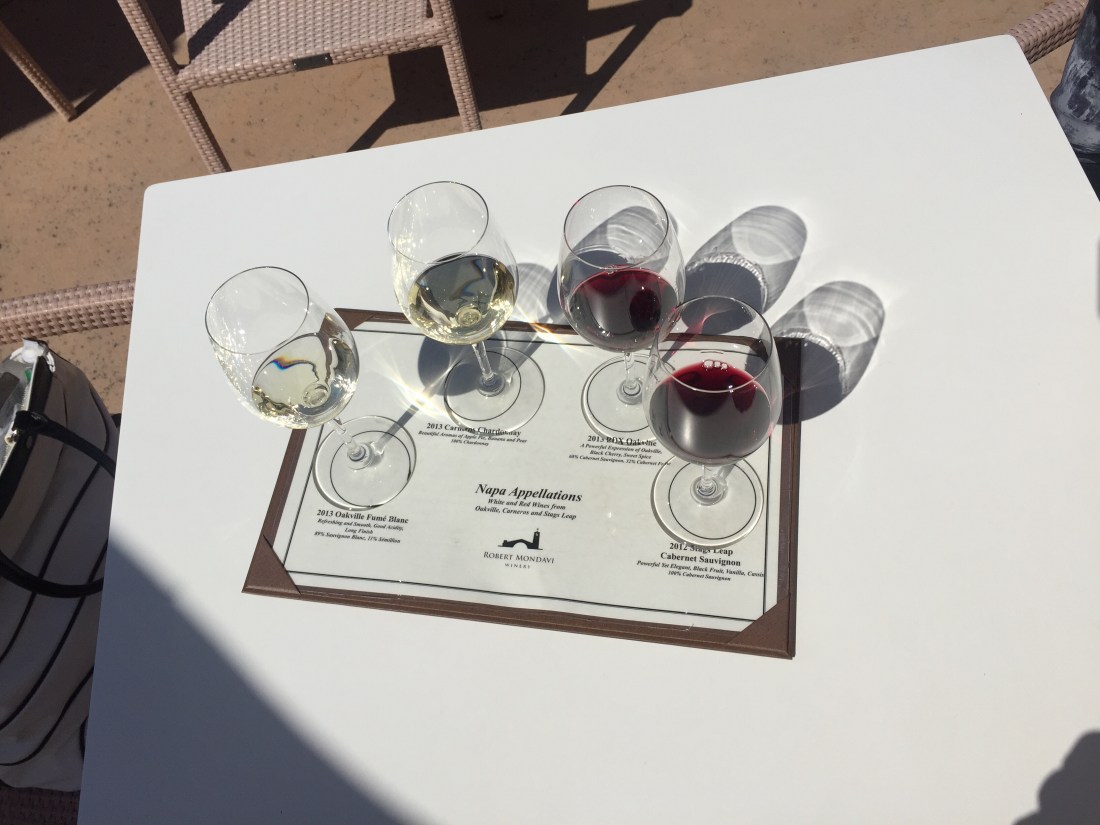
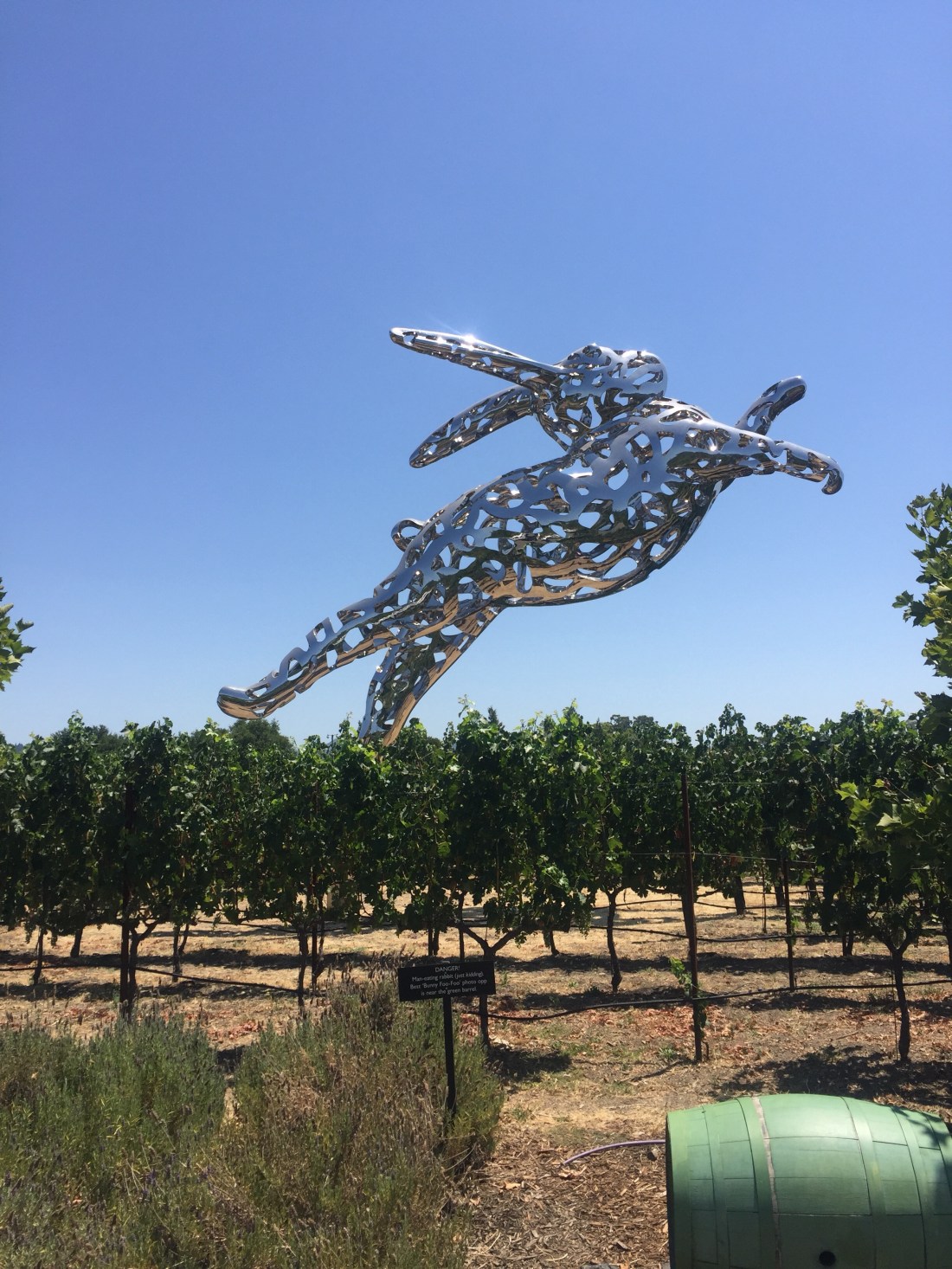
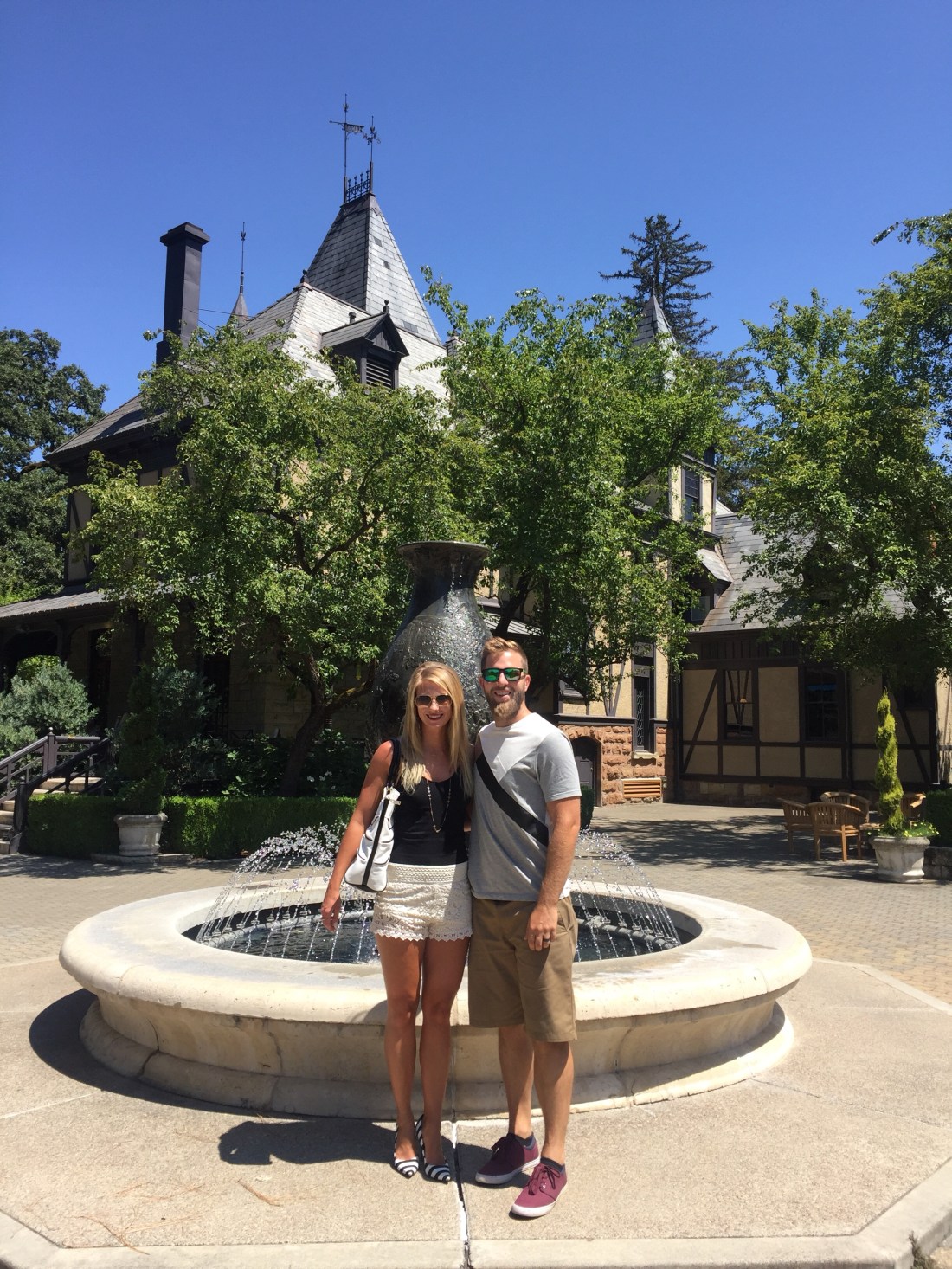
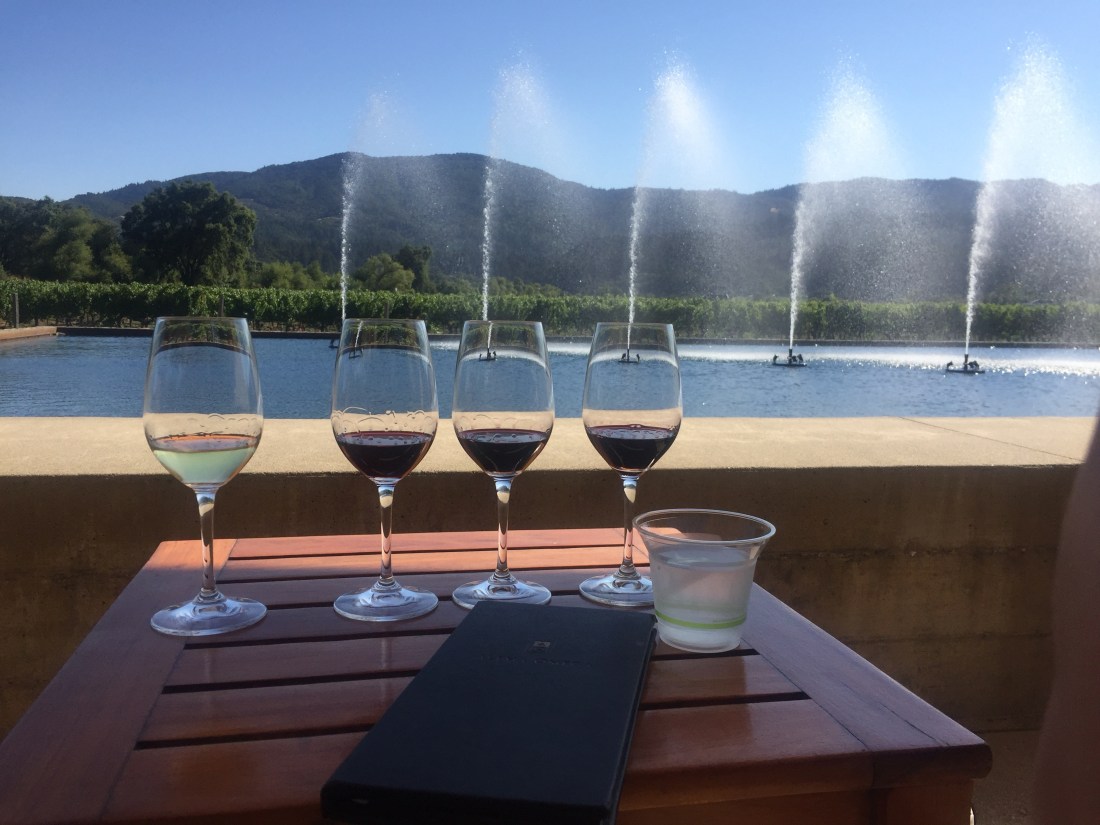
Budget is another consideration when planning your winery visits.  Take a look at websites to see what their tastings are offered for.  If you have the Priority Wine Pass, the 2-for-1 Tasting option can save you a lot of money.  If not, you can expect to pay anywhere from $20 per person up to $50 per person for a tasting, or more depending on the level of prestige of the winery you select.  Tours, of course, come at an extra cost, but many tours will come with a tasting at the end.  What do you get for that price?  Each winery does it a little bit differently, but basically, you can expect a flight of 3 – 6 wines, at roughly a 2 oz pour each.  If you do that math, you’re getting 6 to 12 oz of wine for the price you’re paying.  I found that the prices we paid were similar in comparison to what we’d pay in a restaurant for a serving of that quality of wine.  In addition, you’ll receive the experience of knowledgeable sommeliers to guide you through your flight.  They will teach you about the history of the winery, the region, the specific grapes you have in your glass, the process used to make the wine, what you might notice about it, and they can answer a variety of other questions you might have.  They also don’t rush you!  You can choose to stand at the bar if you wish, or you can choose to take your wine out onto the patio, where you can relax at a table in the sun or shade, and take in the view of the vines that grew the drink you’re currently enjoying, and the multi-million dollar estate (I recommend this option)!  I also recommend taking pictures of the wines you’re trying as a catalogue.  The wine estates are so beautiful, that you may want to take photos of the buildings, which could be considered art, the landscaping, scenery, and some of yourselves while you’re there too!  Once you’re done, there’s no pressure to purchase wine, as you’ve already paid for your tasting.  If you like it, buy it; if you don’t, don’t!  Before you leave, take a swing through the gift shop to look at the souvenirs and wine swag, and then you’re off to the next one.

Wineries I would highly recommend visiting:

• If you want well known places, visit Robert Mondavi and Beringer.  They have wine in stores all over the world, but this is not the stuff you taste at the wineries; when you’re on site, they’ll pour you award winning wine that’s made in smaller quantities, specifically from Napa Valley vineyards.  Expect it to cost a lot more (and taste a lot more complex) than the “Woodbridge” by Mondavi and Beringer wines you find in your local liquor store.  No appointment necessary for tastings; tours are offered.  Check out their websites for details.

• For a more affordable winery, visit V.Sattui.  They only sell from the winery, and this allows them to have smaller price tags than many of the others.

• For a piece of history, visit Grgich Hills Estate.  This is a smaller place, that isn’t as flashy as some of them, but it’s a great one to visit because of whose winery it is!  Mike Grgich was the winemaker for Robert Mondavi when his Chardonnay won the Paris Tasting in 1976, putting Napa Valley officially on the map as a reputable wine producing region.  It’s thanks to those two men that Napa Valley was finally given some credit by the European winemakers of the “Old World.”  Oh, and their wines are fantastic!  No appointment necessary here.

• For a luxury experience, visit Opus One!  This one was out of our budget.  Make sure you look into making an appointment here.

• Hall Wines and Alpha Omega also gave us great wines, and great experiences!  They both have beautiful grounds that you can sit and enjoy while you taste.  They served us a variety of wines, and let us choose the types we wanted to try.  We got to taste some of their highly awarded, prestigious bottles, included with our tasting fee, regardless of bottle price.  Having only done tasting in Canada before this trip (where tastings are free, but they never let you try the really good stuff) we were pleasantly surprised to get to try the best of the best.

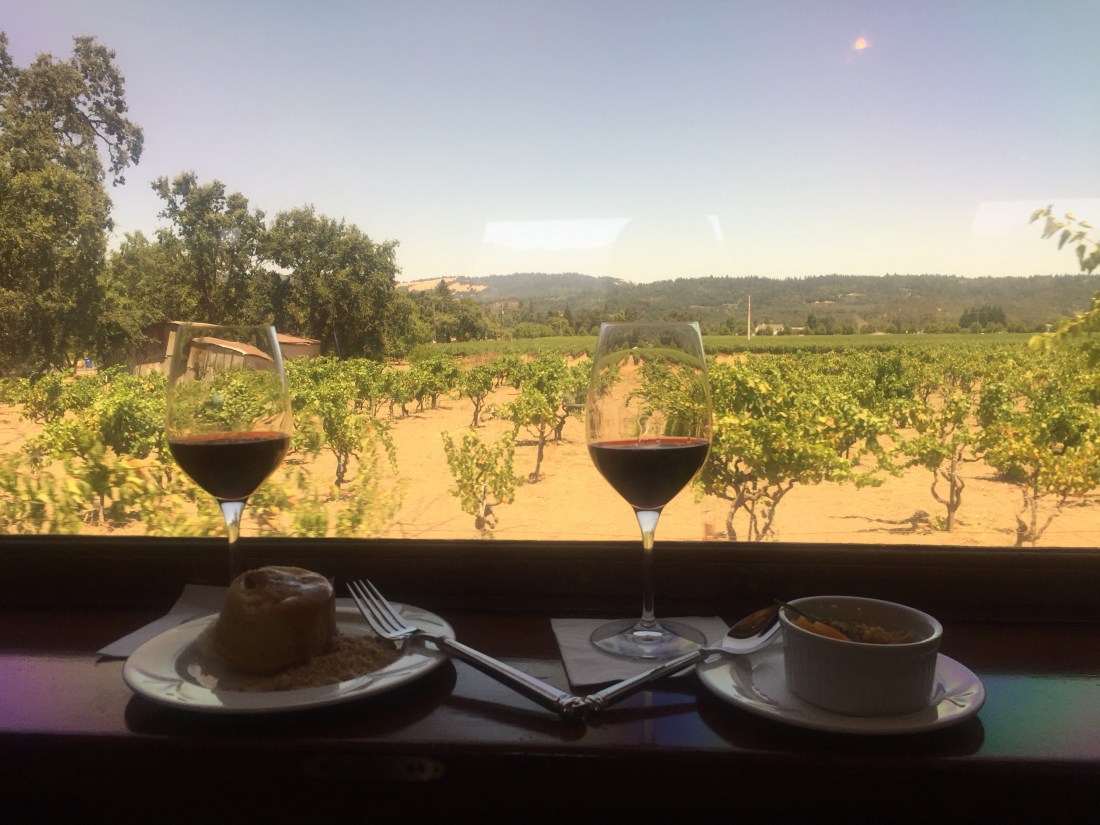
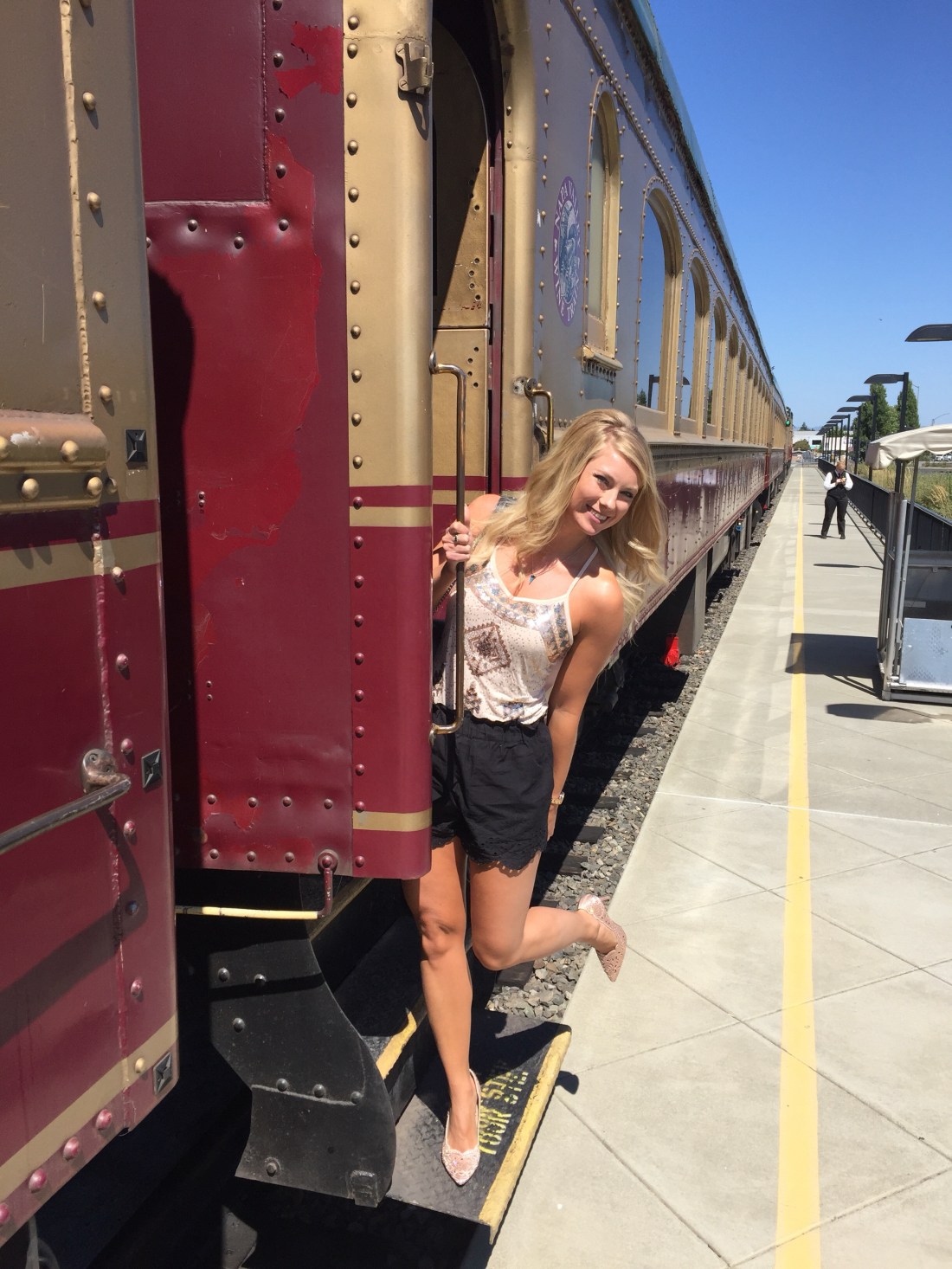
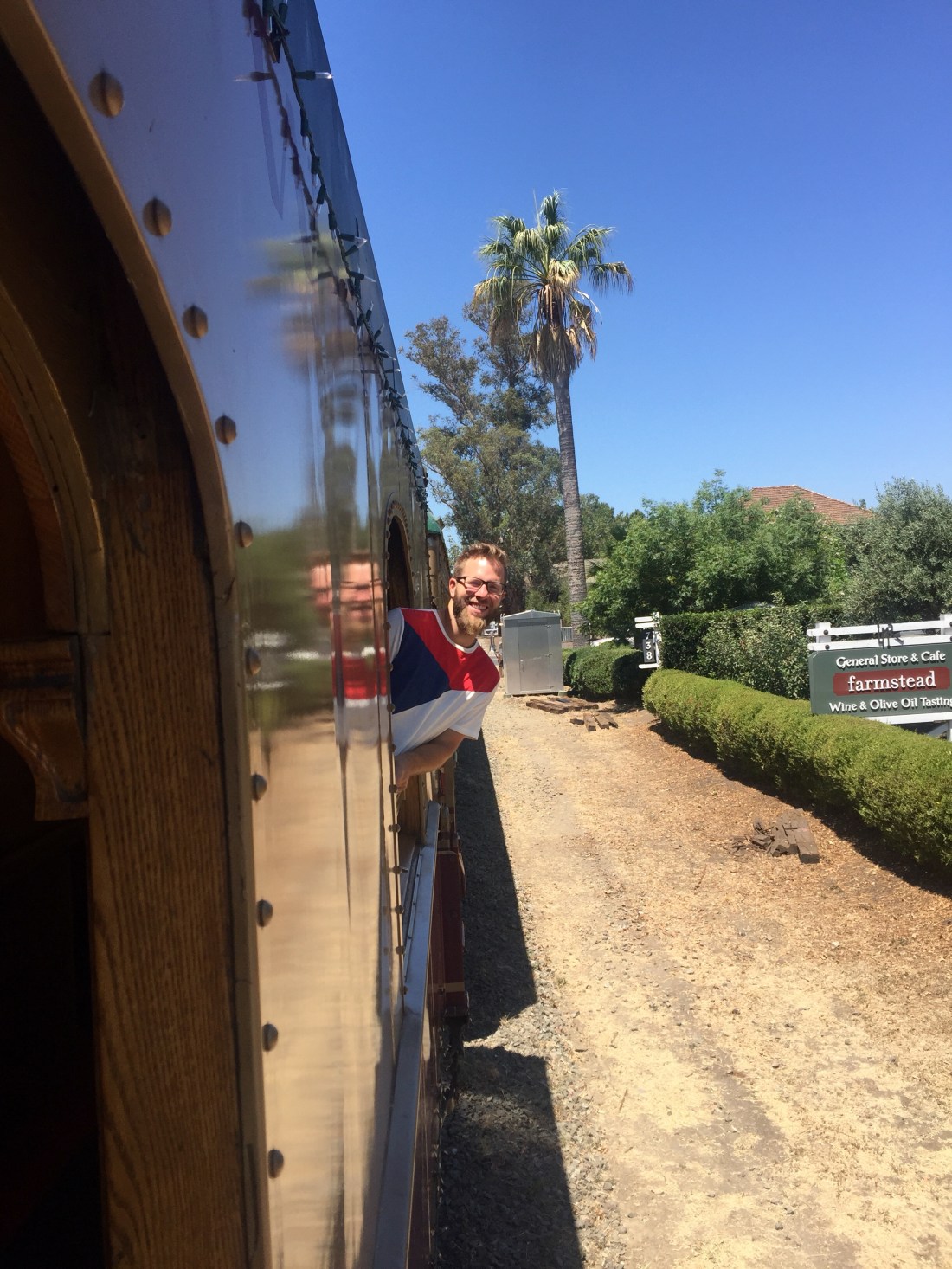
On a final note, a great highlight of our trip was our lunch on the Napa Valley Wine Train.  The company offers a variety of services for a range of budgets and occasions, including dining journeys, special events, and day trips, where it will stop at several wineries for the patrons to have a visit and taste before getting back on the train.  As promoted on their website, the train is “part distinctive Napa Valley fine dining restaurant.  Part museum, it’s made up on exquisitely and faithfully restored vintage early 20th century Pullman cars… You get to sit back, relax, and savor every delicious bite, every bit of extraordinary scenery, every taste and tour” (winetrain.com, July 23/18).  Having ridden the train ourselves, we would agree fully with these statements.  The food was delicious, and they were excellent with catering to my food allergy.  The cars were beautiful and comfortable.  The service was top-notch; not only were they attentive and timely, but they were friendly and very knowledgeable about the Valley, offering interesting information about significant landmarks as we passed by.

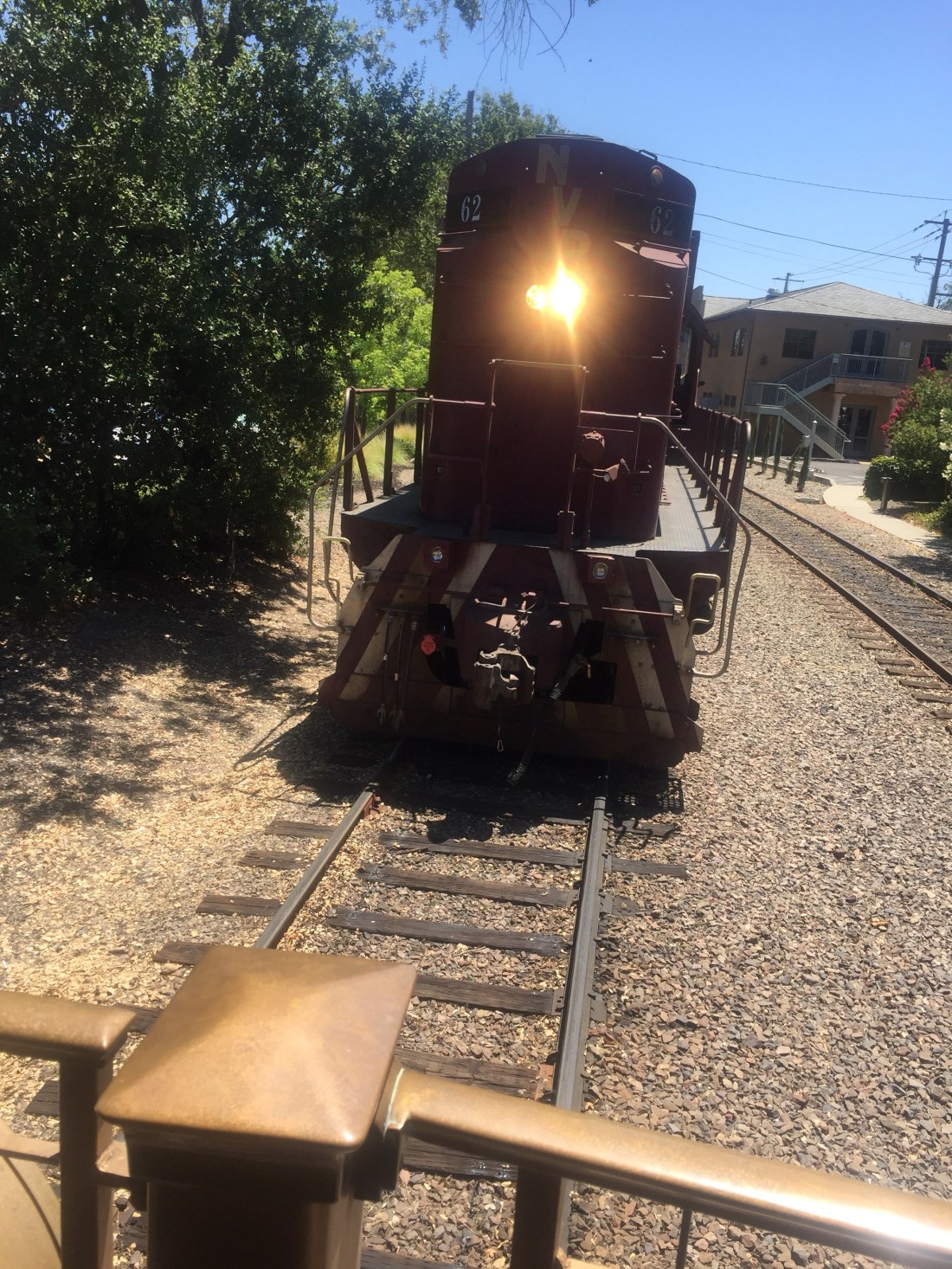
The staff of the Napa Valley Wine Train have this experience fine-tuned to give their guests a memorable and smooth ride, pun intended!  The train station is in downtown Napa, and was easy to bike to from our RV Park.  We arrived early to present our tickets, and then were invited to wait in the large, comfortable lounge, with the option to purchase pre-boarding drinks.  Once it was time to board, we were assisted in finding the right car and table.  Every table is a window seat.  Wine is offered by the glass, or the bottle, and they have several selections if you’re going with the bottle option.  We were served our dinner courses while riding up the Valley for the first hour and a half, at a comfortable pace.  The train stops at the top for the engine to move from the front to the back, something we went to the back to watch!  On the return trip, we were seated in a different car, on the opposite side of the train, in order to see the scenery on the other side of the Valley.  We had dessert and after dinner drinks and coffee on this side.  There was plenty of time in between dinner and dessert for us to explore the train.  They have open air cars where you can get some fresh air and have an even better photo opportunity of the wineries and vineyards.  As I mentioned before, this was a highlight of our trip, and as they have so many options to choose from, I would try another type of journey if we were to return to Napa.  Expect to give a couple hundred dollars for your ticket, but in return, you’ll get over three hours of fine dining, grand service, a museum experience, a guided tour of the Valley, breathtaking views – oh, and of course, you’ll drink Napa Valley wine.  You’re not driving either; no spittoons here!

No matter how much time you spend in Napa, there is never enough time to see and do it all.  It’s a warm weather and wine-lover’s paradise, and I would be thrilled to go back.