A Day in the Life; What Working in the Wine Industry Actually Looks Like for Greg

You all know we’re “working in the wine industry,” but we’ve been getting lots of questions about what we actually DO all day, our hours, colleagues, wineries, etc., so if you’re interested in the specifics, read on, and I’ll walk you through what Greg might do during a typical day or week. (I’ll post a separate blog for my typical week as they’re quite different!)

Greg works at Linden Estate Winery as a Vineyard Hand and Cellar Hand. For right now, he’s working Monday to Friday, 8:00 to 4:30. (This will change during harvest time.) The guys take coffee breaks, which they call “smoko,” in the mid-morning and the mid-afternoon. Linden provides basic coffee and tea for them, but Greg brings his own lunch.

He works with a small team at Linden, which he loves, because he gets to actually do a little bit of everything. Trevor is the Head Winemaker, and Alex is the Assistant Winemaker. Greg works closely with Alex most of the time, but spends a great deal of time with Trevor as well. There’s another man who drives the tractor and does most of the spraying and trimming of the vines.

Linden has a small Cellar Door, with only one full time Cellar Door host, and another office manager that helps as well. Greg doesn’t see them too often as he’s not in the Cellar Door.

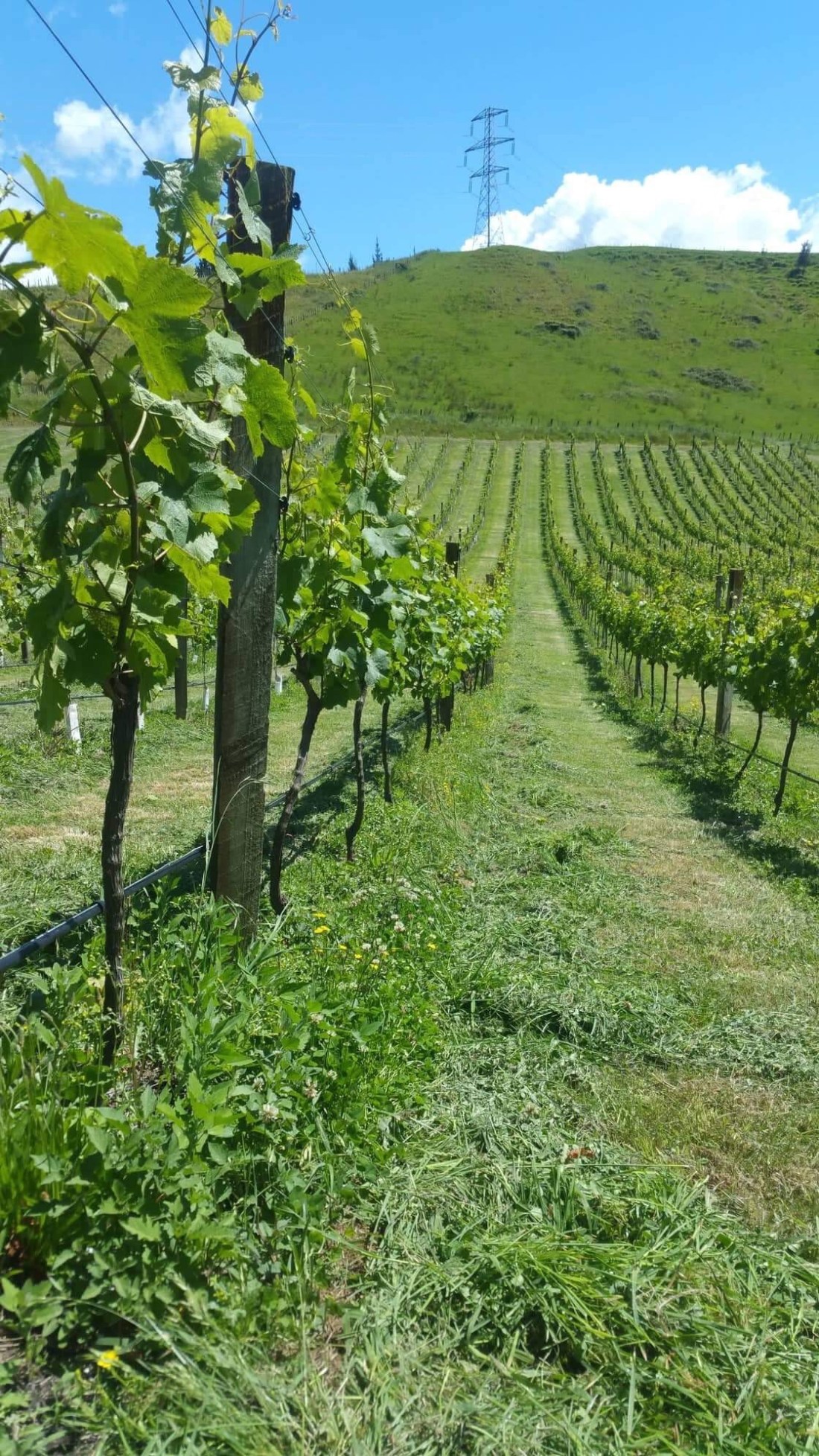
As Greg works with the vines, his daily tasks are constantly changing with the stage of growth of the vines and grapes; the weather has an impact too. His vineyard has recently added some new blocks of vines, so their young vines need appropriate trimming to keep them growing upwards instead of outwards; they are too young for spray, so they need to be weeded manually. The guys go by hand and break off all the extra shoots that are not the main shoot of the vine.

The grass needs mowing in between the rows every so often in all of the blocks. This is part of Greg’s job.

As the more mature vines are growing, they grow like a bush and the branches spread out, but they need to grow straight up. There are wires in the vineyard that keep all of the rows contained. The branches that grow out need to be pushed back into the wires. Greg helps when the vines get taller and the wires need to be pulled up; this process is called “tucking,” and “lifting wires.”

(Pictured above is a comparison of vines that need to be tucked, versus cleanly tucked vines. The wires I mention are shown more clearly in the second photo.)

A few times per season the vines also require what’s called “bud rubbing.” Vines grow out of everywhere, even on the stumpy looking part of the vine at the bottom. If they were left there, they would grow up and cover the fruit from the sun, which wouldn’t allow the grapes to ripen properly. Vintners also just don’t want too many shoots growing because the more fruit a vine produces, the lesser the quality of the fruit. Wine will have more concentrated flavours and complexity if the vines only produce a small amount of fruit that they can invest all of their energy into. In order to prevent these extra shoots from growing, Greg will go from vine to vine and snap off any little shoots that are appearing, and rub off any buds that are beginning to show.

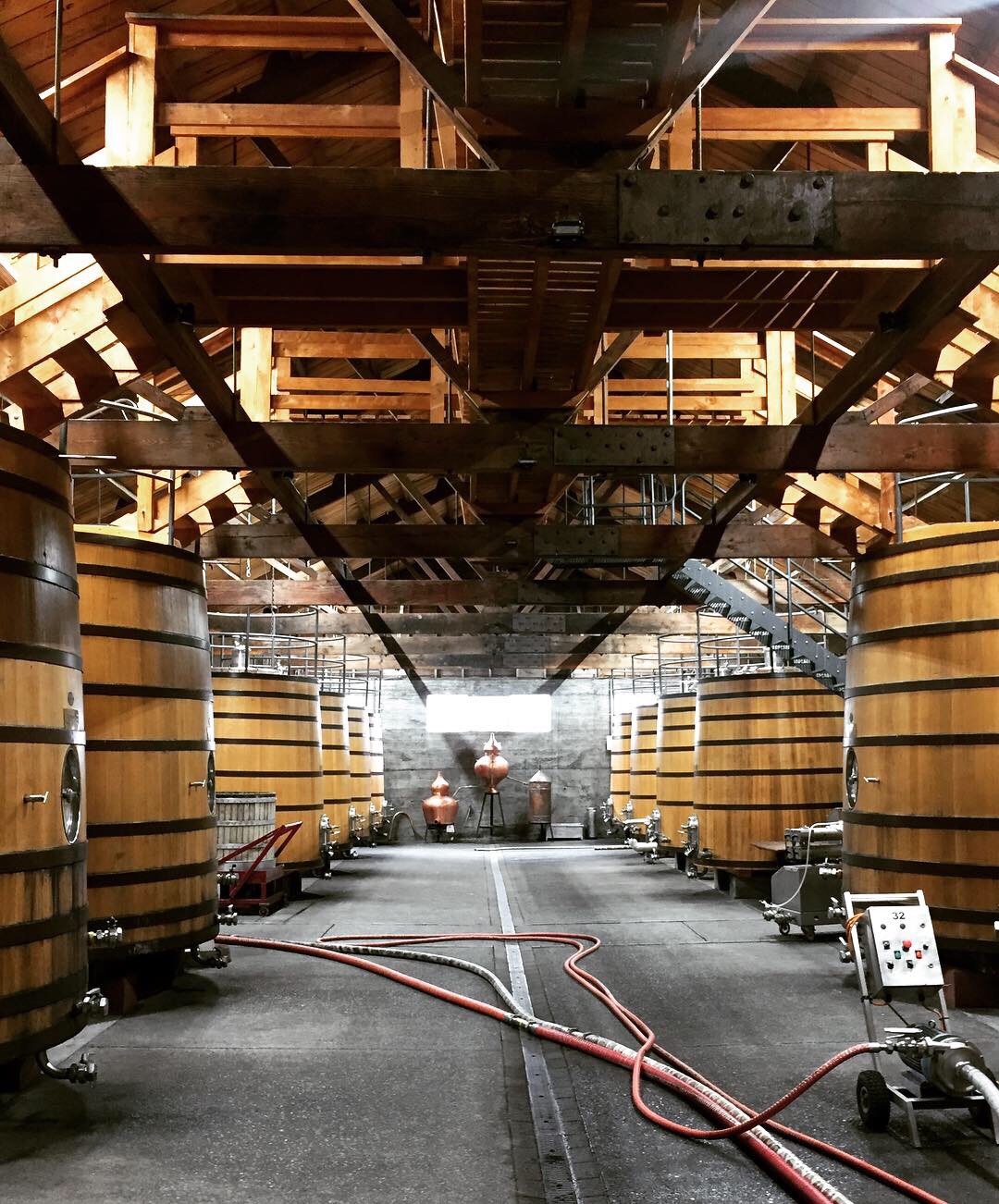
When he helps in the winery, he is working with the wine that was harvested within the last few years and is currently aging. As wine is aging in oak barrels, a small portion of it is constantly evaporating. (We call this the “angel’s share.”) At least once per month, if not more, the barrels need to be topped up with more wine until they’re literally overflowing, to ensure no oxygen is in the barrel. Oak allows a small amount in, but this is controlled and good to help the wine soften and be more palatable. Too much oxygen will ruin the wine and make it taste unpleasant. Greg helps refill the barrels with wine from a different tank. He has to pay close attention to which wines go in each barrel to keep them consistent with the grapes and years that the Winemaker wants.

Greg also cleans and sterilizes hoses, pumps and tanks before filling or using them. Once the Winemaker decides on the percentage of the blends for certain wines, Greg helps him transfer those wines together. He uses a barrel washer machine to clean out barrels once they’re empty. He mixes up a special compound that is applied inside the barrels to keep them sanitary while they’re in storage.

Greg also does a process called “batonnage.” When wines are aging in the barrel, the dormant yeast and other solids sink to the bottom. Sometimes, with certain wines, these are removed throughout the aging process. Other times, they are left during the aging process, and stirred occasionally through the wine, because they add complexity of flavour and contribute to a creamy mouthfeel. Batonnage is when Greg does the stirring.

Linden has additional clients that bring their grapes into the winery for Trevor, the Winemaker, to make into wine for them. Greg helps Trevor with whatever he needs for this as well.

Once the harvest begins, in late February, Greg will be working many more hours than he is now, and will be required to help with anything necessary. Getting grapes off the vine and into the winery has to happen in a very small window of time. The grapes need to be processed in the winery as soon as they’re off the vine, whether it is day or night. Harvest goes throughout March and into April. That will be a very busy, and important time of year for anyone in the industry.

We’ve also been asked if we get discounts on wine. You bet! It’s awesome. As we get such great prices, and the wines are good, lots of the wine we buy is from Linden (and lots from Church Road too). Greg comes home with the occasional, “here, drink this with your wife and tell us what you think,” wine, which is homework we’re definitely not complaining about. (I’ve been known to bring home a few left over bottles here and there as well.)

There are, of course, many other day to day tasks Greg does that can’t all be mentioned here, but hopefully you have a greater understanding of what his roles are, and can see why he appreciates the small team he works with and the wide variety of experience he’s gaining! He is really happy at Linden so far, and I’ll keep you updated on the craziness of our life, and his new tasks once harvest, or “vintage,” starts.

New Zeal in New Zealand; The Start of our Life in Hawke’s Bay

November 2018 will forever live in our memories as one of the most unique months of our lives; we will also remember being completely overwhelmed by God’s goodness and hand on our lives! I can’t believe we’ve only been in NZ for three weeks today. We have been absolutely amazed in the many, many ways we have seen God bless us and take care of us. It has been surreal to experience so many “impossible” blessings in such a short time frame. So much has happened, but I’ll just give an overview of the big topics for now, like jobs, cars, home, church and friends.

We arrived on Tuesday, the 13th of November (that’s how they date things here), picked up our rental car, and headed to our Airbnb. It was a really cute place, and we had the space to ourselves while the host couple was at work all day. I immediately got on the computer and started applying for jobs for both of us. Within an hour, Greg got a call from Linden Estate Winery to come for an interview the next morning!

Tuesday afternoon, we test drove two cars, and got groceries. I got in touch with a couple that a friend at home had put me in contact with via email, and they invited us for dinner the very next night! We spent Tuesday evening with our Airbnb hosts, sharing a bottle of wine and getting to know them.

On Wednesday morning, Greg went for his interview, and was hired on the spot! His job consists of helping around the vineyard and in the winery throughout the vintage season and the rest of the year. It is a small, family owned, estate winery, and he is part of a small group of core staff. He gets to do a little bit of everything and be really involved in several aspects of the wine making process; his job also requires him to use many different skills from the various trades he’s been working in over the last decade. That was exactly what he was looking for in a job, and he was hired within only 25 hours of us arriving in the Bay. Praise the Lord!
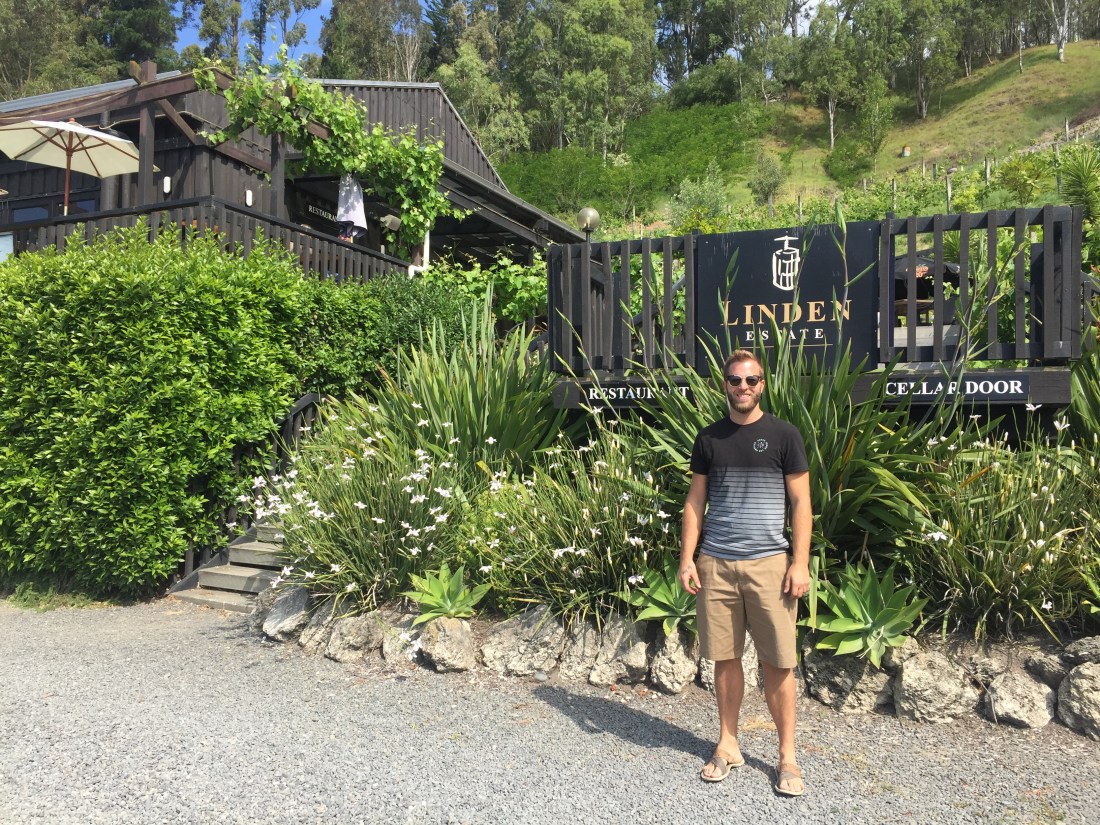
Everyone we’ve told has been shocked at how quickly he got a job, with no past winery experience. This kind of thing “just doesn’t happen,” and we feel it could only have been arranged by God. Linden also has a big shop that Greg has access to, as well as tools; they’re even getting him to brew a beer for harvest time, so he gets to do that too!

Wednesday afternoon, our second day here, we purchased the first car we had looked at the day before, for only $500, as it wasn’t running very well. Greg got to work on finding the problem. He decided we needed to search for another car for me, as this one, “the Polo,” was going to perhaps be a little unreliable.

I had heard of a FB group while we were in Sydney, from an American who had recently moved there, for the purpose of Americans connecting in Sydney. I wondered if there was one like that for Canadians in NZ, and sure enough, there is. I received permission to join it, and put a request out for someone to suggest areas that are good to live in, and areas to avoid. We had been told once we arrived how difficult it is to find rentals here, and we wanted to start looking right away. On their main rental site, there were only seven in our price range, and many were in undesirable neighbourhoods, or far from Greg’s winery. It’s typical here for a place to have upwards of sixty applicants too; we had no idea it would be so hard to find a place!

A Canadian girl got back to me right away on FB, suggesting we try to live in her area. She had been there for years, and loved it. She said it was beautiful and safe. Seeing as she was young and married, I messaged her to invite her for a drink. She said she would love to meet up, but her and her husband were moving away in less than three weeks. I said, “well we should just live in your place then!” She said she would recommend us to her landlord, and she did!

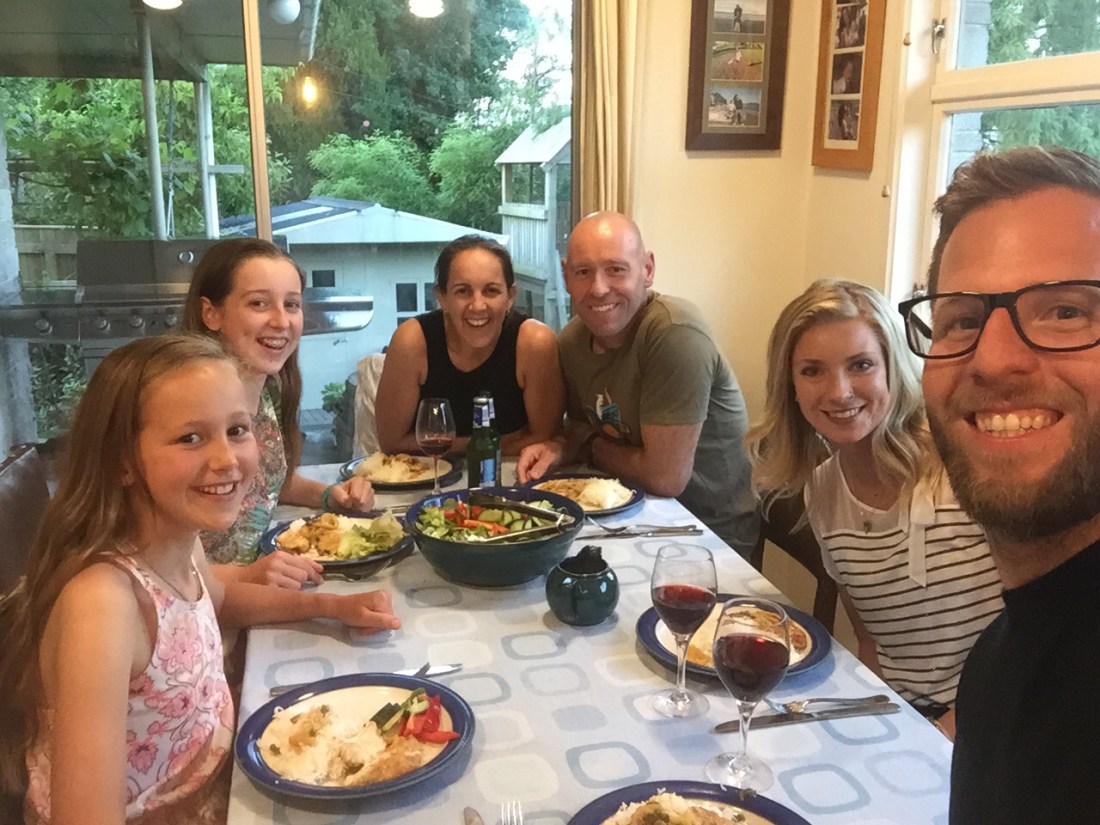
Wednesday evening, we went to meet R & A, the new couple whom we’d been in contact with. They were so friendly and had us in for dinner with their daughters. We spent the evening getting to know them and really enjoyed their company. They suggested I print my CV’s at their house (something I had worried about in Canada – “where will I print my CV’s?”) and they said we could borrow their car if we ever needed, and invited us to join them at their lakehouse in the summer. They read us a story about Kiwi Christmas and taught us about Hawke’s Bay. We feel blessed to have met them so quickly after arriving.
Thursday consisted of Greg working on the Polo, and me applying for some more jobs. I had also been in touch with a winemaker via Instagram while we were still in Canada, and he had been so helpful in tips for living here, answering my questions, and trying to help me find a job. He invited us to come try their wine and sit down with him and his partner, so we went to their house on Thursday, for what was supposed to be a glass of wine, and turned into five hours of visiting with him, his partner and their daughter over charcuterie until it was dark out! We feel blessed to have met them too!
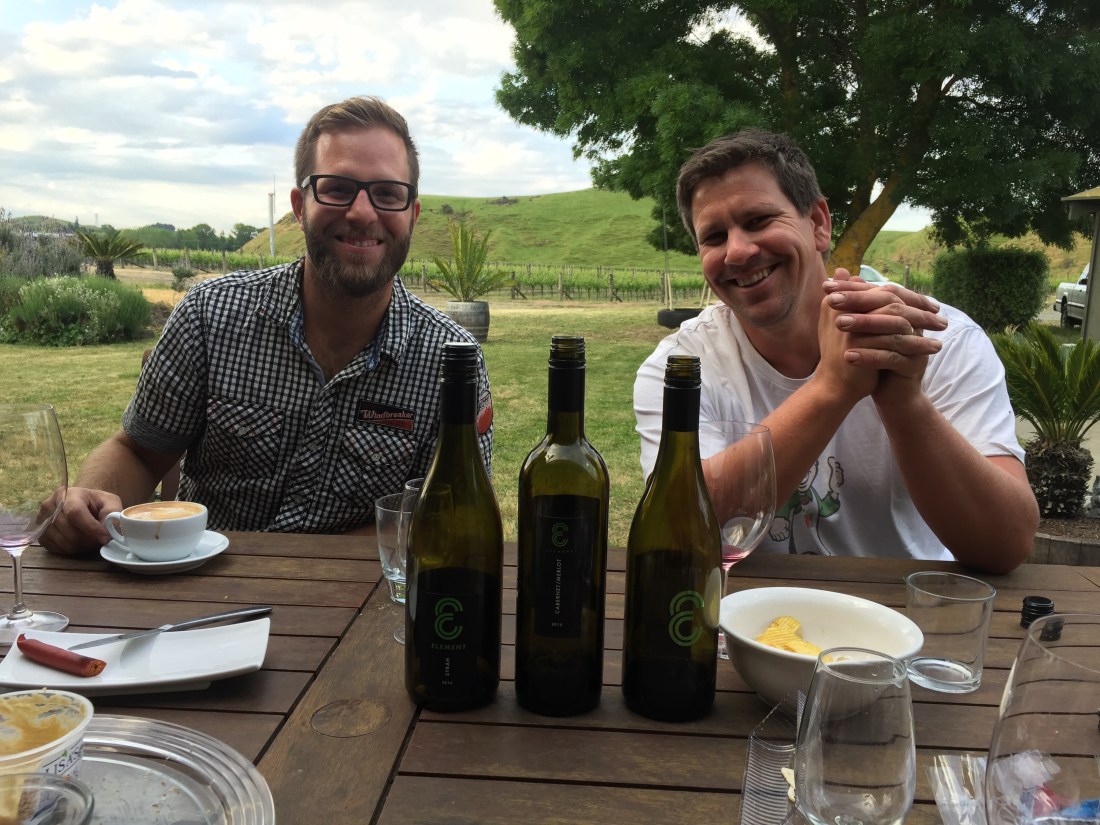
The Canadian’s landlord had only just posted the listing for her “flat” the day that I was speaking to her, and she had already had over a hundred people contact her about it, over sixty applications, and a day “chocka full” of viewings set up for Sunday. Once her current tenant recommended us fellow Canadians to her, and we got in touch, the landlord said that she loves Canadians, has family in SK, and is destined to rent to Canadians. Amazingly, she offered to hold the place for us. We set up a time to see it Saturday.

On Friday, our rental car was due back, and the Polo still wasn’t running, so we found what appeared to be a great car, for a little more money than we’d hoped to spend, at a dealership. We test drove it that morning, and decided to purchase it. We got it insured and left it near the rental agency to pick up when we returned the rental later on.

Greg’s new boss’s partner showed us two places she had for us to potentially live. She has an empty house where her art studio is, that she would allow us to live in once our time at the Airbnb was up, as a transitional spot (where we are currently). She also has another property becoming available, that she wasn’t intending to rent out again, but that she said we could have if we wanted. Both of these are in a very desirable area of Hawke’s Bay. Here we were, on our first week in town, where it’s nearly impossible to find a rental, with two amazing choices in the most desirable neighbourhoods, both being held specifically for us. Amazing.

Greg took me to Linden so I could see where he’ll work, and I got a bit of a tour, and even got to meet most of his co-workers. It was a Friday at quitting time when we happened to be there, so we got to sit with them for a bit and have a visit.

After seeing Linden, we went and picked up the new car, the Mitsubishi, and took the rental back. We spent the evening with our Airbnb hosts again, after Greg worked until dark on the Polo.

Saturday, we drove to see the Canadian’s rental unit, and the car began breaking down on the way! We got there though, and decided to live there. It has the airport and a highway nearby, but there are no windows on that side of the house, so we can’t see it, and hardly hear it from inside. It’s in a great area, and everything is included – even towels and linens! It has wifi and tv, a dishwasher, and all the dishes. It used to run as a bed and breakfast, so we can literally move in with our bags.

This is another thing that has been shocking to many Kiwi’s here, as apparently that’s not how they usually do it. It’s quite uncommon to find a furnished place at all, let alone with dishes and linens. Here is another “impossibility” made possible. Oh, and we can walk to the ocean in five minutes! We can move in on the 9th of December, and I can’t wait for those after work walks to the ocean!

The Mitsubishi broke down completely after we left there, so we had to call the dealer back. Thankfully, he said to drop it at his shop and he would have it looked at the next week. We got yet another rental car, and then took me to apply for more jobs. Greg finally got the Polo running that evening! We were so thrilled about that!

Sunday morning was our first time to attend C3 Hawke’s Bay, so we were excited to go check out what we hoped would be our new church. We were greeted by some very friendly people, and found a small group to join that meets “fortnightly” on Wednesday’s. We made plans to go to the next one. The service was unique in the way that they had three of their core members tell their stories, so we got to know some of the people at the church really well just by attending on that particular day. The church also happened to be having a quarterly lunch afterwards that we were able to stay for, and use to spend more time meeting and connecting with people. It was a great week to be there.

Greg started his new job on Monday, six days after we arrived, and he got to do so many amazing things and learn so much. He came home with homework – a couple of bottles of wine we were supposed to drink so we could start getting familiar with it.

I also got a call for an interview at the job I really wanted! My new winemaker friend had recommended the company to me, and I had also seen it posted online the first day we were here, and I said out loud, “that’s my perfect job.” It was exactly what I said I wanted to do here, but didn’t think I’d be able to find or get. I was so excited, and also very nervous! I spent Tuesday preparing for it and learning as much as I could. Wednesday morning I went in for my interview, and it seemed to go well, however I found out they were interviewing more than four people for only two positions!

We had to return the rental car on Wednesday, and the Mitsubishi was supposedly fixed, so we picked it up… and made it half a block away before it broke down again. We took it right back and Greg spent twenty minutes arguing with the dealer on the phone who no longer wanted to refund us, and said he had to think about it overnight! I was so stressed. Thankfully, we had plans with R & A and their girls again that evening, so I was distracted! They also bought our drinks, invited us for Christmas, and lent us their car! I can’t believe the kindness they have shown us already. It brings tears to my eyes.

Wednesday and Thursday that week were big days of me practicing patience with the car and the job, and trusting that God would help us with the car dealer, and that if it were the job for me, God would set it up; if it wasn’t, He would bring something else my way at the right time.

Thursday, after taking a verbal beating on the phone by the dealer, Greg got our money back! We were so relieved, and back on the hunt for another car. Thursday evening, I heard from the job that they wouldn’t be deciding until the following week now, due to contacting references! It was hard to hear that I’d have to wait so long, but I just kept thinking that God would put me where I was supposed to be.

Friday, I got a call in the afternoon that they were offering me the job! I was so thrilled and excited! Again, I felt a miracle had happened. I have no winery experience, and they interviewed three or four others, and still chose me to do tours and tastings at the most visited, and one of the oldest, biggest name wineries in the Bay. I was, and am, so grateful to God for both of our jobs!

Saturday was spent moving out of our Airbnb in Hastings, into the transitional place belonging to Greg’s boss’s partner. It’s in Ahuriri, in Napier, very close to where we’ll live. On the way, we happened to notice a car on the side of the road for sale that hadn’t been there before. We joked that we should maybe buy that one, and then kept going.

Once we moved our stuff over to the new place, we went looking for a car again! Greg had found a bunch online and had lined up four test drives, but none of them seemed to be great. We had just started saying that maybe we needed to increase our budget when we pulled onto that main road near our Airbnb and saw that car on the side of the road again. We pulled over and Greg called the owner, who came and let us test drive it. She had just parked it there at lunchtime, literally moments before we had driven by. It felt right and seemed in good condition. The lady dropped her price when we got back, because she is a single Mom and didn’t want to deal with having to continue to show it to people. We got it for a steal!

On Saturday night, we met the woman that lives in the house behind the one we’re in, and shares our yard. She is from Italy! We connected right away and she sat and visited with us for a while, and invited us to her dinner party the following night.

On Sunday morning, we went to church again and met some more new people, and reconnected with some from the previous week. We spent the afternoon with R and A again after returning their car. They showed us how to turn my new ride into a camper van so we can sight see the NZ way on our days off!
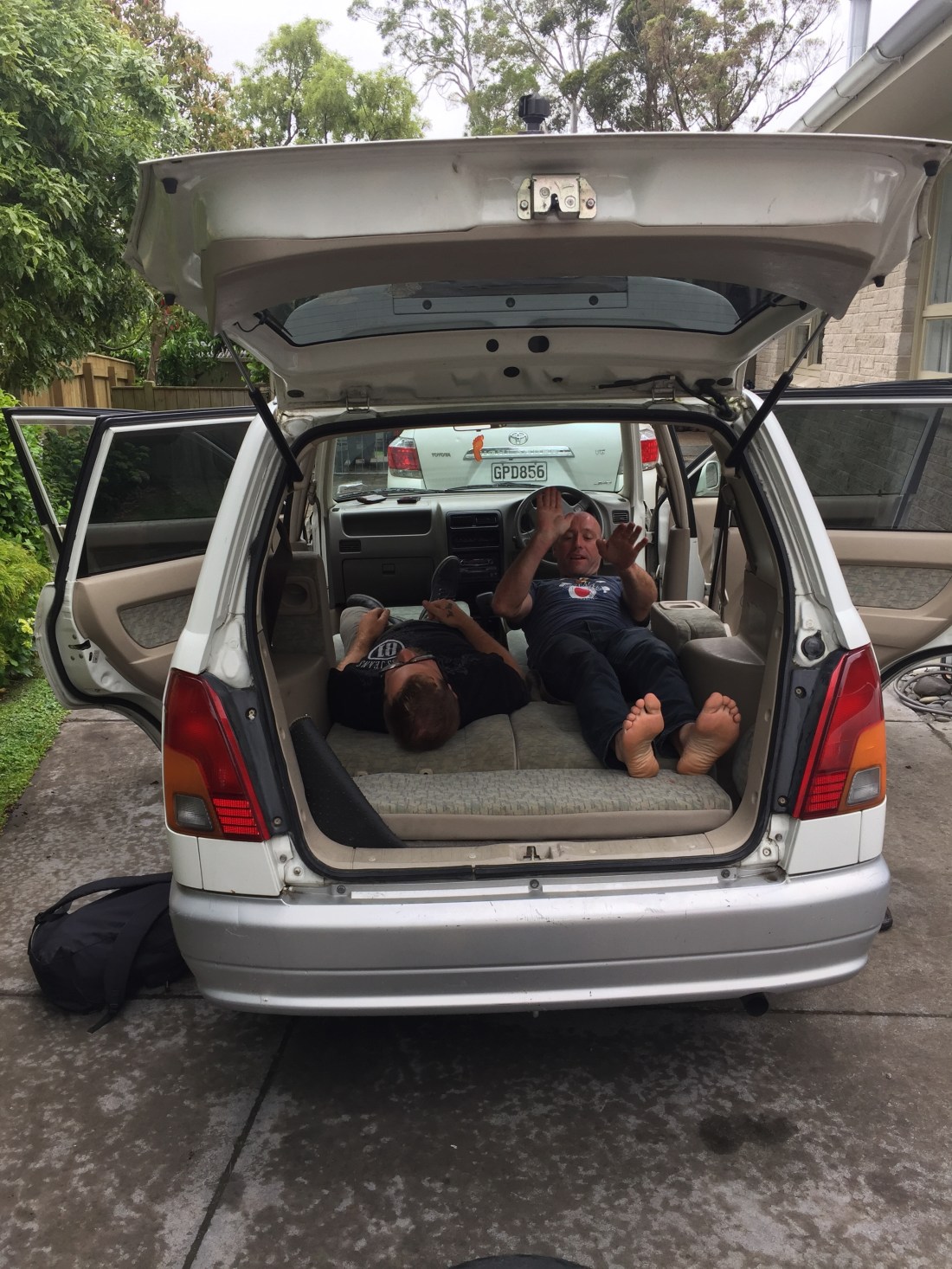
That evening, we had dinner with L, our Italian neighbour! She cooked us Italian food and introduced us to some of her friends. It was a great day full of socializing, and we felt so blessed to have already met so many great people. I thought it was so interesting that we ended up making an Italian friend, who has already cooked Italian food for us, and that we can speak the small amount of Italian we learned with! The things we were looking forward to in Italy, we got to do here already!
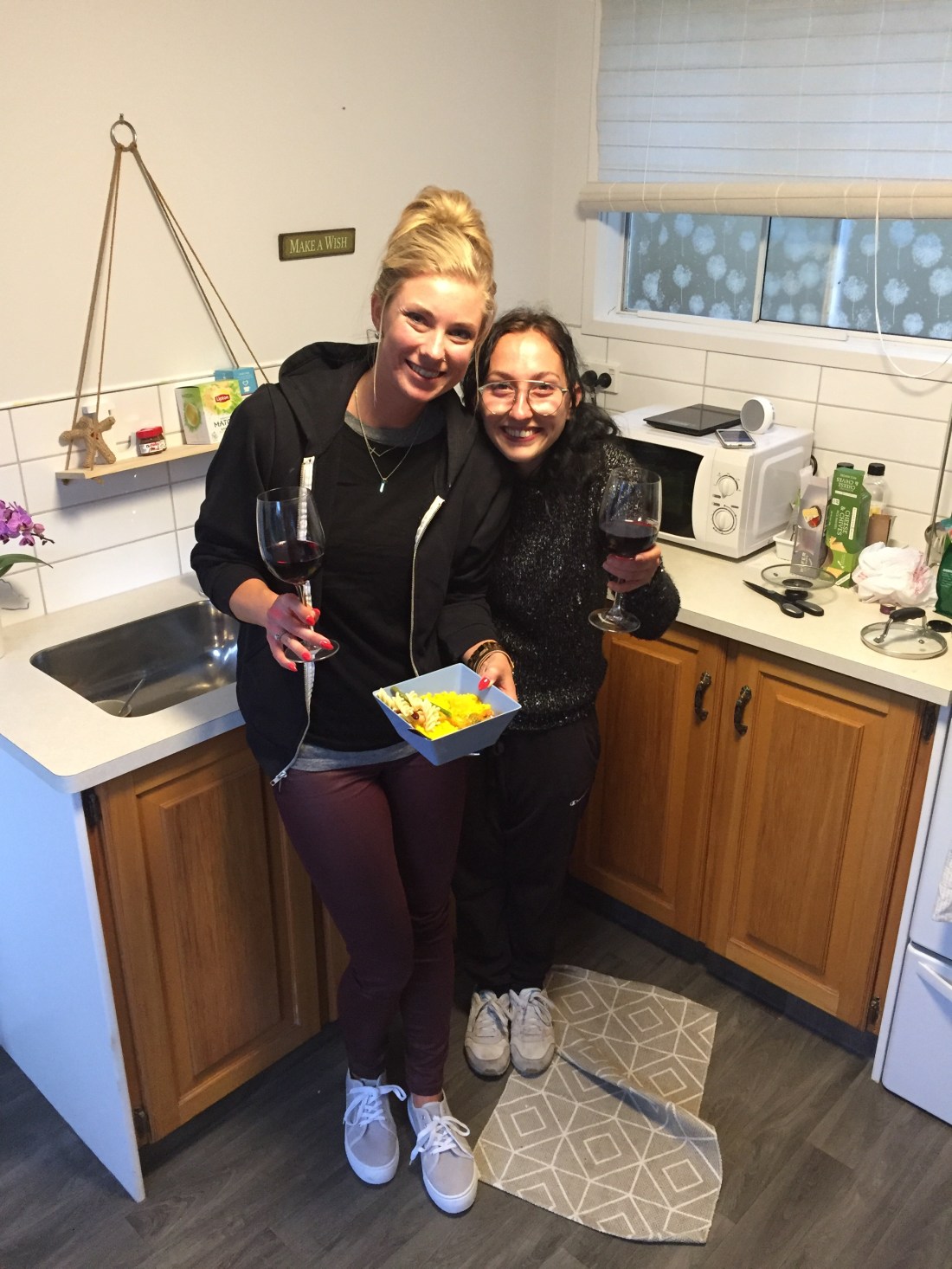
I started my job on Wednesday the next week, and did four days in a row. It was a lot of information to take in, but I am absolutely loving it, and having so much fun. The staff are all so friendly, and as the third winery to be established in NZ, it has amazing history. The winemaker is friendly, great at his job, and makes quality wine that I’m proud to represent and pour for people. We even got invited to the Christmas party and had a great night socializing with my new colleagues and their partners. In the tasting room (Cellar Door as it’s called here) I’ve already met people from all around the world and gotten to have great conversations with so many of them in my first week!
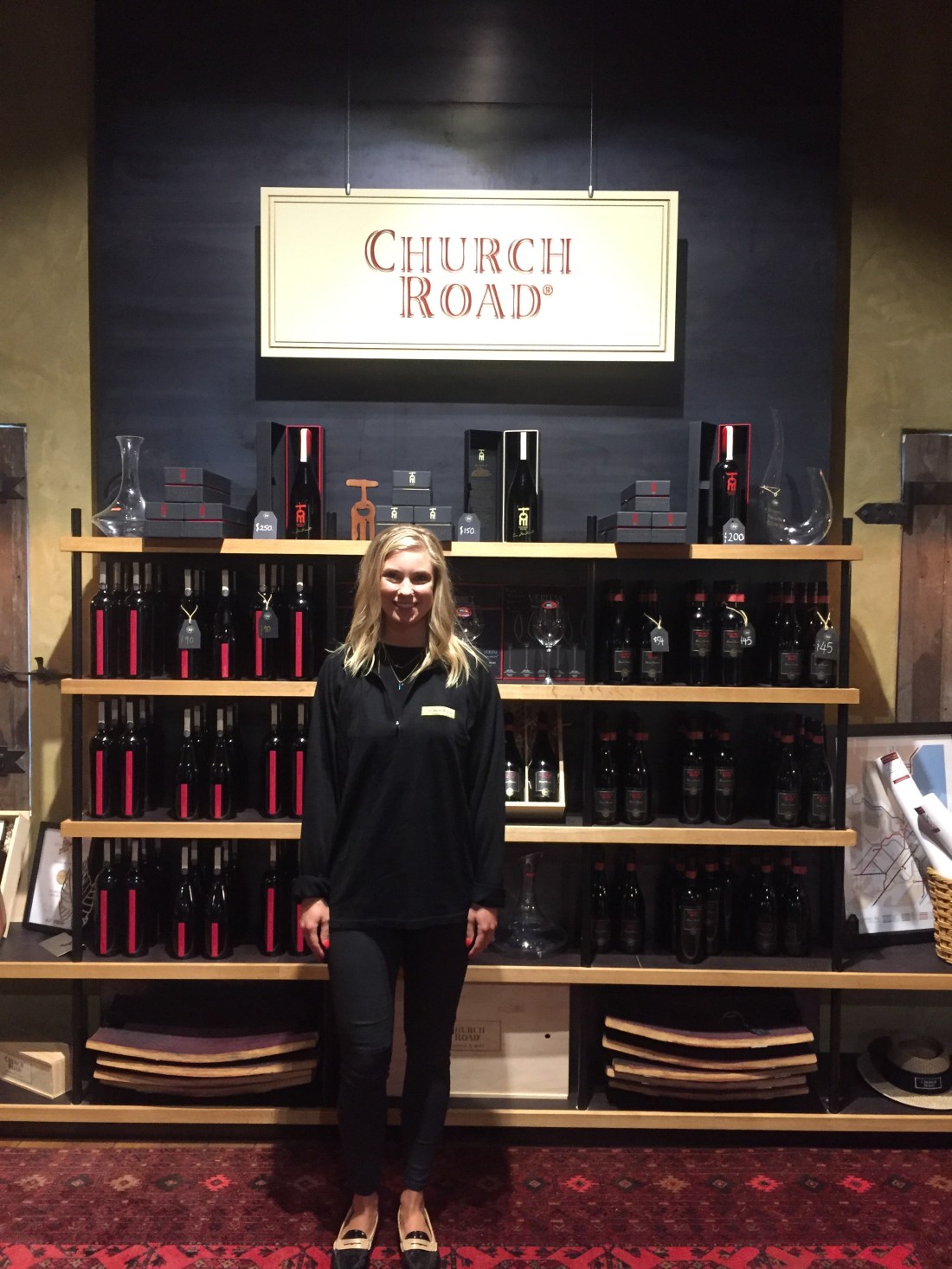
We attended our first C3 Church Connect Group last week as well, and couldn’t believe how welcoming the group was. We felt right at home and completely comfortable with them, like we had known them for years.

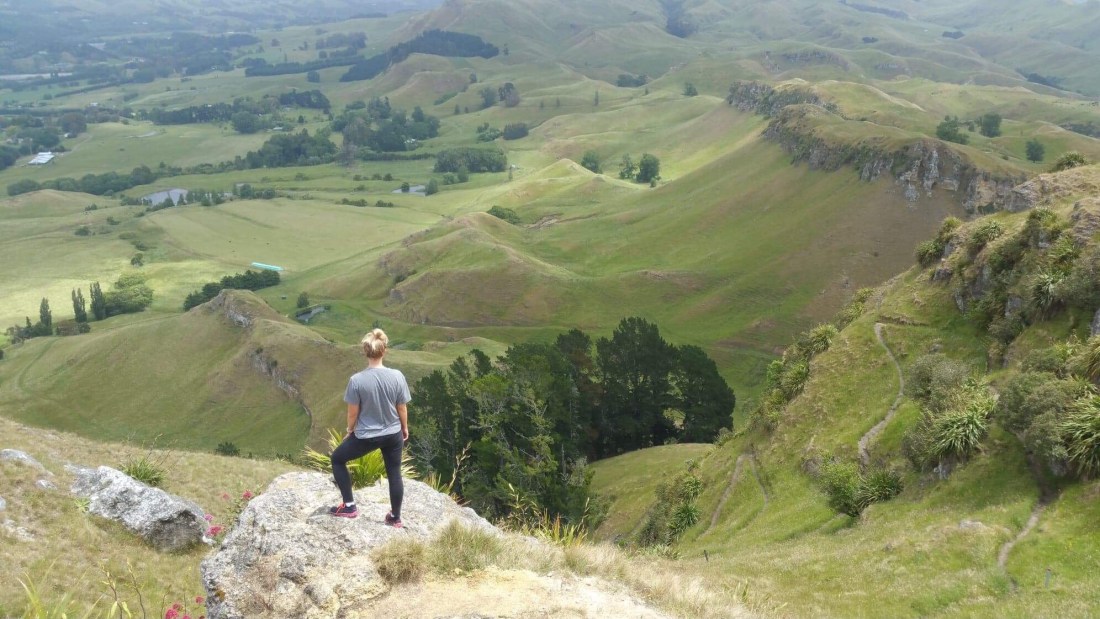
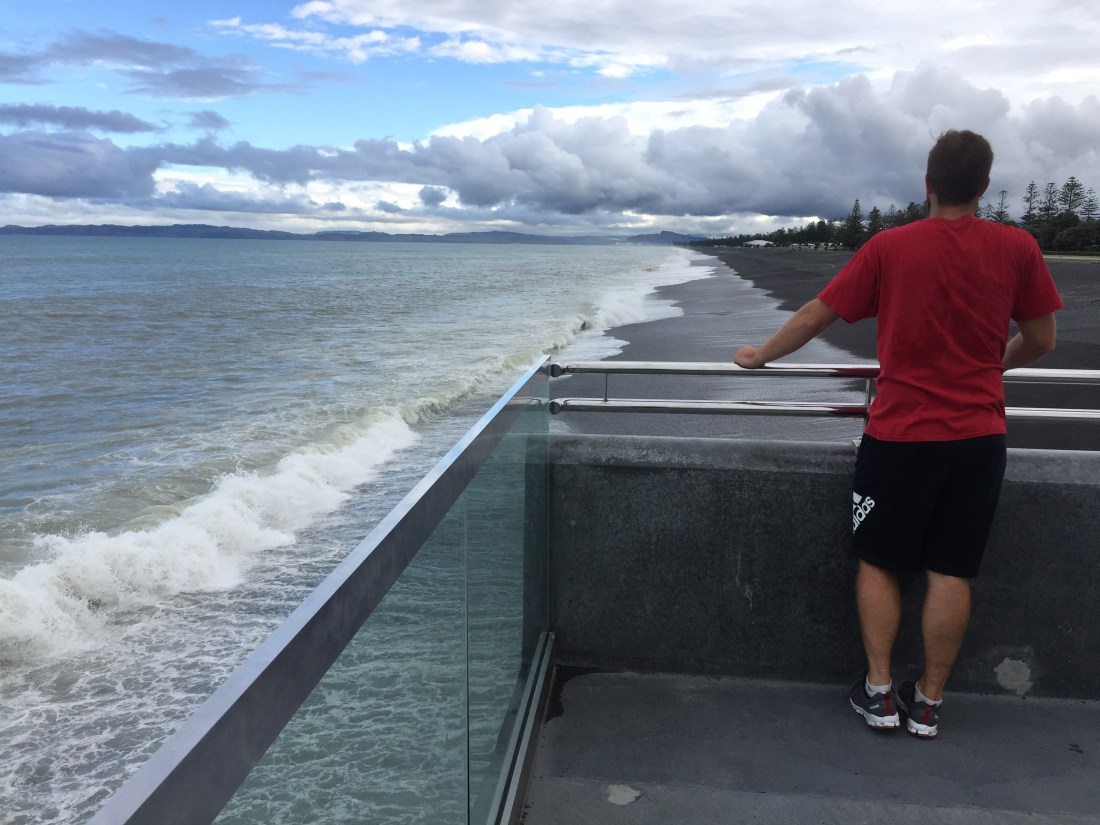
We’ve taken every chance we can to get outside and enjoy the beautiful scenery around us. We’re looking forward to when the rainy spring ends and we can get outside even more.
We continue to learn so much as we slowly integrate into the wine industry, and look forward to the months ahead. We have been so blessed to have everything we’ve needed come together in such a short time. It’s been only three weeks today since we arrived, and we’re both working in not only wine industry jobs, but the exact types of jobs we wanted. We have been blessed to meet so many amazing people already and have been out with new friends more nights than we’ve been in! We have vehicles now, and a place lined up, and a great church and small group. It really has been overwhelming to see God provide for our needs in ways I couldn’t have even dreamed of.

Despite everything that’s gone right, it’s not been easy, but it’s been humbling, exciting, and so encouraging for us to have experienced this new beginning. I am curiously awaiting what’s coming next in our story!

Our Australian Stop Over Part Two; Barossa Valley & McLaren Vale

After spending five days in Sydney, we were ready to head to Adelaide, a city many people don’t visit unless they’re heading to the surrounding wine regions. Within a short drive from Adelaide are several large and famous wine producing regions in Australia, such as the Barossa Valley, which is well known for Australian Shiraz, and several others; we visited Barossa first, the Eden Valley briefly, and spent several days in McLaren Vale.

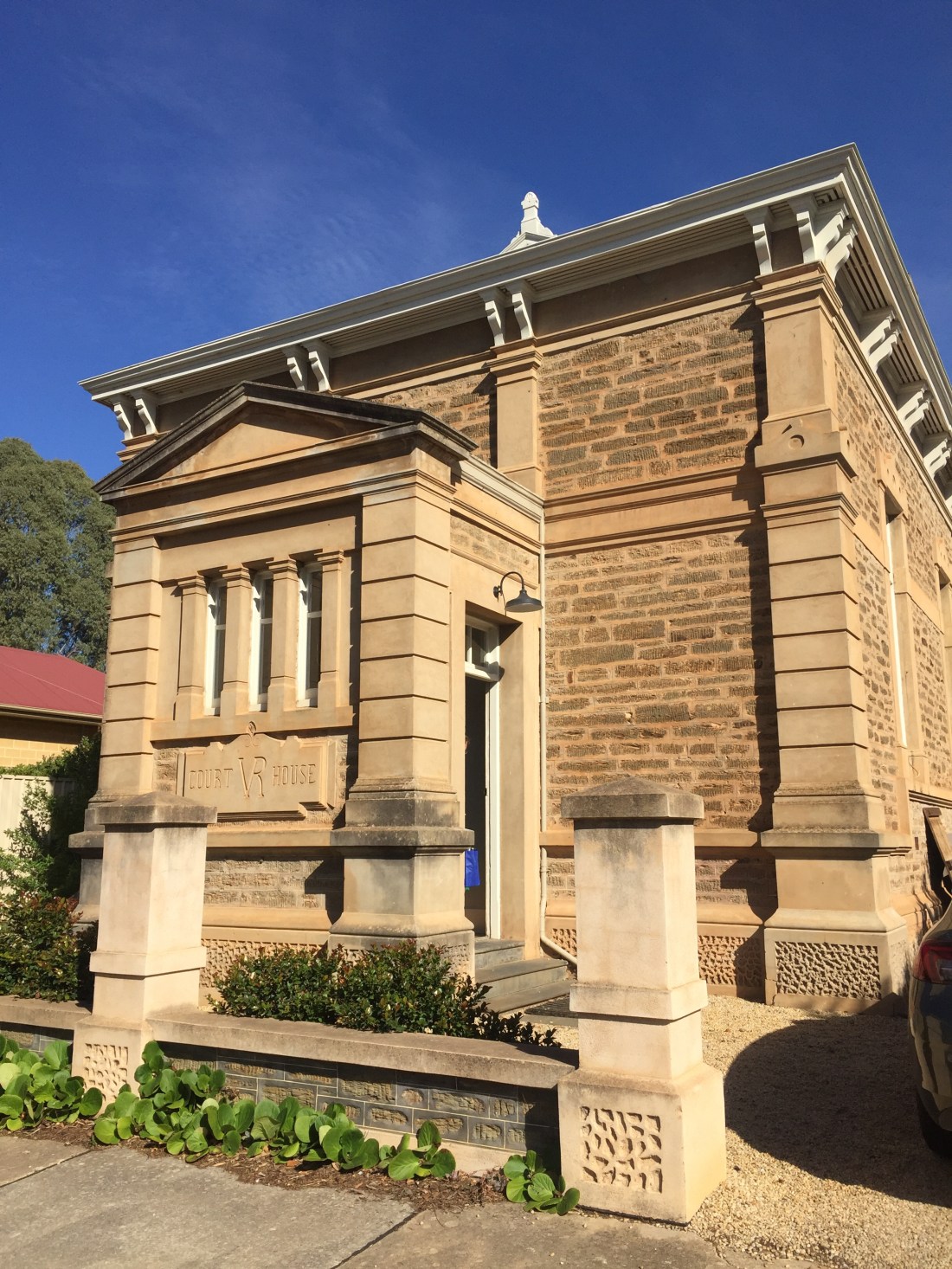
We flew into Adelaide and picked up our rental car (after business hours); it turned out to be broken, so after a couple of hours of dealing with shuttles, returns and getting a new car from a different company, and an express and affordable dinner at “Fasta Pasta,” we were on our way to the small town of Gawler. It lies in the Barossa, where we stayed at the old courthouse, that has been converted by the owner into an Airbnb. Coming out of our Sydney Airbnb, this one was just what we needed. It was quirky and adorable, the bed was so comfortable, it was very clean, and it was fully stocked! It also had a Bluetooth speaker, and phone chargers, which was extra appreciated, seeing as ours were left in a backpack in the first rental car, and we didn’t manage to get them back for a few days.


The Barossa Valley

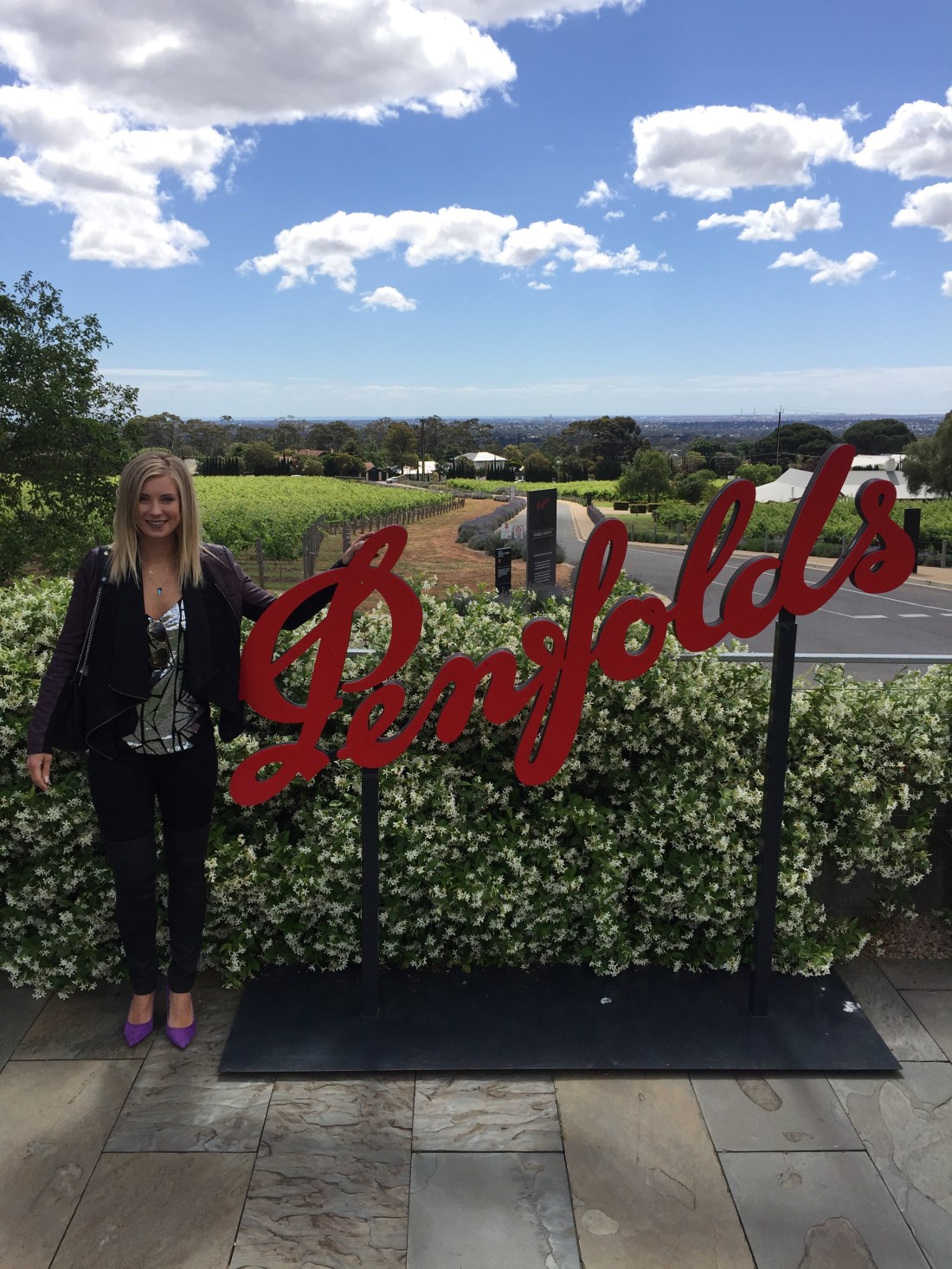
First things first – Penfolds! ❤️

Penfolds has two locations in the Barossa; one location is their Cellar Door in the valley, where they make the majority of their wine, and offer some interesting experiences, like the “Make Your Own Blend” tasting that we did. The other location is a heritage site in Adelaide, and is the original location of Penfolds, featuring the cottage where Dr. and Mrs. Penfolds lived when they started it in 1847. Some wine is still produced at that site, and is labelled Magill Estate.

Seeing as how I’m gaga over Penfolds, we visited both sites, and for me, they were some of the most jaw dropping, stars in my eyes, “I can’t believe I’m standing here seeing this” wineries I’ve ever been to.

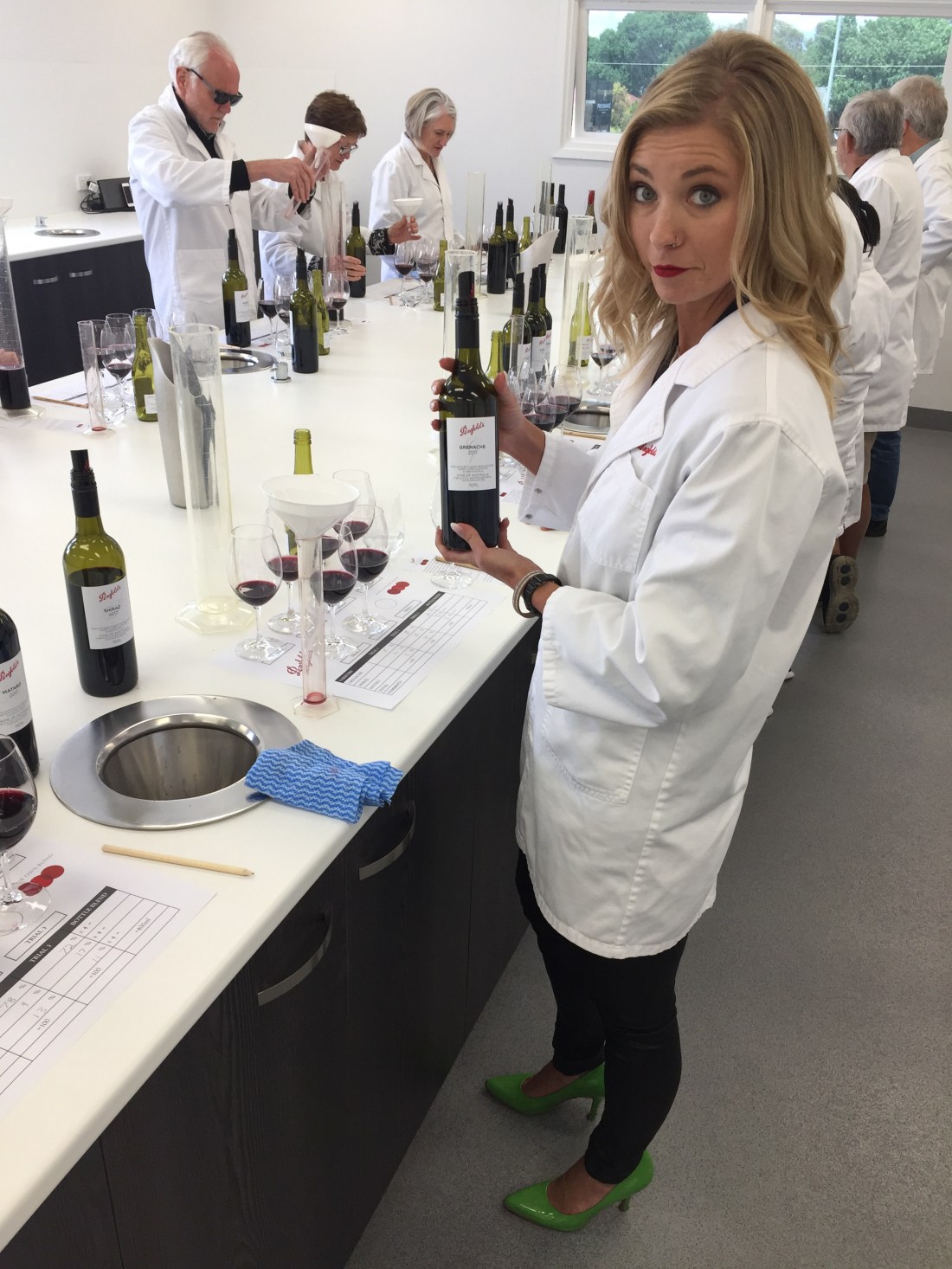
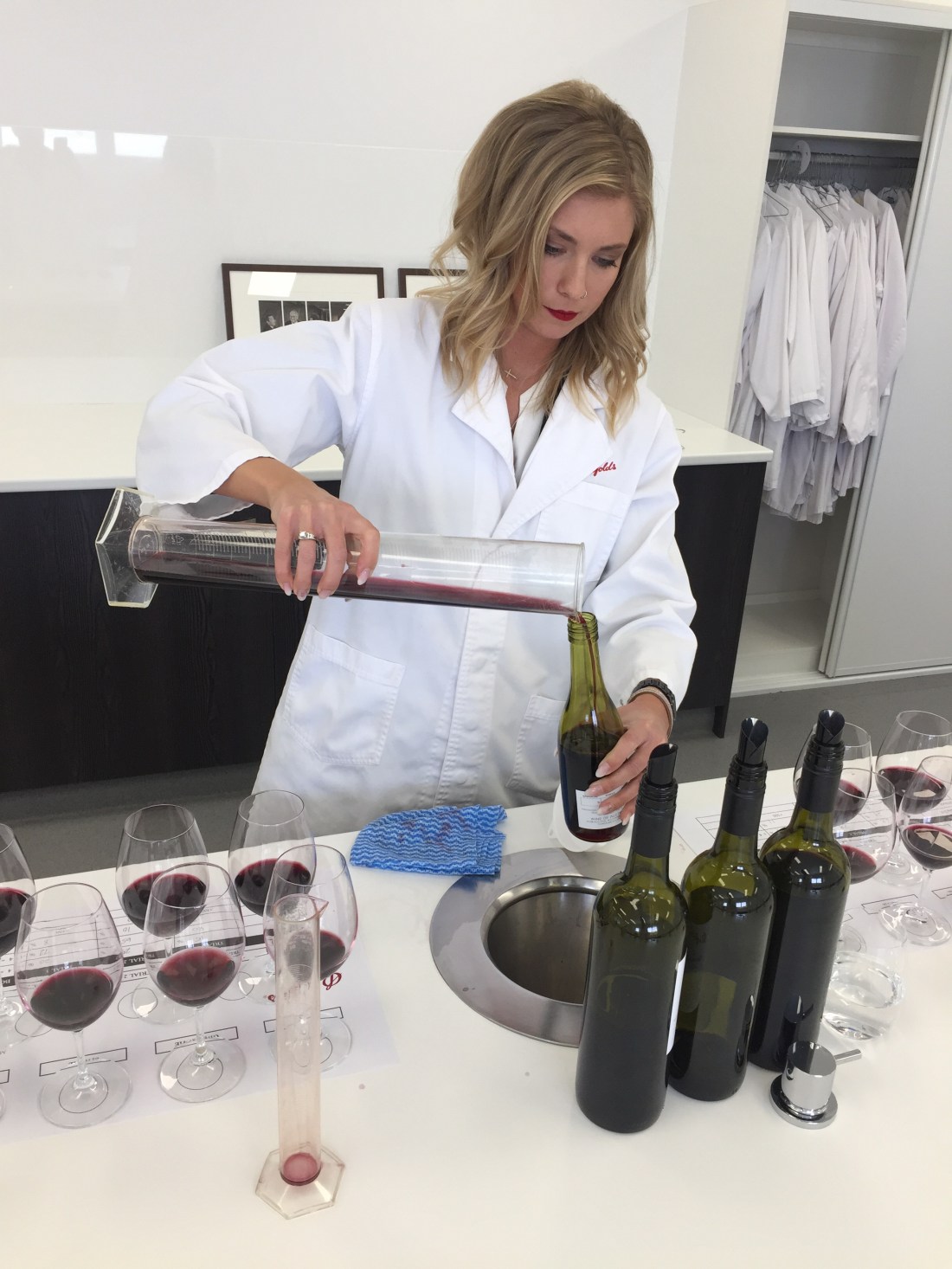
The “Make Your Own Blend” experience was recommended to me by friends who had done it, and was an exceptional experience. We were dressed in lab coats, told the history of Penfolds, and given wine making tools, and three bottles to work with, of single varietals commonly blended in Australia. We got to try different percentages of our own, and come up with the ratio we preferred. Then we made a bigger batch each and bottled them; we got to take them with us!

We did a tasting downstairs afterwards, and as we happened to connect well with their Cellar Door ladies, we were there a bit longer, and were able to try a lot of “off menu” wines.

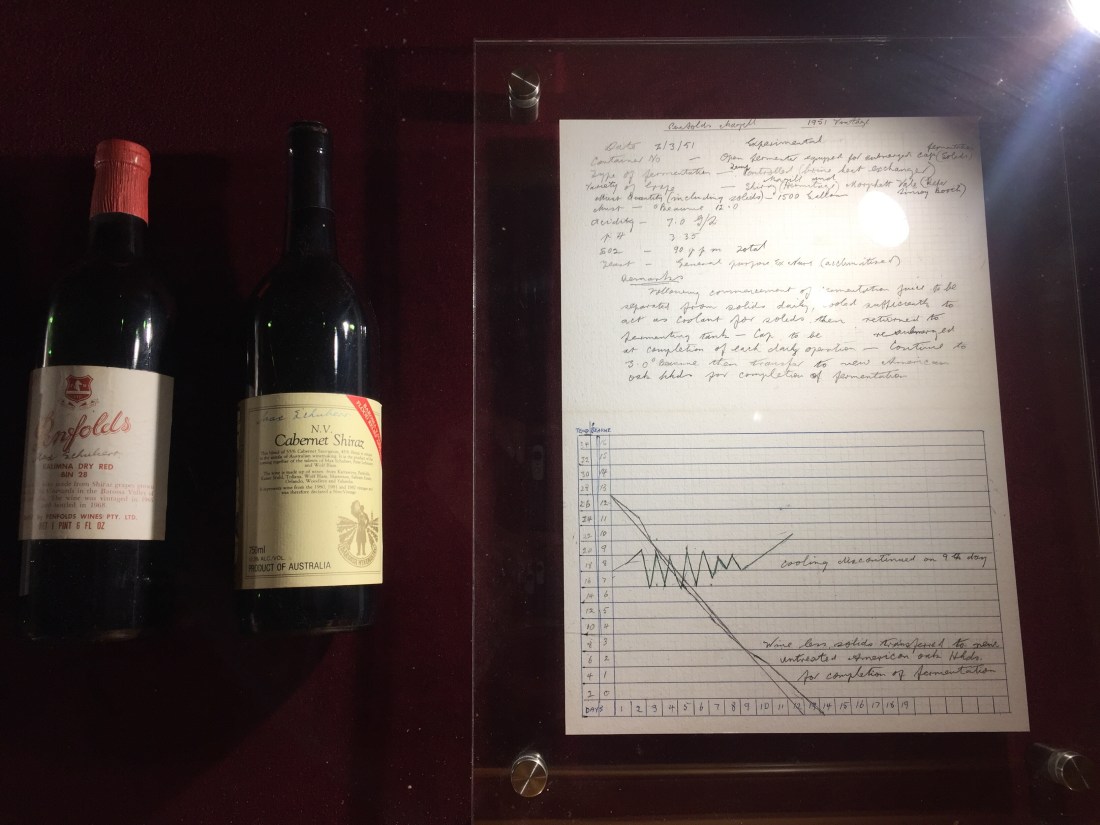
Our experience at the Magill Estate the following day was also amazing! We had a private tour of the grounds and got to see everything from Max Schubert’s personal collection of signed Grange’s, and his handwritten notes on production, to the area where he built his secret wall to hide them in the early 1950’s.

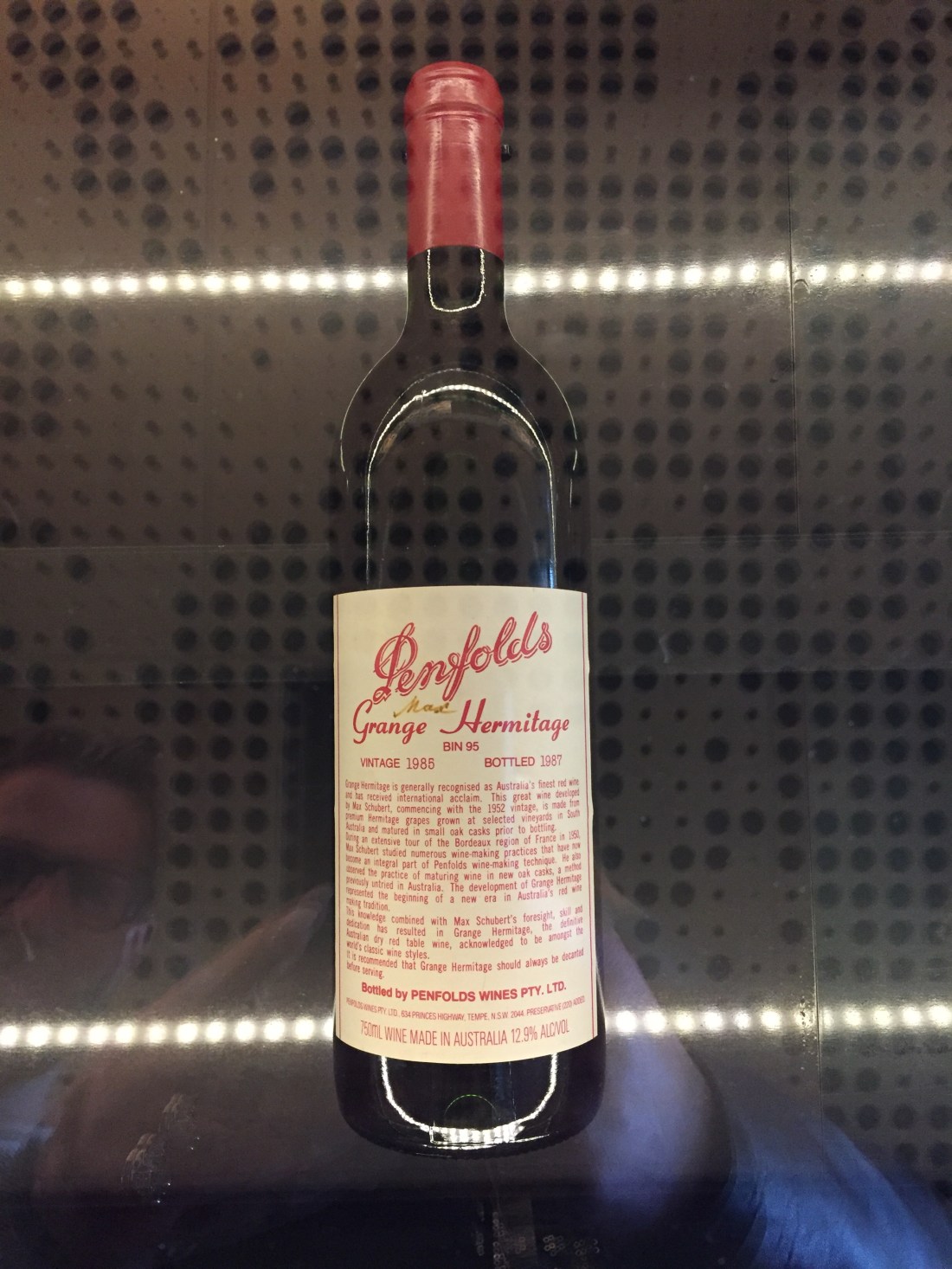
We did another tasting after the tour, and connected well with our guide again, who literally snuck us a taste of the not-included on the tour, iconic, Grange. I was speechless, and very aware of the value in my glass (pictured below).

If you’re in the Barossa, even if you don’t love Penfolds as much as I do, go to Penfolds! It is such a famous, iconic wine producer that has shaped a large part of the wine making history in Australia and is well known across the world.

Langmeil

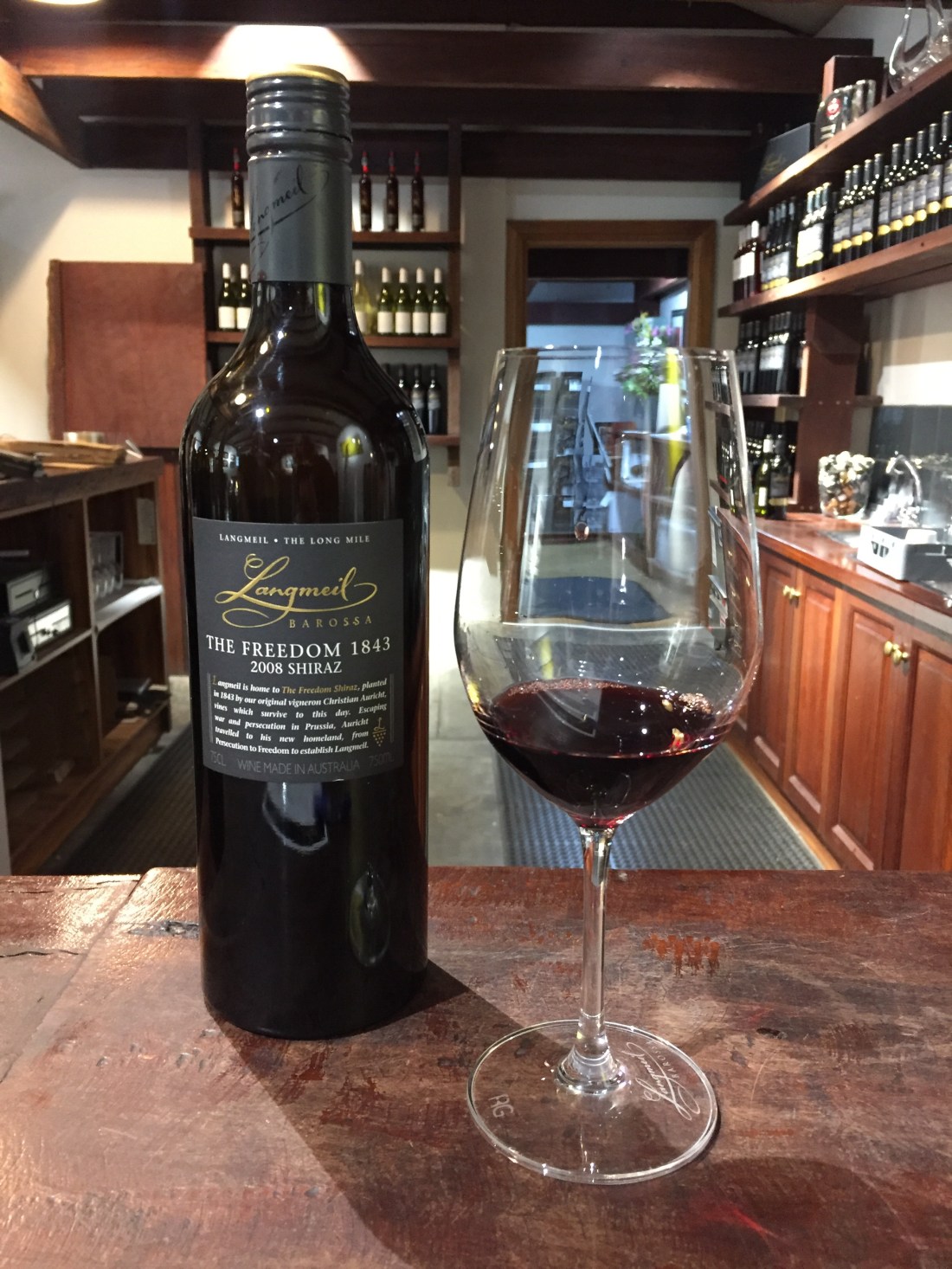
This producer is another well known one, that has some pretty amazing history behind it. They have the record for the oldest Shiraz vines in the world, as the Barossa Valley is one of the only areas that hasn’t been affected by phylloxera, a disease in the vine that kills it. Even Europe has had to tear out many of their old vines due to this disease. We saw these beautiful vines, and were fortunate enough to try the wine they produce. When a vine is very old, it produces much less fruit, but the fruit it does produce is rich, concentrated and flavourful. The wines reflect this in their deep, intense flavours, and their complexities in varieties and layers of different flavours that come out as you smell it in the glass, in your mouth as you sip, and long after you have swallowed.

Peter Lehman, Yalumba, Wolf Blass, Jacob’s Creek

We visited several other well known producers, and were glad to get to see some of the wineries that are so well known around the world. Peter Lehman and Wolf Blass impressed us with their higher tier wines that we don’t get in Canada due to our government’s taxation and shipping laws. Yalumba (Eden Valley) has several quality wines as well, and the lady in their tasting room was a blast to spend an hour with! Tate, the company that makes Ballbuster, was also there, but only opens by appointment with people who plan to purchase, so we drove past, but didn’t visit. Jacob’s Creek was another history maker in its day, but we were disappointed with our experience there, and the taste of their wines.

Landscape and Food

The Barossa Valley in itself is quite hilly, and sunny, with lots of interesting plants and animals to look for! We ate at a restaurant called Harvest Kitchen, as it came highly recommended in my research. It had unique menu choices with made-in-house food and friendly service, plus a beautiful view.


McLaren Vale

Mollydooker Wines

We started off our visit in McLaren Vale with the best of the best, and it was really difficult to enjoy some of the other wineries after being at Mollydooker! If you’re a Mollydooker fan, save them for close to last. It was explained to us that Mollydooker is mostly known in America and China, as 85% of their product is shipped overseas. Lots of the locals haven’t heard of them. They have a unique watering formula that allows them to get large, high quantities of grapes that are concentrated in flavours, leading to high “fruit weight”‘on the tongue, meaning you can clearly taste the fruit flavours in the wines, along with secondary flavours. They also have higher alcohol wines that are very smooth and creamy in texture.

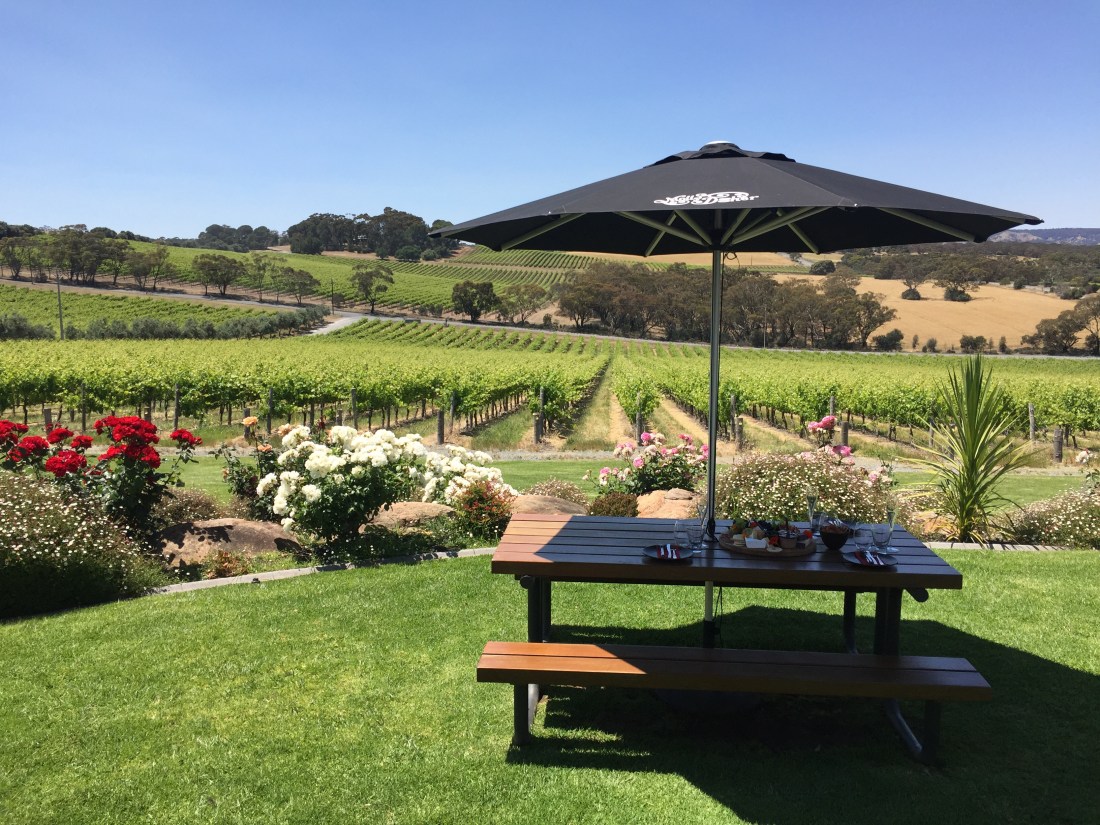
We did a tour and light lunch with Liza, who was lovely, and got to learn all about the wine making process, meet the winemaker, and enjoy a beautiful charcuterie board on their stunning patio while we tasted through their flight.

Mollydooker makes amazing quality wines that are full of flavour, boast a velvety mouthfeel, and have long finishes. If you haven’t tried their wines, I recommend you do so. Even their entry level wines are fabulous!

Coriole, Samuel’s Gorge

We fit in two more tastings after Mollydooker that I was fairly unimpressed with. Coriole had a beautiful setting, but a small Cellar Door, and basic wines. Samuel’s Gorge made great, Italian varieties, but I found our experience there to be very unprofessional. Don’t go on a Friday at the end of the day if you want your cellar door people not to be “trollied,” as they say. Greg loved it there, and was able to see past the behaviour of some of the staff; had we sat on their patio and done a seated tasting with the sober worker, I’m sure it would have been way more enjoyable for me as well.

D’Arenberg – The Cube

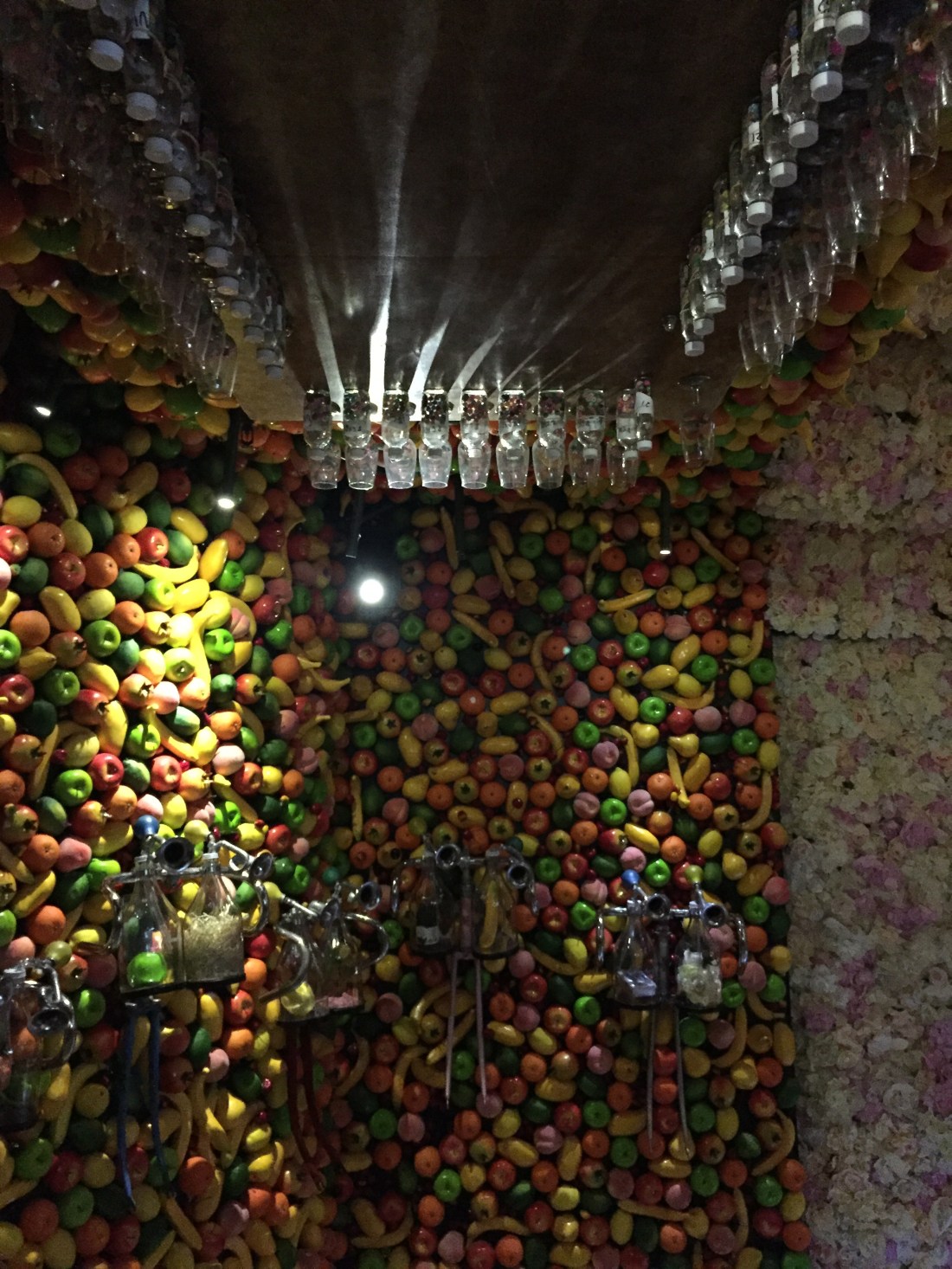
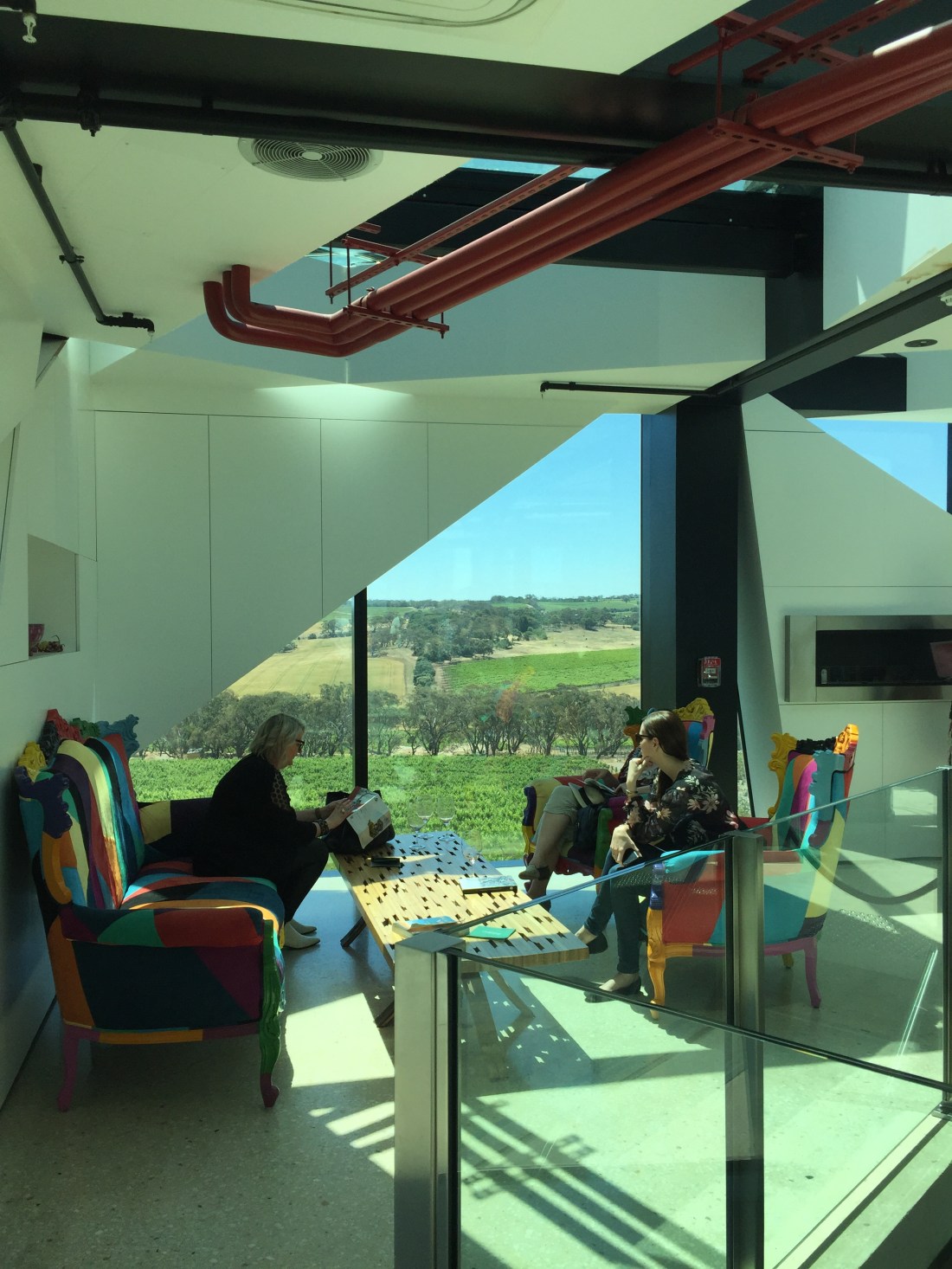
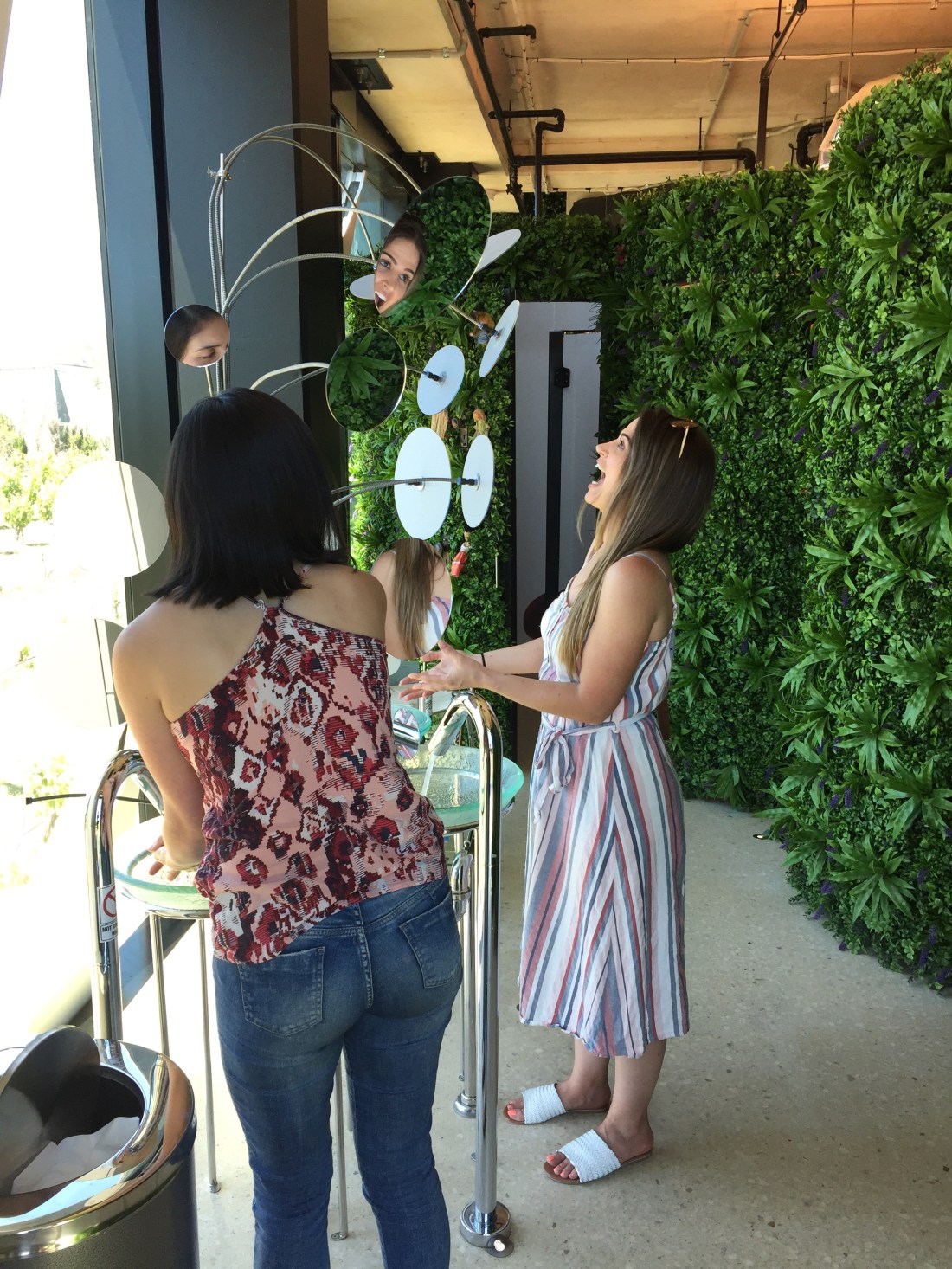
This place is something else! I’ll let the photos speak to their set up in there.

There was haunted house type music playing on outdoor speakers as we walked up, and the whole ground level is an artistic museum. The tasting room is on the top, and the bathrooms are on the first level.

This wasn’t my style of winery, but was worth seeing once. I’d recommend that everyone who visits McLaren Vale go take a tour, keeping in mind that all of that craziness in there distracts from their wine. They have over 70 wines and they’re aiming for 100. I’ll let you decide how many you think a place can do before the quality drops.

Hugh Hamilton

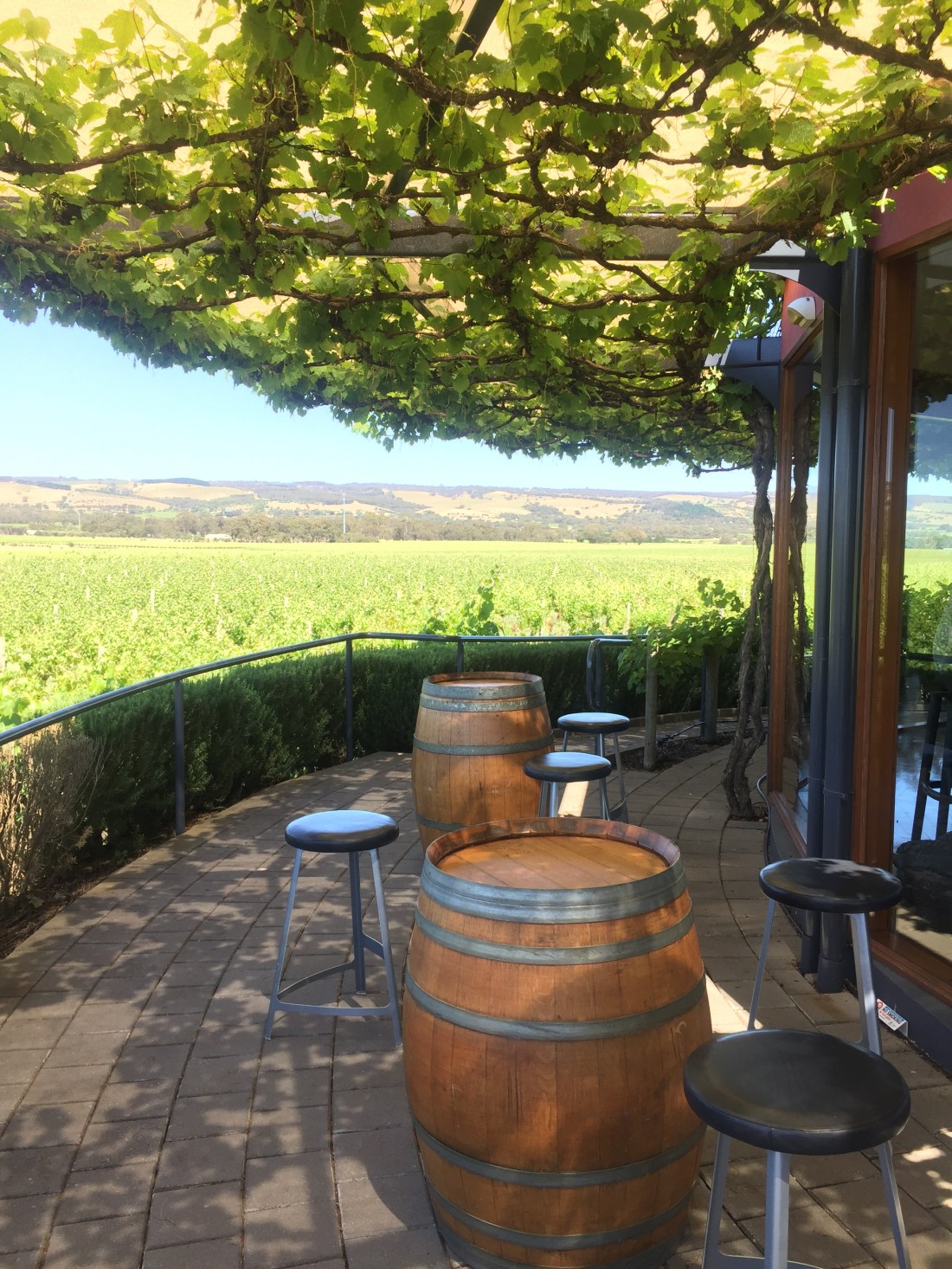
This was easily one of the most beautiful wineries and tasting rooms I’ve ever been to. They also had exceptional wine. The building is very simple and small, but it’s set up for sit down tastings that capitalize on the naturally beautiful setting that is all around them.

Wirra Wirra, Alpha Box & Dice, Chapel Hill

These were all nice enough experiences, with decent, but not spectacular wines, except at Alpha Box & Dice. It was a super cute, quirky place, that made a lot of Italian varieties, and did them well.

We quite enjoyed our experience and our wine. We even sat on their lawn and had a glass in the shade before ending our day, as they’re open later than all the other wineries.

Goodieson’s Brewery

The craft beer scene is beginning to pick up in several of the wine regions in Australia. Breweries are slowly popping up that produce locally made styles of craft beer in a wide range.

Greg enjoyed his flight at Goodieson’s very much, and as the D.D., I practiced driving on the other side of the road!

Landscape and Food

Pizzateca was the highly reviewed restaurant we chose to visit for lunch in this wine region. It is run by Italians, who make everything in house and fresh. Greg said our pizza was one of the best he’s ever had. We also enjoyed their lamb skewers, tiramisu and limoncello!

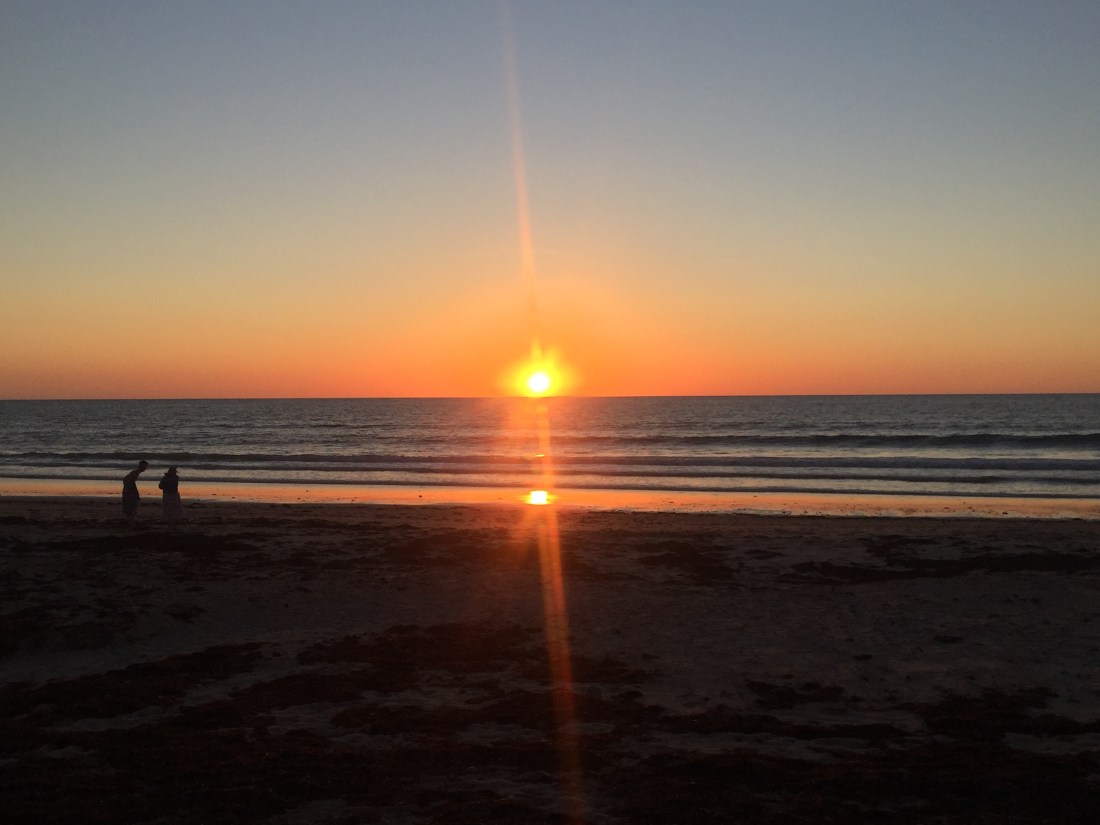
McLaren Vale was quite hilly, and unlike the Barossa, it sits right along the sea. You can see the sea from many different viewpoints as you’re driving around and at wineries. Our Airbnb was also within sight of it, and we walked or jogged down to and along the shore several times. We also visited the beach to relax in the sun a couple of times, and to watch the sun drop into the ocean at the end of the day.

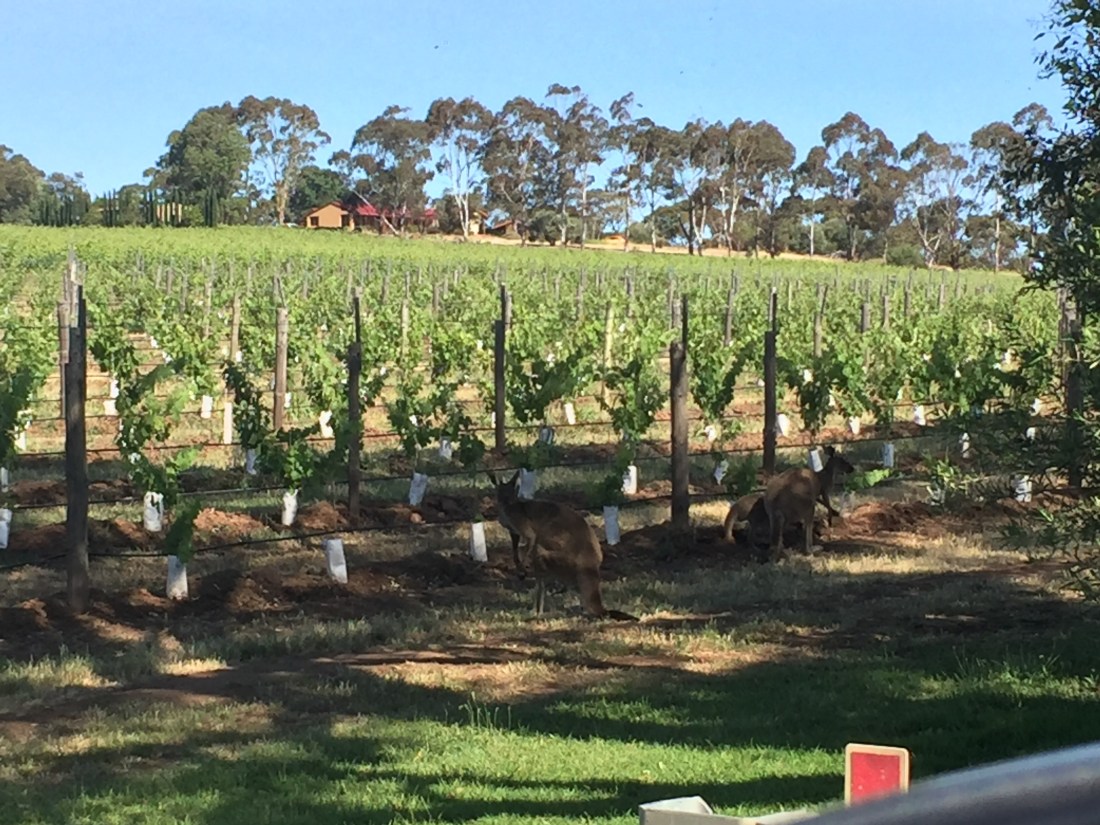
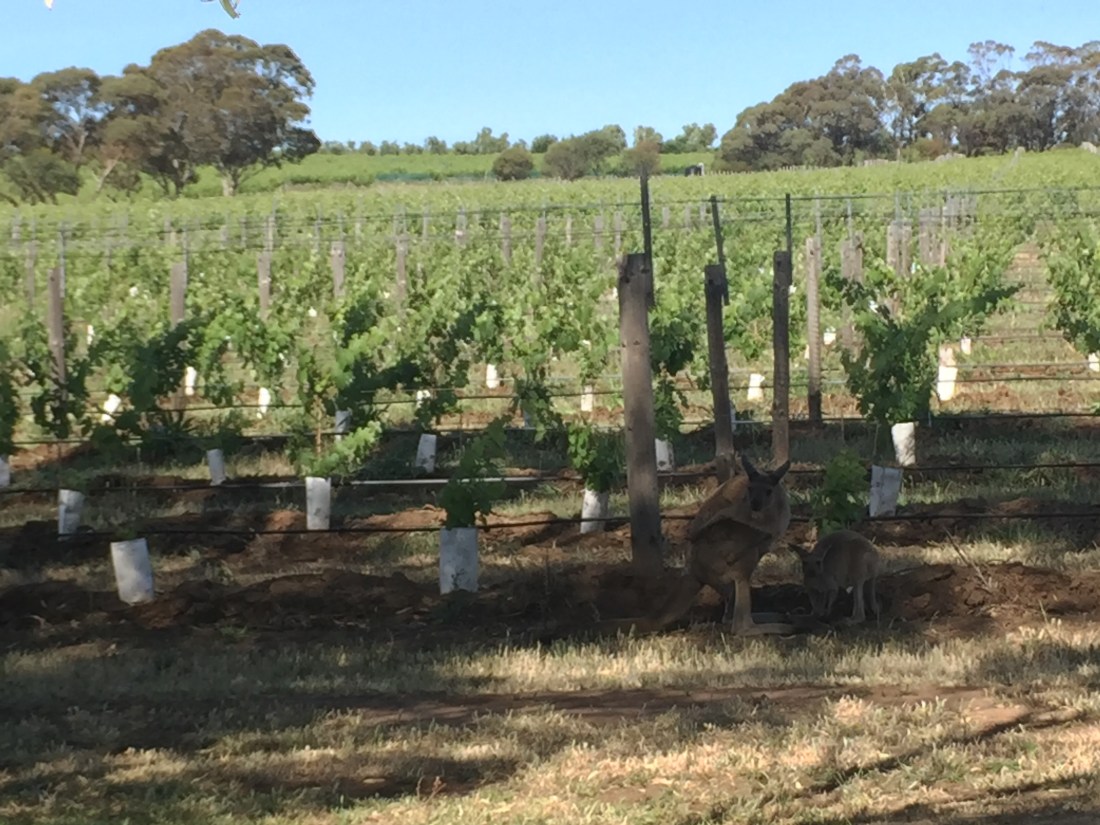
We also managed to see some Kangaroos along the side of the road!


Wine Tasting in Australia

One thing we noticed, that is unique to Australia (and some wineries we’ve been to in New Zealand), is that they actually let you taste everything on the menu. In other countries, you’re asked to choose which ones you’d like to do, and given a number of how many you can try, but in Australia, they seem to like to take you through everything they have.

Many people in Australia do not use the spittoon. It was common to see people with drivers, or on group tours in vans. We, of course, both use the spittoon at all the wineries, all day (with the exception of definitely swallowing Grange!) even if we’re not the one driving. We actually want to learn, and we like to be able to pay full attention to each wine we’re tasting, even by the end of the day. Because spitting isn’t super common, some of the spittoons were a big bucket, across the room or walkway from the bar, which made it awkward for us to have to walk over with each mouthful, and sometimes bend to the floor to spit. That was a negative for me at the places that didn’t have mini spittoons at the bars.

One of the ladies at Penfolds noticed we were spitting, and commented on it. We explained how we learned a saying they have in France that “you don’t taste wine with your stomach.” She just laughed and exclaimed, “well we don’t say that in the Barossa!”

Overall, our trip to the wine regions in Australia was fabulous for wine lovers like us, and we had some really great visits, met some great Cellar Door people, and learned a lot! Hopefully I’ll get to be a Cellar Door person myself some day, and offer that experience I’ve enjoyed so many times to others.

If you’re touring wine regions in Australia, good luck, enjoy the beautiful scenery, watch for bugs and creatures, and have fun!

Two Natural Wines We Tried, and Why Natural Wines Could Be Better for Our Health

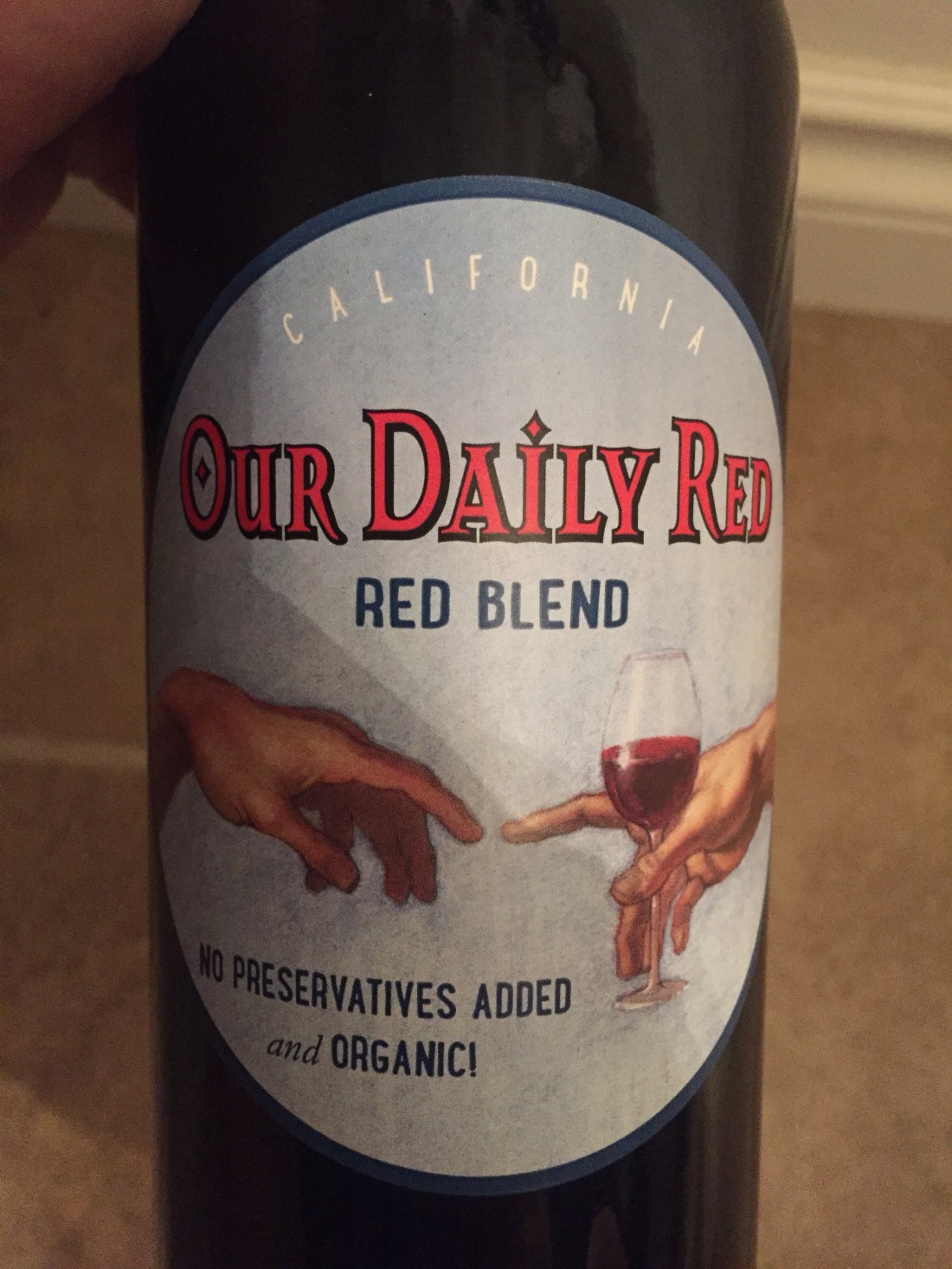
Natural Wine is gaining popularity as wine drinkers are wanting healthier, less chemically enhanced options. The trend in organic, clean foods is crossing over into a desire for wines with lower sulphites, farmed by real people and with minimal interventions. I’ve been doing more research on them myself, and after listening to a podcast about them this summer, I decided I wanted to try some truly natural wines, and contacted my local sommelier to have her add them to my wine locker. We don’t have many available yet in our small city, but she was able to help me find the ones we have access to. I had tried one of them at a wine tasting previously, (an orange wine – a white made like a red) and I wanted some reds this time, so she gave me two: a Bonterra Cabernet Sauvignon, and Our Daily Wines Red Blend.

I am excited to share our opinions of these wines with you, but before I review the wines, it will be helpful to explain what natural wine is, and how it is different than most commercial wines. Natural wine is essentially made how they would have done it in the old days. As you are reading about natural wine’s characteristics below, remember that the opposite is true in many other commercial wines that are on our shelves.

Natural wine is hand harvested, and basically, it’s made with nothing fake or processed. (Organic wineries can still use machines to harvest). The vineyards must be sustainable, organic and biodynamic. See my blog post Organic and Biodynamic Wineries in Kelowna for more information on these practices. No chemicals are used in the vineyard, but natural plant based fertilizers and pest control methods are employed. Natural yeast, or native yeast, is found in every vineyard, growing on grapes and living in the air, and this is the yeast used to make a natural wine. It’s harder to control, as it’s natural, so it can produce unpredictable flavours, even undesirable sometimes, but it’s not formulated in a lab, and this is important to natural wine lovers. To a certain degree sulphites are present in grapes and bottle sanitization methods, but in a natural wine it’s common to find little to none present. (Organic wineries can still use sulphites to clean the equipment and bottles, although many try to keep it to a minimum). Natural wine makers will allow fermentation to stop when the yeast dies either from high alcohol content, or temperatures that kill it off. They also don’t add anything to alter sugar levels, so there’s no simple syrup going into them, nor do they use chemical additives to alter acidity, so you get what you get. There are no dyes or artificial flavours added to enhance appearance or cover up mistakes or unpopular flavours. No fining or filtering agents are used to rid the wine of sediment either, so they’re vegan, and you just need to remember not to pour the last ounce to spare yourself the chunks! (I explain this in my blog linked above as well).

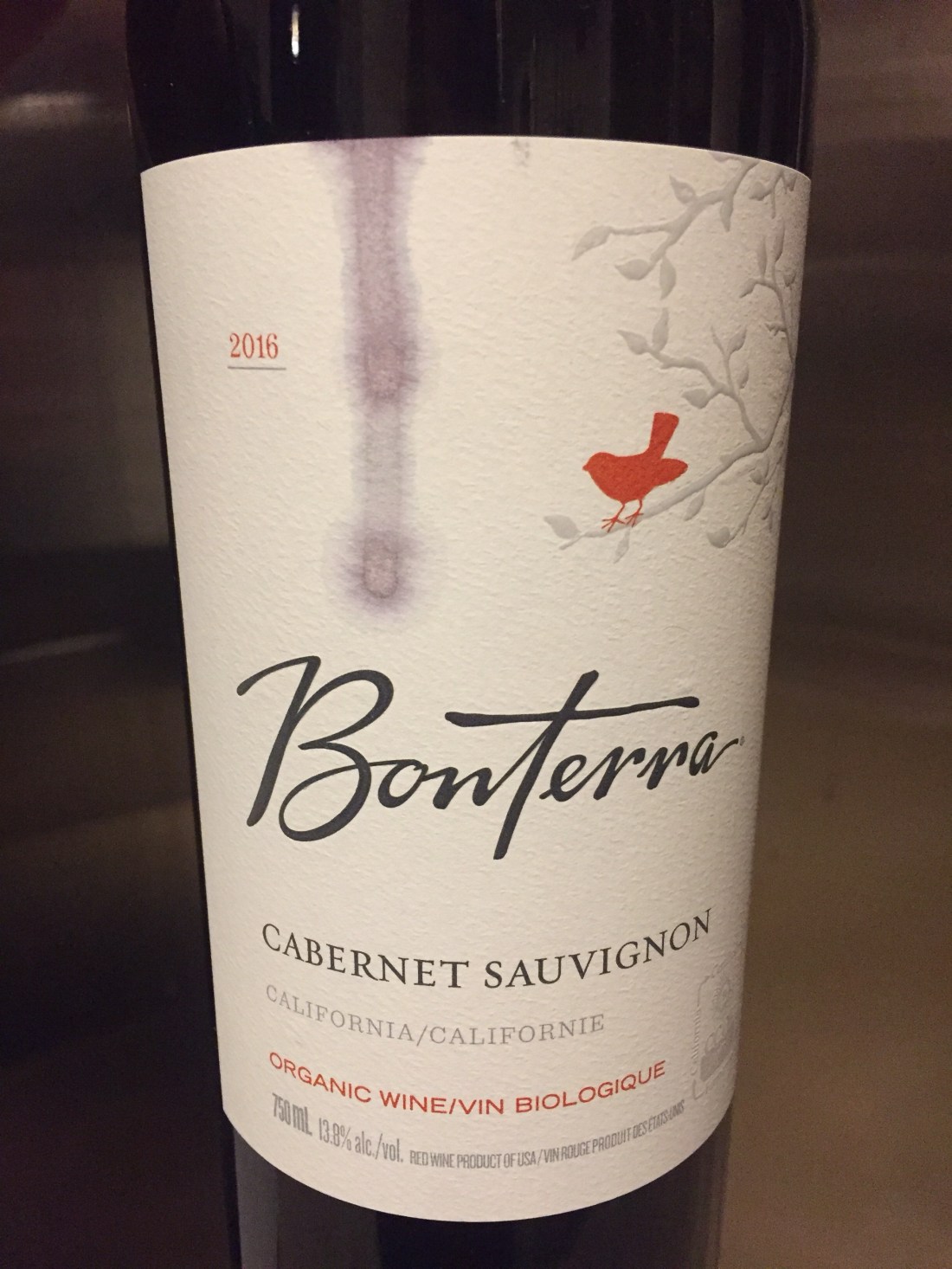
Bonterra – Cabernet Sauvignon from California (labeled as Organic). We dripped on the label, so pay no mind to the purple streak, other than as a color indication!

I did some research on the producer’s website to find out more about their natural practices: http://www.bonterra.com.

They practice organic and biodynamic farming, and they are actually certified Biodynamic, meaning they’re holding tight to all of the practices they should be.

Their tasting notes boast bright cherry, currant and raspberry, with hints of oak and vanilla. I would completely agree with this tasting note. It wasn’t too complex, but there were a few layers, and it still had that California Cab taste, just with a bit less intensity. The tannins were still high, and the finish was medium. The body was a bit less than other California Cabs, but not by much.

I emailed them twice to ask for more specific information about sulphites and if they use them to clean the bottles, but nobody got back to me either time. That’s a bit unimpressive to me; if you offer a place for comments and questions on your website, employ someone to monitor them and respond.

Overall, this was a very good wine, and I would drink it again, gladly.


Our Daily Red – Red Blend from California (labeled as “No preservatives added,” and organic).

I researched this one as well, and this one is truly a natural wine: ourdailywines.com.

Our non-GMO wine grapes are grown without the use of conventional pesticides, synthetic fertilizers or any chemicals deemed harmful to the environment. Furthermore, our certified organic winemaking facility allows for only minimal processing and prohibits the use of color, flavor or non-organic  additives and preservatives.

They also have no detectable sulphites, which is extremely rare in the new world.

Sulfites occur naturally in small amounts in a number of foods and also in wine. Winemakers add additional sulfites at various steps during the winemaking process to prevent oxidation and the growth of undesirable yeast or bacteria. At Our Daily Wines, however, we never add sulfites to our wines, and as a result of our care and processes, our wines are among the few commercially available which contain no detectable sulfites. We use natural, technologically advanced techniques to ensure freshness, resulting in wines that are the purest expression of the grapes and vintage.

They checked out in all of the areas I was concerned with in wanting a natural wine.

Now, for the taste!

It was acceptable. It had a bit of a yeasty aroma to it, which is to be expected from a natural wine. My mother-in-law was in the room when I swirled my glass, and without knowing anything about the wine, asked me from across the kitchen if I smelt yeast! It was noticeable, but I wouldn’t say unpleasant.

It was a red blend, and it had typical red fruit aromas of cherry and plum, and maybe some darker fruits like blackberry, but nothing intense. Their tasting note claims bourbon vanilla, but it was very faintly there. They claim a ripe and silky finish; it was balanced, in my opinion, and had a medium finish. It had light to medium tannins and light body, and reminded me of the same intensity as a Pinot Noir style red, although it was much lighter in body than a Burgundy.

Overall, it was a basic, simple wine, but it was perfectly enjoyable, and I liked knowing that it was very cleanly made, and had nothing in it that was bad for me. For people that drink wine a few times a week, it’s nice to know that there are options out there that don’t contain chemicals. Just like organic foods are healthier due to less chemical intervention in their growth, organic wines are healthier too, for the same reasons. They’re naturally grown, how they were meant to be.

I would purchase from either company again, and am curious to try some of their other varietals, if I ever see them in my travels. I encourage you to pick up a bottle of natural wine the next time you’re in the mood for something different, or a bit healthier!

Happy Wine-ing!

Three Amazing Must-Do Travel Bike Tours

We love traveling, seeing the sights, and being active, so it’s no wonder we’ve chosen to do bike tours on several of our trips. I also appreciate efficiency, and getting some wheels can greatly increase the amount of ground that can be covered in a short amount of time! We’ve biked in many places of the world, but these three experiences are all somewhat or fully guided, have given us the best bang for our buck, have offered very scenic exercise opportunities, and have provided amazing memories that we will cherish for life.

The Paris Night Bike Tour – 4 hours

http://www.fattiretours.com offers it for $69.95 and I recommend booking well in advance or it will be sold out! It’s got a 5 star rating on their site and I’m not surprised, as it is absolutely fantastic.

This tour was recommended to me by a friend before I had been to Paris for the first time, as it’s a great way to get some bearings on the layout of some popular tourist spots, and some general information. I recommend doing the tour close to the beginning of your trip for that reason. We did it, loved it, and have recommended it ever since. My sister and her friends booked it on my recommendation and highly enjoyed it as well.

We arrived on time, just after supper, at the address given to us upon booking, where we met our tour guide. We were set up with bikes and safety vests that were adjusted to fit us properly, and then we were taught how to use the bike. Paris is a very busy city, and we were going to be driving on the roads, with the traffic, so our tour guide taught us how to drive as safely as possible and how to keep up with the group.

Disclaimer: If you have never ridden a bike before, I wouldn’t recommend a bike tour in any large city as the place to learn. You don’t need to be an avid biker, but you do need to have some pre-established comfort on a bike.

Once we were ready to go, we set off into the evening! We biked at a relatively quick pace, and stopped every so often to view a monument, take some pictures, and learn a bit about what we were seeing. We stopped at places like Notre Dame Cathedral, the Louvre, the Latin Quarter, and we even stopped for an ice cream at Berthillon, a place they claim is most famous in Paris.

Then we made our way to the river, where we locked up our bikes, and jumped on a boat for a Seine River Cruise. The river cruise is one of my absolute favourite things to do in Paris, as you can see so many of the city’s famous places from the water, sail under its intricately ornate bridges, and admire all the locals that gather to relax and socialize along the riverbank. The timing of the boat ride was perfect for us to see the sunset, and the Eiffel Tower sparkle in the dusk from the water.

Oh, and did I mention the bike tour guide gives you free wine on the boat ride? Yes. Free wine. As much as you want. 🍷✔️

Once we got off the boat, we resumed our biking, perhaps a little wobblier than before the free wine, and made one more stop to see the Eiffel Tower again before heading back to the Fat Tire shop.

What a fantastic use of 4 hours in Paris!


Brooklyn Bridge Bike Tour
in New York – 2 hours

http://www.centralparksightseeing.com offers this tour for about $45, depending on what time and day you’re going.

Nobody had recommended this to me, but I wanted to do a bike tour in NYC, for the same reasons as on other trips: we cover ground so quickly, we get to meet other people, and we get some information about what we’re seeing, all while being active!

We were almost late for this one as we got lost on the Subway (so leave earlier than you think you need to), but we got there just before our group left. They quickly fitted us with bikes and we were on our way with our tour guide.

We biked at a reasonable pace, but we also stopped quite frequently on this tour to learn for a couple of minutes about what we were seeing. We rode through several old neighbourhoods that were the beginnings of Manhattan, down by the harbour, through the south end of Broadway, and China Town, while learning about some of NYC’s history. We pedalled across the Brooklyn bridge, breaking for some photos on the top!

Then we explored Brooklyn Heights and learned about the bridge and the area, before heading to the water’s edge near Jane’s Carousel to get a fantastic view of Manhattan, the bridge, and of course, some photos.

We made our way back across the Manhattan Bridge before ending the tour back at the shop.

This was an affordable and very informative tour with a friendly, personable and knowledgeable tour guide (ours happened to also be a college professor who was passionate about his city’s history), that left us feeling like we learned and saw so much that we just couldn’t have on our own.

They offer many different bike tours other than this one, so if you’re interested in other areas of the city, or want to do more than one tour, you could learn and see a lot!


Biking the Vineyard Trails of Burgundy
in France – full day

We booked rental bikes ahead of time through http://www.burgundy-by-bike.com for the very reasonable price of €20/day.

My heart smiles when I remember this day. It was easily not only one of the best biking experiences, but the best travel experiences – I’ll even say best life experiences – I’ve ever had.

We had watched some YouTube videos and read a few articles in our preparation to visit Burgundy (Bourgogne in French) and we’d seen a few recommendations to do the bike trails through the vineyards. As we love wine, we were going for wine, and we enjoy biking, we knew this was an absolute must for us.

There are a few companies that do guided tours, but we chose to rent our bikes in the town of Beaune, follow the maps they gave us of the bike trails and winery stops, and go independently of a guide. We didn’t know how long we’d want to be out, but we didn’t want to be limited by a group for this one, and I’m glad we weren’t, because we took the whole day!
We were fitted to our bikes, and given great directions and a map to get us through Beaune, and onto the bike path. Our map also explained exactly how many kilometres apart each of the towns were, so we could decide if we wanted to go the full distance or not.

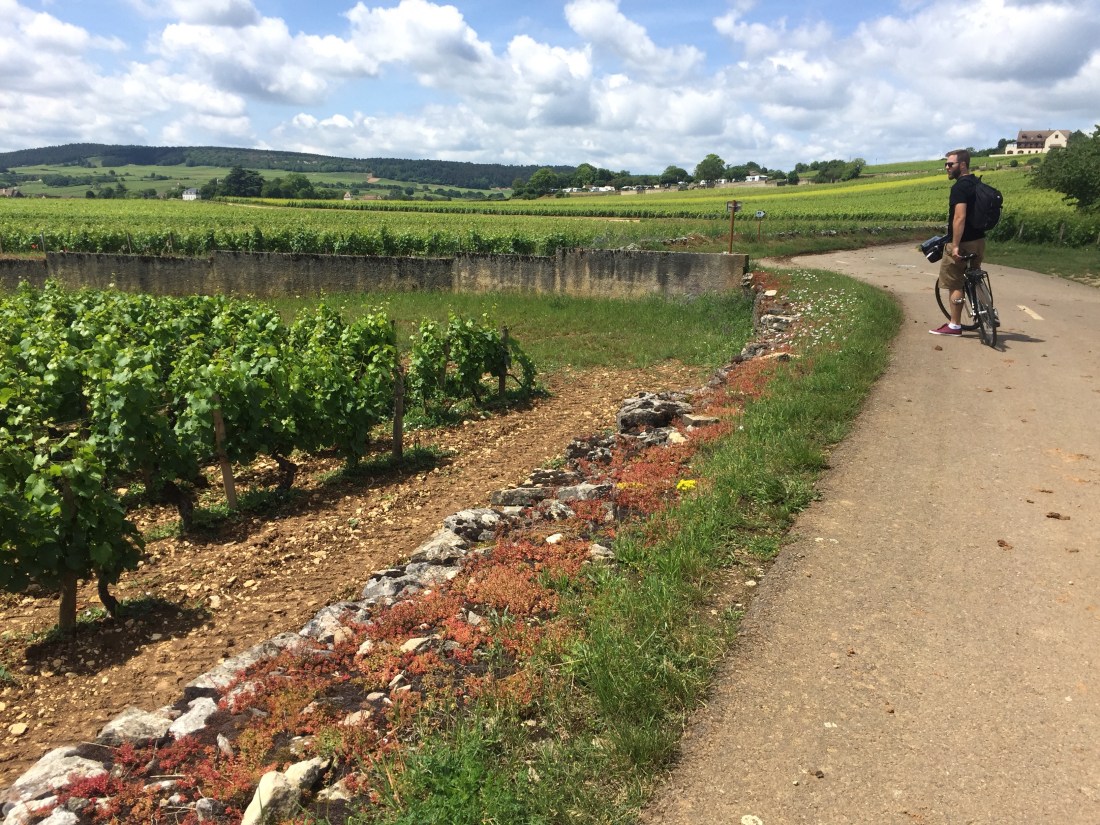
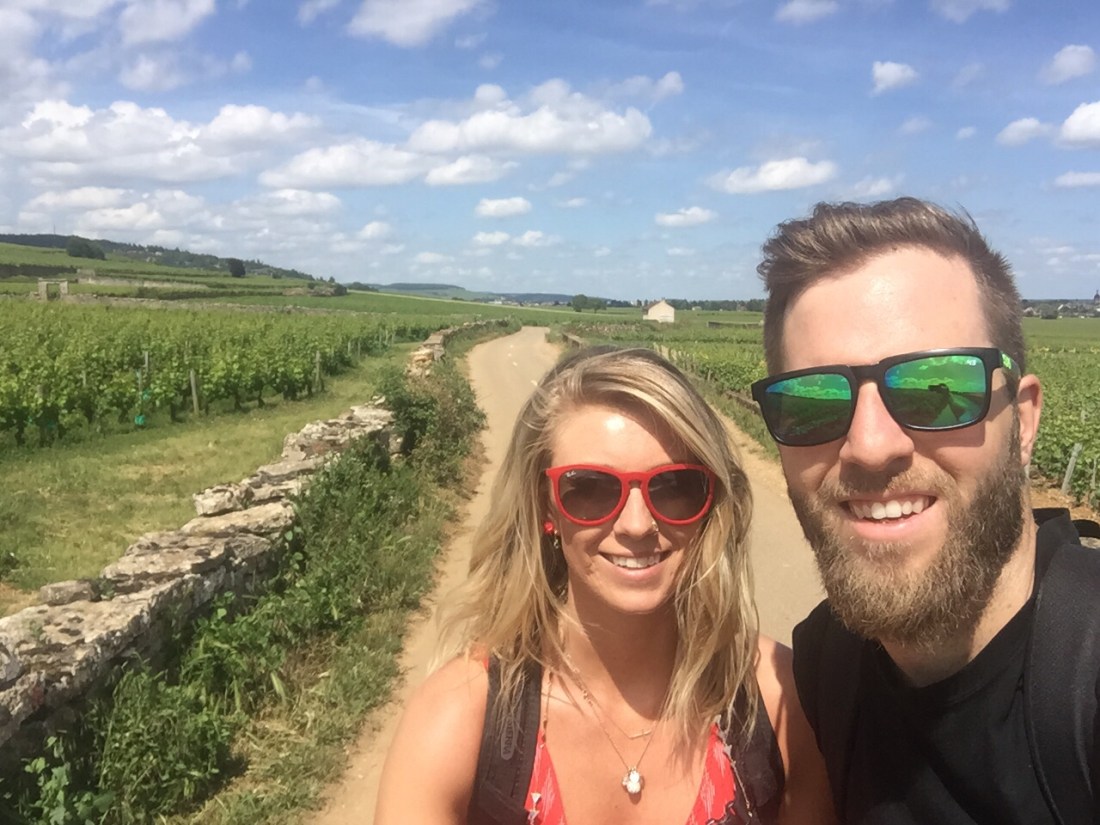
We had the most beautiful, magical day. This was my Disneyland! Biking through the vineyards of Burgundy is just breathtaking! For one, the views are stunning, and the history is ancient; these vineyards and wineries have survived wars, and the stories of the families are generations long. Secondly, Burgundy is not flat! Our breath was taken away many times on this hilly ride! We were there in June, and it happened to be a very hot, sunny day. There is little shade on the ride, so make sure you bring lots of water. There are a few towns that you can purchase food and water in along the ride as well.
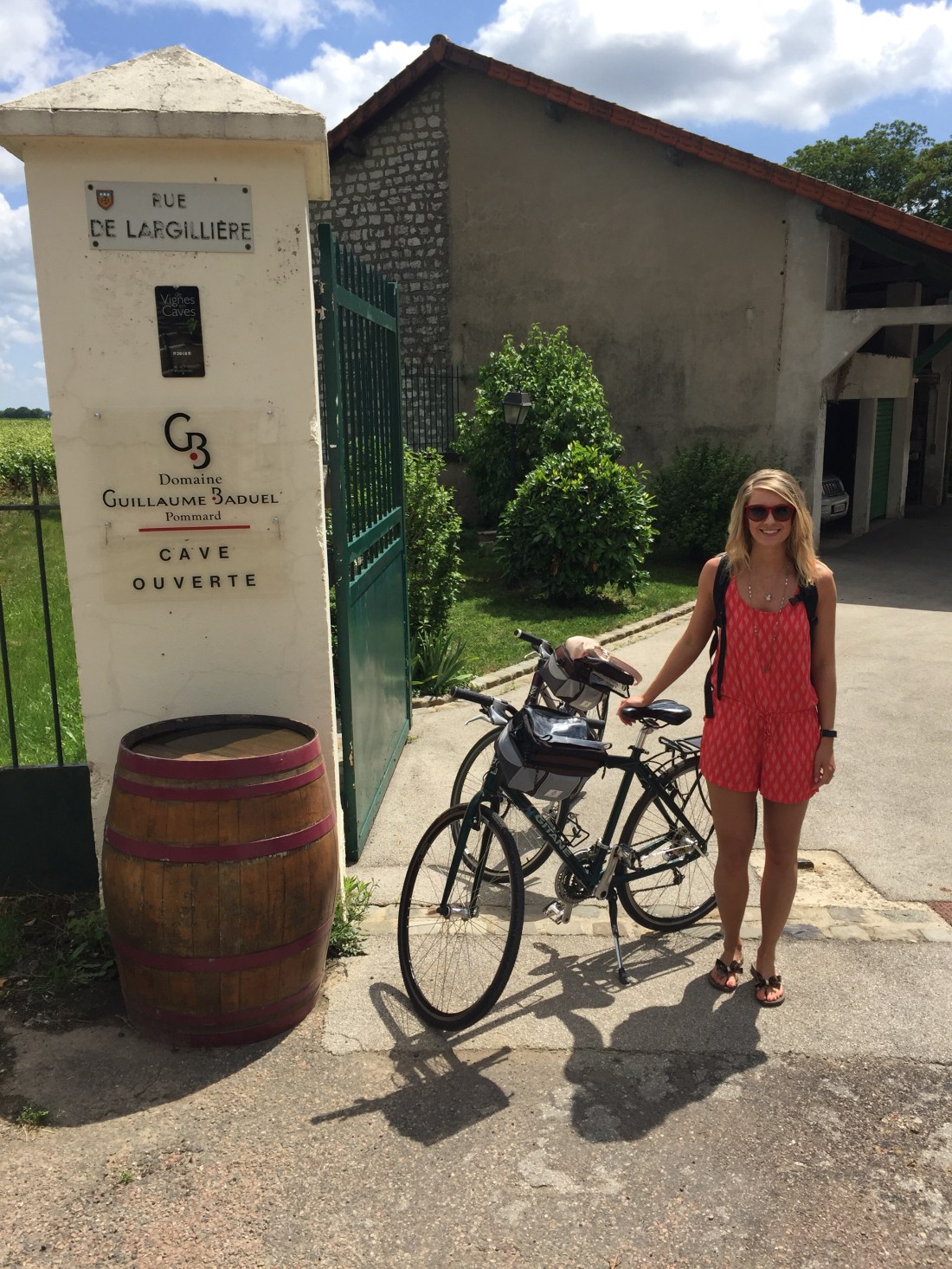
We started off at the famous entry to the vineyards.

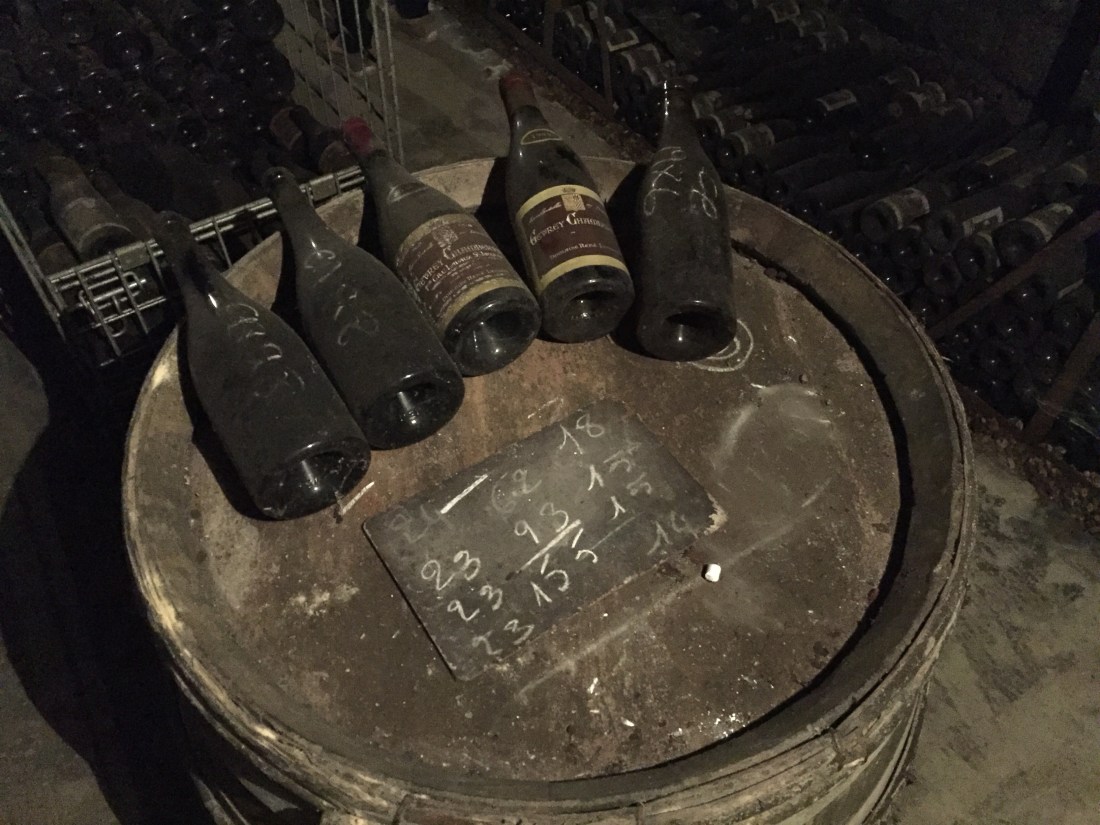
We rode through several towns in the morning, stopping at a small Chateau in Pommard for a wine tasting in their below ground cave.

It was stunning, but the details of this are for another article!

We then rode through the villages of Volnay, Monthelle, and into Mersault, where we bought some beer and water and had a picnic lunch in the town square. It was scenic and quaint, with the church tower chiming away noon, and the small shop keepers closing up to enjoy the lunch hour by the trickling fountain. The town was alive with locals on their daily routes, and other bikers like us, stopping to enjoy the moment and some rest in the shade.

Once we were finished our storybook perfect lunch, we headed on towards Puligny-Montrachet, where we did another wine tasting. We then biked to Chassagne-Montrachet and finally Santenay, before deciding to turn around. We enjoyed little stops along the way to look closer at the vineyards and take photos, as well as to observe the village homes and businesses.

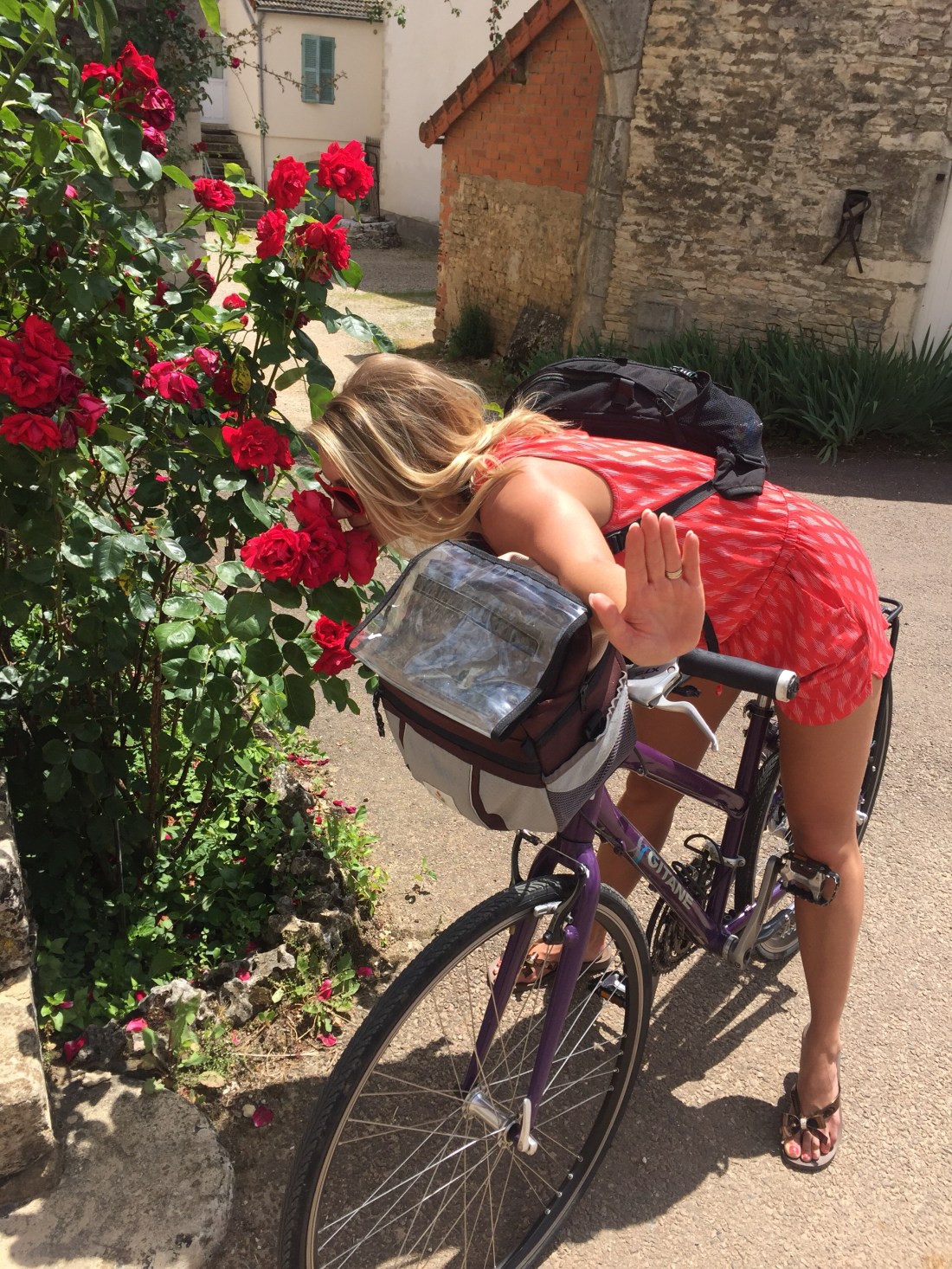
We also made sure to stop and smell the roses!

Biking in Burgundy felt so picturesque, so peaceful and so surreal that I had to keep reminding myself that I was really there, and it was really happening! I soaked up every minute of the experience and it couldn’t have been more perfect.

We put on 40kms on the bikes that day, so we were pretty tired by the evening, and it was so worth it!

So there you have it; these are my top three biking memories. If you are ever in any of those places, I highly encourage you to take advantage of the opportunities, and all they can offer you!

Happy travels!

Aging Wine; The Need To Knows

“You get better with age like a fine wine…” ❤️

We’ve all heard sayings like this before that leave us to believe that all fine wine gets better with age.  This is partly true – many fine wines do get better with some age – but which wines are meant for aging and how long they should be aged, is actually quite a complex topic.  Then there are multiple factors that come into play regarding storage/cellar conditions that will either age wine well, or ruin it quickly.

A huge misconception I’ve come across in speaking with friends and family about wine is that it ALL gets better with age.  This is definitely not true!  There is a saying in the wine world that only 1% of wine is actually meant to be aged in the bottle, which means that 99% of the wine on the shelves right now is meant to be consumed within a few short years from now, or today!  More on specific aging times in a moment. I’ll tell you right now, that 1% more than likely didn’t cost less than $20 either, so if you’re hanging on to those $7.99 bottles, it’s time to grab some glasses, or possibly make dinner with some type of a wine sauce!

Wine needs to have certain qualities to give it the ability to age well.  Madeline Puckette, the creator of Wine Folly, gives 4 qualities that you can look for in a wine to determine if it is age worthy:  Acidity, Tannins, Alcohol Level, and Residual Sugar.  [1]

Acidity

The higher the acid in the wine, the better it will age.  When tasting wine, acidity is the factor that makes your mouth water.  It is often described as “crispness.”  Chablis, for example, has a high amount of acidity, and can age well, even though it’s made from white grapes. (Tip your chin down with the wine in your mouth and see how much spit forms. If there’s a lot, it’s higher in acid!)

Tannins

Lots of red grapes have high tannins and can be aged for several years.  Sometimes whites have tannins, but rarely.  Tannins are chemical compounds that come from the seeds, skins and stems of grapes.  When you taste them in wine, they’re not so much a flavour as a feeling.  (That dry feeling you get along your gums, like when you drink a way over-steeped tea, is the feeling of tannins!) In the process of making red wine, the grape juice sits with these parts of the grape, allowing the tannins to enter the wine.  Some can come from oak contact as well.  Certain grapes are more tannic than others, depending on their composition, and certain wines will be more tannic if they’re left to sit with the skins, etc. for longer periods of time.  These tannins can be bitter and harsh in young wines, but they help them age well because with time, the tannins “soften,” and become more “well-rounded.”  This basically means that instead of the wine tasting sharp and pungent in your mouth, it will taste more smooth and balanced; higher tannin wines need age to taste better.

Alcohol Level and Residual Sugar

Red wines with higher alcohol content, closer to the 14% mark, will typically age better than lower alcohol reds.  Whites have lower alcohol in them, but some grapes have particular compounds and sugar levels that will allow for a decent amount of residual, that is, left-over sugar, once the fermentation process is done.  These whites, like Rieslings, for example, have a balance of sugar and acid that enables them to age well.

So now that you’ve determined you’ve got a wine you’re going to hold on to, here are some things to think about before you put it away and forget about it.

Screwcap vs. Synthetic Cork vs. Real Cork  

The method of capping wines is still a largely debated topic in the wine industry.  Real cork, vs. synthetic cork, vs. screwcap – there are a lot of opinions out there on which is best and why.  For more information on this topic, check out my article Real Cork vs. Synthetic Cork and Screwcaps. For the purposes of this article, I’ll only comment related to wine’s age-ability and storage.

Australia and New Zealand initiated the use of screw caps, and still use them on many of their wines.  Other countries have started following suit.  A screw cap does not indicate poor quality wine, it’s simply a method that some producers believe is the best way to seal their wines.  Wines with screw caps don’t need to be laying down for storage, but they can be. Screw caps haven’t been tested for super long term aging, but some can last a decade or more.

Wine professionals have recommended to me, on more than one occasion, that synthetic cork should not be left in contact with the wine for long periods of time; they say it can leave a plastic type taste in the wine, and can also leave other synthesized compounds in the wine, that they don’t want to be consuming several years down the line.  Stand those synthetic cork wines up for any length of storage.  Fair enough. These are also only guaranteed for a few years at best.

Wine with a real cork must be stored lying down.  Cork is a natural compound, and it dries out over time.  By lying the wine on its side, the wine stays touching the bottom of the cork, and the moisture helps to keep the cork damp enough that it shouldn’t dry out.  This is important, because if the cork dries out, it shrivels up and shrinks, letting too much unwanted air into the bottle.  Over the years, the overdose of oxygen will ruin the wine, leaving it “oxidized” and undesirable. Natural cork has proven the test of time and has lasted sometimes for hundreds of years.

Cellar Conditions

Have you ever been to a winery, or seen photos of their cellars?  What do you notice about them?  They’re usually cool, dark, and damp, and the wine is off to the side and out of the way so it doesn’t have to be moved.

Cellar conditions for ideal wine storage should be between 10 and 15 degrees Celsius, and shouldn’t change much.  Light shining onto the bottles for some time can alter the wine inside, whether it’s natural or artificial light.  Humidity will help keep the corks damp, so they stay plump and tightly sealed to the inside of the bottle’s neck.  The more you can leave the wine alone, without bumping it and moving it, the better its chances are of aging well.

When wine is resting well, it’s aging well, similar to you!  Just think of how well you would rest if someone kept changing the temperature on you, shining light on you, and bumping you around – exactly.  This is why I can’t sleep on an airplane. If you want your wine to be pleasant, give it a good rest!

Did you know that storing wine in a kitchen is actually one of the worst places in a home environment to keep it?  The temperature fluctuates the most in kitchens/bathrooms out of any of the rooms in your home.

How Long is Too Long?

There is a window of time that most wine professionals believe wine is at its best.  The window will vary slightly for each wine, but at a certain point, it will hit its peak, and begin to decline in quality again.  There is no exact way to know when this is, so it can feel like a risk when you’ve been aging a wine for a while, and want to make sure it’s at its best before popping that old cork ever so gently!

So many great wines become collector’s items, and people spend so much money on them, that they never want to drink them.  I once heard someone on a wine documentary say something to the effect of how many of the world’s greatest wines have essentially gone to waste, sitting in someone’s cellar for way too long, because people don’t understand how wine ages.  There’s a time and place for cellaring wine, but in the end, wine is meant to be drunk.

Jancis Robinson’s The Oxford Companion to Wine is one of my favourite wine books.  She says, “contrary to popular opinion, only a small subgroup of wines benefit from extended bottle aging.  The great bulk of wine sold today, red as well as white and pink, is designed to be drunk within a year, or at most two, of bottling.”[2]

In her expert opinion, she goes on to list specific numbers of years that several particular types of wine should be aged for, of which I’ve only included a few popular choices.  Almost all whites retailing under the $20 range should only be bottle aged to a maximum of 2 years.  Heavier whites, like Chardonnay can sometimes last up to 6 years.  More expensive whites can age longer, like Chablis (up to 15 years), or some Rieslings (up to 20).[3]  This has to do with the structure of the particular grapes, and how they’re produced.

Surprisingly, the number doesn’t differ much for reds.  If they’re around that same $20 mark or under, the longest Jancis recommends you keep them is 3 years.  You can hang onto higher priced French wines in your cellar from 15 to 25 years, Italian Chianti or Spanish Rioja can present nicely up to 10 and 20 respectively as well.  Above the $20 price point, most Cabernet Sauvignons can be bottle aged for 7 – 17 years, Pinot Noirs, 4 – 10, Shiraz, 4 – 12, and Grenache, 3 – 8. [4]  Jancis has not lead me astray yet, and I trust these numbers; keep in mind there are always exceptions, and your cellar conditions need to be appropriate, especially if you’re considering aging your own wines in the bottles.

*Note that keeping value wines up to that 2-3 year mark is NOT going to enhance their flavour; think of that time frame like a best before date.

To determine how long the wine has been in the bottle, you’re going to have to do some math!  The year on the label is the year the grapes were harvested, not the year it was bottled necessarily, so if the label explains that it was aged in the winery for a certain number of years, you can add that time to the year on the label to get the bottling year.

If you’re looking to age a wine, remember to look for wines that are balanced in acidity, alcohol, residual sugar, or have some tannin to them.  You’ll want to spend a bit more on these ones, and watch out for synthetic cork. If you’ve got a lot of $20 to $30 wines sitting in your house, it may be time to have a party!  Let’s not let that wine go to waste.  Happy aging of the appropriate ones, and cheers to all the rest of them!

[1] Puckette, Madeline.  (2017, Feb.)  “How to Tell If A Wine Is Age-Worthy.”  Retrieved from https://winefolly.com/tutorial/how-to-tell-if-a-wine-is-age-worthy/

[2] Robinson, Jancis.  The Oxford Companion to Wine.  2015.  Oxford, UK; Oxford University Press.

[3] Robinson, Jancis.  The Oxford Companion to Wine.  2015.  Oxford, UK; Oxford University Press.

[4] Robinson, Jancis.  The Oxford Companion to Wine.  2015.  Oxford, UK; Oxford University Press.

Organic and Biodynamic Wineries in Kelowna

Organic wine is becoming more and more of a trend in the new world. It’s quite commonly found in Europe, but it’s still a rarity in Canada. Kelowna has several wineries that use some organic practices and that claim to be organic, but there are only two that are actually certified Organic, and one that has a Demeter biodynamic certification. We visited both of them, and loved our experiences at each! I’m pleased to share with you what we learned about their practices and what we thought of the wines at Summerhill Pyramid Winery and Rollingdale Winery. First, it will help to understand what makes a winery organic and biodynamic.

There are several reasons why people are growing fond of organic wines, such as their low sulphite content, and environmentally sustainable practices. Many wineries may use organically grown grapes, but as nice as this theory is, if the winery isn’t organic in the rest of its production, it’s not putting out an organic product. In order to be certified organic, there’s actually quite a process that a winery has to successfully complete. Each country has its own specific regulations for certification, but they all focus on producing the purest wine possible. Grapes need to be grown organically, with no chemical sprays used. The organic vintner doesn’t add commercial yeast, but rather, lets the natural yeast in the air and on the grapes do the work. Sulphur naturally occurs on grapes in small amounts, and it is often used to sanitize bottles, but an organic winery is not permitted to add sulphur to their wines to stop the fermentation process, and they have specified maximum sulphur amounts on reds and whites. This means that sulphites (the buggers blamed for those nasty headaches and hangovers) are going to be minimal compared to commercial wines. Many organic wineries often don’t do fining or filtering, which means they’re not putting animal protein by-products (like fish bladders or egg or milk proteins) into the wine to clear out the sediment; you’ll notice some chunks at the bottom of your bottle of organic wine. This is the leftover tartaric and other acids, dead yeast and bacteria. It sounds kind of gross, but this is part of the wine making process, and they’re in all wines during fermentation. Most commercial wines take them out using chemicals or all those animal parts I mentioned (the sediment coagulates onto them), so I’m fine with seeing the sediment in my glass to know it’s a cleaner product.

The biodynamic movement is gaining more traction as people are studying it and starting to notice positive effects in the vineyards and the wine. The movement basically involves using the lunar calendar to determine the best days for vineyard practices, as well as some other beliefs that certain plants and natural practices increase the overall health of the vineyard, and therefore the final product that it produces. Biodynamic wineries are always organic wineries first; biodynamics is a way of being even more environmentally friendly, and additionally, these types of wineries are usually paying attention to sustainable practices to reduce their footprint on the earth as much as possible.


Now, to the wineries!

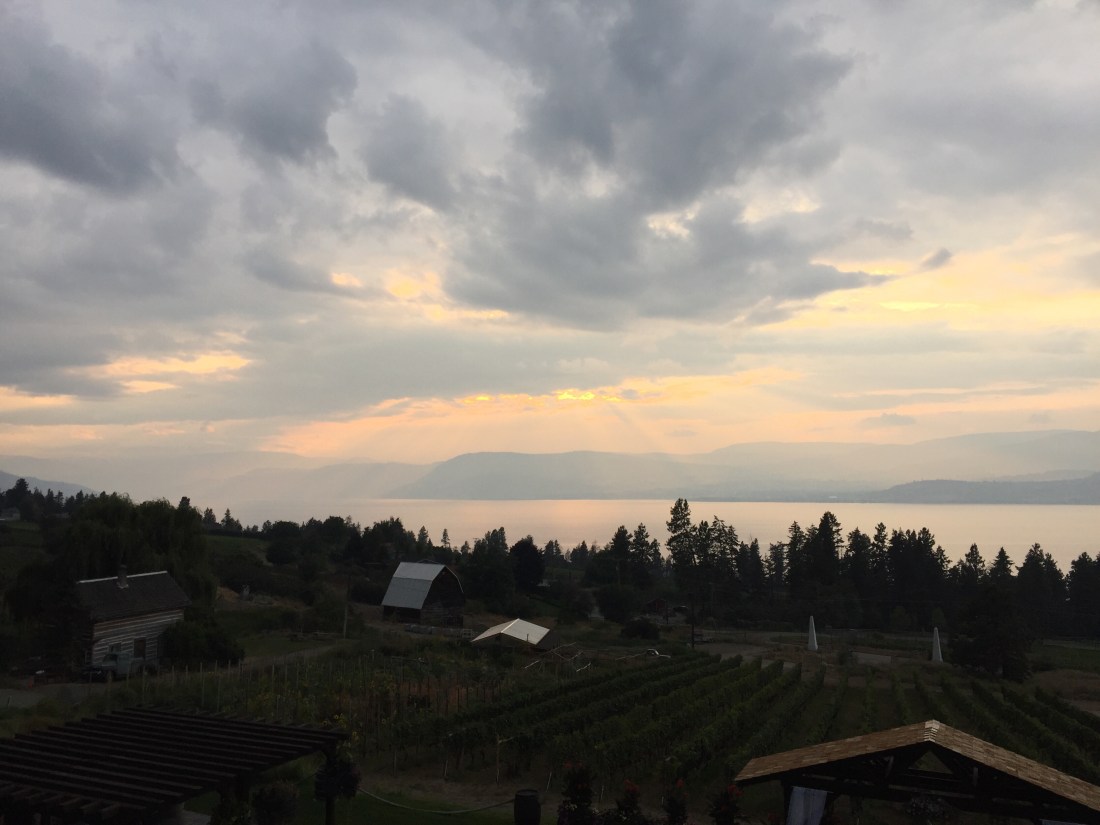
Summerhill Pyramid Winery is located just outside of Kelowna on a hillside overlooking the mountains and Okanagan Lake. Summerhill is certified organic and biodynamic. All of their wines are organic, and two are biodynamic. They are a large winery with lots of room for tasting, special events, and enjoying the beautiful view from inside and out. They have a large patio area that is part of their restaurant. We started with a tasting of several wines before we made our way to the patio to relax with a glass.

We started with their sparkling wine, which is made from Chardonnay and tastes as similar to Champagne as we had in the Okanagan valley, anywhere. It is made in the traditional method, with a traditional Champagne grape varietal, and we were quite impressed with it. It has notes of crisp green apples and citrus, and a slight yeasty bready nose and flavour.

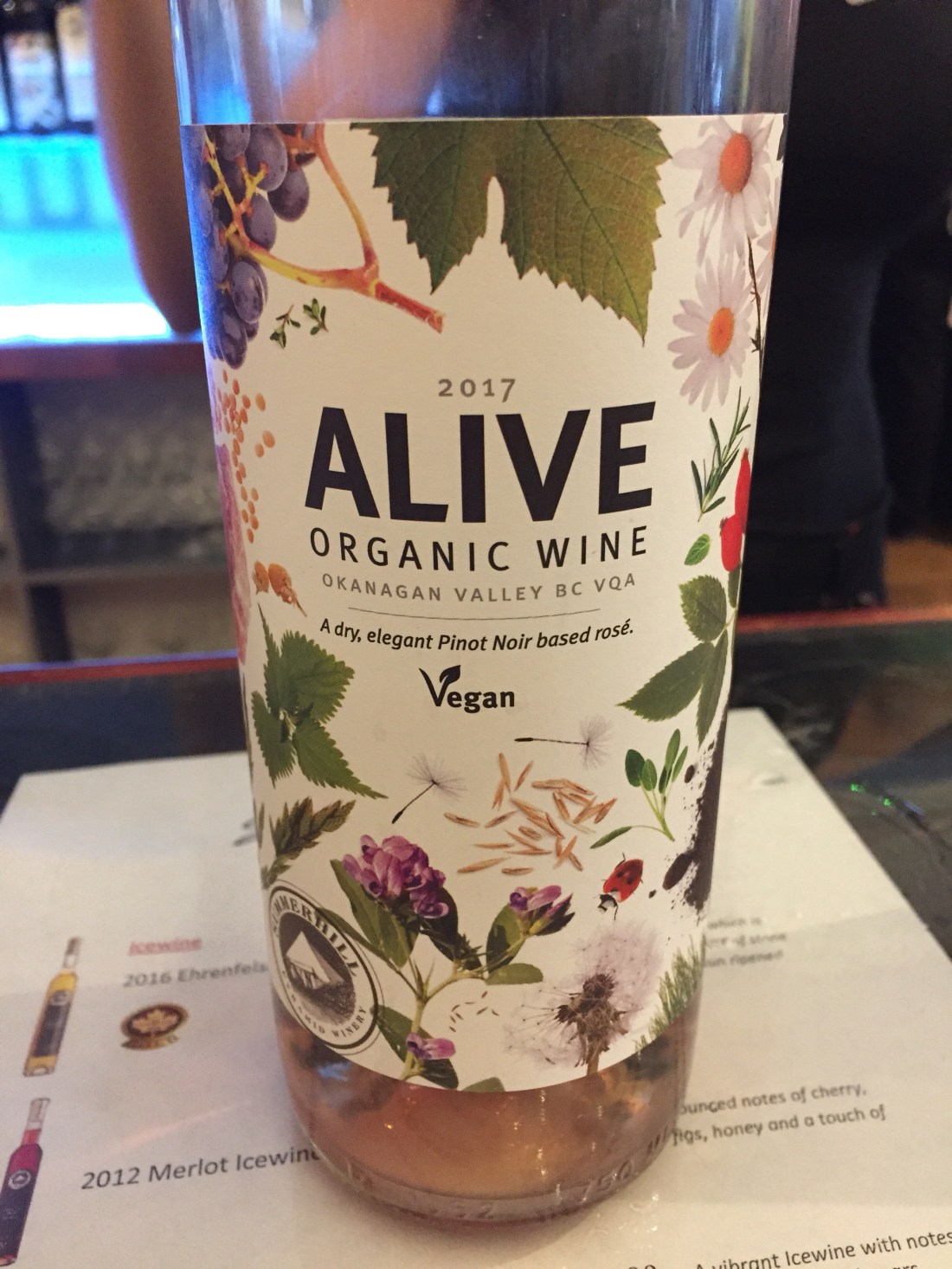
Their Viognier was also notable as it was quite floral and aromatic, and was a great expression of what the grape should taste like, as was their Alive Rose.

This is a benefit to organic wine, with little intervention; it can taste like what the grape actually offers, rather than what the winemaker did to it to alter the taste to what he or she believes consumers may want. We tried several more wines, and weren’t in love with all of them, but overall, we were pleasantly surprised. Our sommelier was an Italian man who recently spent some time in South America, and he had lots of experience and knowledge to offer about wine.

On the patio, we enjoyed Syrah and Merlot, two more that we felt were great representations of the grapes and well done. Our service here was also excellent!


Rollingdale Winery is special to us because we’ve gotten to know their wine maker over the course of our visits in which we’ve connected on lots of common ground. We therefore know even more about Rollingdale’s practices than we do about Summerhill’s. Rollingdale is certified organic, and is currently in process of becoming biodynamic. All of their wines are organic.

Rollingdale is set up in a very casual, minimalistic style. It’s rustic-industrial-chic, if you will! They’re using a shop as their winery and tasting room, and they don’t have a restaurant or a fancy patio, but visitors get the sense of being on a family farm, and that’s how they treat you there – like family. Everyone is so welcoming and friendly. They have a little cheese and cracker set up when you come in, and juice boxes for kids, and when they go through the wines, you can tell they’re passionate about what they do, not just punching a clock.

Our sommelier took us through several wines with an explanation of each, what they were made of and how, and a bit of the stories behind the names. He was knowledgable about the wines and the winery.

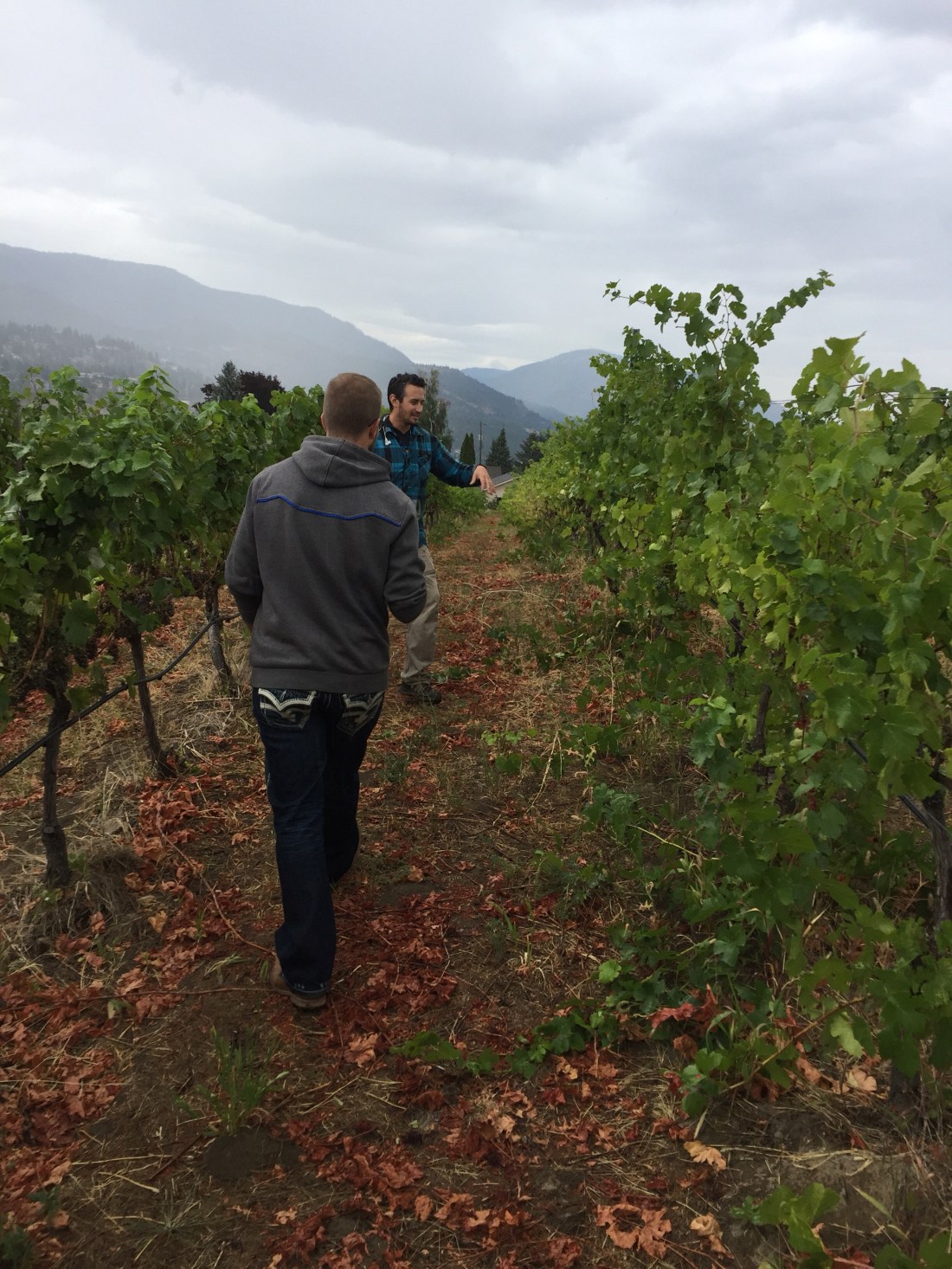
After our tasting, we ran into the winemaker who took us on a long walk through the vineyard and showed us where they were at in the season. He also explained how they’re in the process of getting their Demeter biodynamic certification. We went and took a look at the biodynamic block to compare the crop with the others, and it was immediately clear how much bigger, more ripe and abundant the fruit was. After going through the process, he really believes in the practices, now that he’s seen them for himself.

He has to keep a daily log of everything he does to those grapes and vines to get the certification. There are only certain days on which he can water and harvest, and he has to track exactly how much water the vines get. There are other days they’re permitted to prune and trim the vines. There are certain plants that need to be growing on the property to increase the health of the whole vineyard’s ecosystem. They have been taking measures to draw certain birds to the area to control pests naturally. They spray the crop with steeped teas of particular herbs and plants. There’s so much going into it, but it’s going to be worth it based on how those grapes looked yesterday! I’ll be excited to try their 2018 biodynamic Chardonnay!

(Pictured above: smelling hops, and taking a look at some of their fruit plants)

If you’re in the Kelowna area, and looking for a fabulous tasting experience, try either Summerhill or Rollingdale, or both! I highly recommend them, as you’ll be supporting more environmentally friendly wineries, and getting a more pure product in addition. If you have never tried organic or biodynamic wines, I encourage you to do so. See what you think of them, and how they make you feel.

Happy organic wine-ing!

Sonoma Valley, Napa’s Not So Similar Sibling

Napa Valley and Sonoma Valley almost come hand in hand as a wine travel experience.  People ask if you’ve “done Napa and Sonoma,” and they roll off the tongue as though they are one in the same, but they’re actually quite different.  We visited Napa Valley first, and then went touring in Sonoma Valley.  We were shocked at some of the differences.  I believe our shock came from simply being misinformed, and setting false expectations for Sonoma, based on our experience of Napa.  If I had read an article like the one I hope to provide you with now, I believe I would have experienced a better appreciation for Sonoma at the time.

Let me first clarify that when I say Napa and Sonoma are different, I don’t mean that either one is better or worse; different means different, and that’s it.  Some might say that Napa is superior to Sonoma.  Few might argue that Sonoma is more personable or friendly than Napa.  My stance remains that they are both great in their own right, and they each have much to offer.

There are some things Napa and Sonoma have in common.  They both represent well known growing regions in California.  They share the Mayacamas mountain range running between them, and both have excellently warm weather, breathtaking views, and are blanketed in wine grapes!  They each have a main highway that runs through them, leading tourists and wine experts alike down a trail of near endless exploring from one wine estate to the next.  Wineries offer tours and tastings, and have vast, stunning estates for their guests to enjoy.

There are many things that are different about Napa and Sonoma Counties.  On our visit, we were educated about how the Mayacamas Mountains, standing between Sonoma Valley and Napa Valley, actually block some of the cool current winds that come off of the San Francisco Bay area from reaching Napa Valley.  This keeps Napa’s climate slightly hotter than that of Sonoma’s.  With more of the cooling winds able to reach Sonoma Valley’s vineyards, the grapes are subject to a bit of a cooler climate, which in turn affects their development.  You may be thinking that’s a bit ridiculous, and how much of a difference could a slight breeze really make from that far away?  Well, in the world of wine, it’s a big difference.  Believe it or not, grapes can actually change in taste from one owner’s plot to the next door neighbours, even within the same small region.

All of this means that certain grapes will not grow as well in Sonoma as in Napa, and vice versa!  It can also mean that the same grape will taste different if it’s grown in Sonoma rather than Napa.  The winemakers in each region have been at it long enough to have figured out the exact climates and micro-climates of their particular vineyards, and they seem to be doing a fabulous job!  Remember, neither is better or worse; it’s a matter of preference to your tastes, whether you like warmer or cooler climate styles of each grape varietal.  Enough about all of that for now.  To sum up, the wines from Sonoma Valley are going to taste different than the wines from Napa Valley.

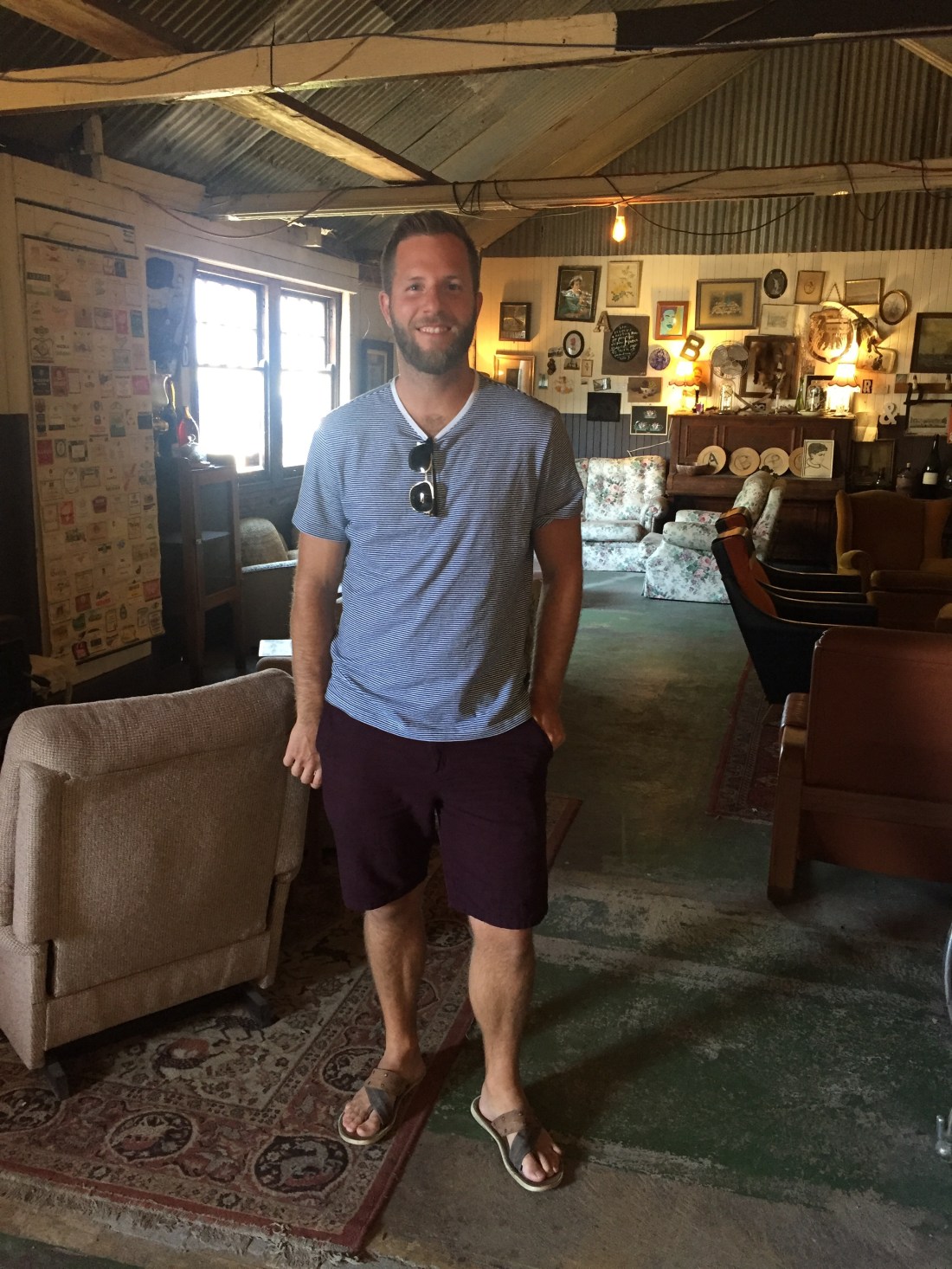
Another difference I wish I had been prepared for was the type of experience we were going to have in SOME Sonoma wineries.  After coming from Napa wineries, I had some expectations in my mind regarding curb appeal, staff dress, staff language and overall etiquette on the grounds.  I must make this clear; one winery we visited, which will remain un-named, certainly does not represent all Sonoma Valley wineries, but it was found among them. The place was difficult to find, and we had to drive down a long, windy dirt lane.  When we pulled up, we weren’t even sure we had arrived at the right spot.  Upon going in, we discovered some of the staff to be dressed in dirty, very casual clothes.  One of the men had his socks pulled up to his knees inside of his sport sandals, underneath poorly fitted denim shorts.  There were dogs running around though the tasting area.  Once I heard the word “butthole” come out of one of the staff’s mouths during a tasting, I knew this particular winery wasn’t within my preference.

We finished the tasting, and made the most of it, but I wouldn’t recommend that particular place to just anyone.  If you desire a very casual environment where you can bring your dog into the tasting area, and you’re looking for more of an affordable, weekend cook-out style of wine than the expensive, 100 point stuff, the wineries you’re looking for are not found in Napa Valley.  I do believe there IS a place for every type of winery in the market though, and Sonoma definitely has more diversity in its estates.  If I had known what I was getting into, I could have come with the right mindset, and enjoyed it for what it was – it may not have been my preference for language and dress, but it was a casual and relaxing environment, where anyone would be warmly welcomed.

I will note that we also visited some very high-class, professional, gorgeous estates in Sonoma Valley, which exceeded our expectations and delivered a five star experience, at a more affordable price than the Napa Valley wineries.  For example, B.R.Cohn, and St. Francis were both exceptional tours that I would highly recommend to anyone and everyone!  Domaine Carneros sits in between the Napa and Sonoma Valleys at the south end, and has exceptional reviews; we didn’t get the chance to visit it ourselves, but it is well known and reputable.  If you enjoy sparkling wine, I would take a chance on saying it’s the place to be.

The price differences compared to Napa Valley are something you’ll notice right away once you get into Sonoma Valley wineries.  Don’t let the comparatively lower price of a Sonoma bottle fool you into thinking it’s not as good as one from Napa.  Price per acre of land in Sonoma and Napa Counties in general is very high, and can range up into the millions; however, Sonoma price per acre does tend to be a bit less than in Napa. Hence, Sonoma wineries don’t need to charge as much.  They also don’t have quite as much prestige behind their name as their neighbour, which is all the better for us consumers!  We get amazing quality wine, and I would argue that it’s just as amazing as Napa Valley wine, but at a lower price point.  Some of our favourite wines are from Sonoma; they do an exceptional job at making the grapes they grow into amazing, award winning wines that score very highly with countless sommeliers.

“Pretentious” is a word used by some to describe Napa Valley.  A dictionary would tell you that this means Napa is attempting to impress by affecting greater importance, talent, culture, etc., than is actually possessed” (dictionary.com).  I wouldn’t go so far as to say Napa doesn’t actually possess its importance, talent, or culture; Napa Valley vintners have invested in their prime location for grape growing, developed stunning estates, acquired a vast knowledge, and have developed an expertise.  They produce a quality product.  However, in the grand scheme of history, European countries have been producing wine for centuries, and Napa was only put on the map in the 70’s; it’s a baby still, yet it’s competing with the Grandparent wines of the world, and breaking all of their rules on top of it.

Napa Valley wine IS expensive, and is highly raved over by certain wine-lovers, simply because of its name, before they even know what is inside the bottle.  Some would argue that it doesn’t warrant its price, but I won’t discuss that here.  Napa wine is often very full bodied and bold, and has specific taste profiles.  If that profile isn’t someone’s taste, they’re not going to think Napa’s is the greatest wine in the world.  It would be a fair guess that most of Europe would hold that viewpoint! Sonoma produces a quality product as well, but has a more approachable atmosphere for a wider range of people.

The best way I can suggest you determine which place you like, is to visit both of them.  They’re so close together geographically; it’s quite easy to do on one trip!  Go into both experiences with an open mind, and maybe you can enjoy them equally, and soak them in for their own personalities and styles; they both do offer so much style.  Either way, you’re going to be served excellent wine, in an exceptional setting, hopefully with the ones you love.  Happy wine tasting!